 listicle
Quiet Pet Grooming Tools for Home: A 2026 Guide
Table of Contents
- Why Noise Levels Matter in Pet Grooming Tools
- Quiet Pet Grooming Tools for Home: What to Look For
- Low-Noise Dog Clippers: Our Top Pick for Home Use
- Comparison Table: Bentley's Bark Quiet Grooming Lineup
- Pet Grooming Desensitization Tips for Anxious Pets
- How to Groom a Nervous Dog at Home: Step-by-Step
- Maintenance and Blade Care for Quiet Operation
- Final Thoughts: Building a Calm Grooming Routine
- Frequently Asked Questions
Last Updated: September 9, 2026
Why Noise Levels Matter in Pet Grooming Tools
A standard electric clipper can produce noise levels that startle and frighten pets, turning a simple trim into a battle of wills. Quiet pet grooming tools for home use address this directly by minimizing both acoustic output and physical vibration, the two primary triggers for anxiety in dogs and cats.
The connection between sound and fear is instinctive for many pets, and a loud, rattling clipper can create a lasting negative association. This is why the shift toward quiet pet grooming is more than a convenience feature; it is a fundamental component of humane, low-stress care.
Putting Decibels in Perspective
Most articles describe quiet clippers with vague terms like 'whisper-quiet' or 'low-noise.' To make an informed choice, you need numbers. Decibel (dB) ratings are the objective measure of sound pressure, and the scale is logarithmic, meaning a small increase in dB represents a significant jump in perceived loudness.
Here is how typical household and grooming sounds compare on the decibel scale:
| Sound Source | Approximate dB Range | Perceived Loudness |
|---|---|---|
| Normal conversation | 60-65 dB | Moderate |
| Standard electric clipper | 75-85 dB | Loud, often startling |
| Vacuum cleaner | 70-80 dB | Loud, droning |
| Quiet-rated grooming clipper | 50-60 dB | Moderate, comparable to conversation |
| Quiet-rated vacuum groomer | 55-65 dB | Moderate, lower than standard vacuums |
A dog's hearing is far more sensitive than a human's, detecting sounds at higher frequencies and lower volumes (PubMed). A clipper operating at 80 dB can be physically uncomfortable, especially with the high-frequency whine of a motor. A reduction from 80 dB to 55 dB is not a 25% improvement in comfort, it is a dramatic shift from a potentially painful stimulus to a tolerable background hum.
The Vibration Component
Noise is only half the problem. Vibration is the tactile counterpart to sound, and for many pets, it is the more distressing trigger. When a clipper vibrates, the sensation travels through the blade, into the skin, and deep into the bone, a feeling pets cannot escape.
Low-quality clippers often have poor motor balance, producing a rough, rattling vibration. High-quality quiet tools use counterweighted motors, rubberized housings, and floating blade assemblies to absorb this energy. When evaluating a tool, hold it and turn it on; if you feel a strong buzz in your palm, your pet will feel it tenfold.
Quiet Pet Grooming Tools for Home: What to Look For
Quiet pet grooming tools for home use are designed with noise reduction and vibration dampening as core engineering priorities, rather than afterthoughts. When evaluating your options, you should focus on several key specifications that separate genuinely quiet equipment from standard tools with marketing claims.
The first specification is the motor type. High-torque motors with brushless designs run cooler and quieter than older counterparts while maintaining consistent trimming speed through dense coats. Ergonomic design also matters, as a comfortable grip gives you better control and fewer corrections.
Understanding Decibels and Vibration
Noise output is measured in decibels (dB), your most objective starting point. Standard clippers often operate in a range that noise-sensitive pets find distressing, whereas low-noise models are engineered to stay quieter. Look for manufacturers that publish dB ratings, as this transparency indicates confidence in their technology.
Vibration is the second half of the equation. A tool that is acoustically quiet but vibrates heavily can still cause fear, since pets feel the buzz through their skin and bones. Seek out models with vibration dampening components, such as rubberized housings or floating blade assemblies.
Low-Noise Dog Clippers: Our Top Pick for Home Use
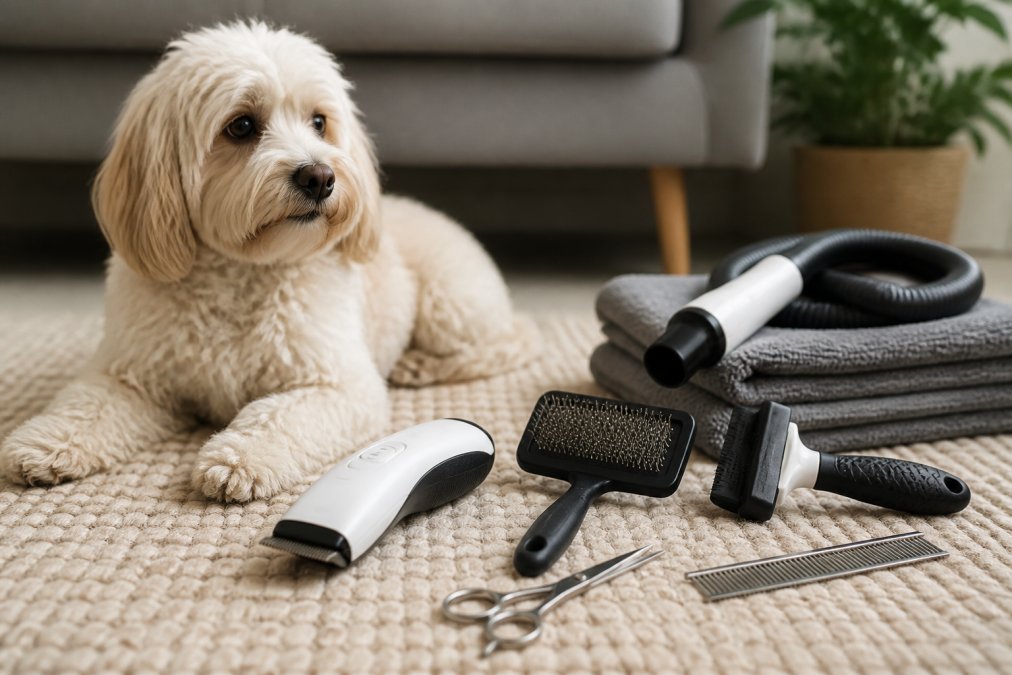
For most households, the best choice is an all-in-one system that combines clipper, vacuum, and grooming brushes. A dedicated low-noise dog clipper is essential for coat maintenance, but pairing it with fur suction solves the cleanup problem that often extends the stressful session. The Pet Hair Vacuum and Grooming Kit with Dog Clipper at $419.95 is our top pick because it consolidates these functions into one quiet, low-stress package.
This kit is designed with quiet operation as a stated priority, helping keep pets calm throughout the process. It includes a powerful vacuum for pet hair collection, a dog clipper for trimming, and various grooming brushes for both dogs and cats. Having all tools in one system means you are not switching between noisy devices, minimizing the chance of startling your pet mid-groom.
Comparison Table: Bentley's Bark Quiet Grooming Lineup
Choosing the right tool depends on your pet's coat type, your grooming frequency, and whether you need full cleanup support. The following table summarizes the key options available to help you build your home kit.
| Product | Price | Best For | Key Feature |
|---|---|---|---|
| Pet Hair Vacuum & Grooming Kit | $419.95 | Full grooming sessions | Low-noise clipper plus fur suction |
| Pet Hair Remover Vacuum | $379.95 | Shedding control | Suction and grooming functions |
| EasyGroom Handheld Shower Tool | $39.95 | Bath time | A long tube for maneuverability |
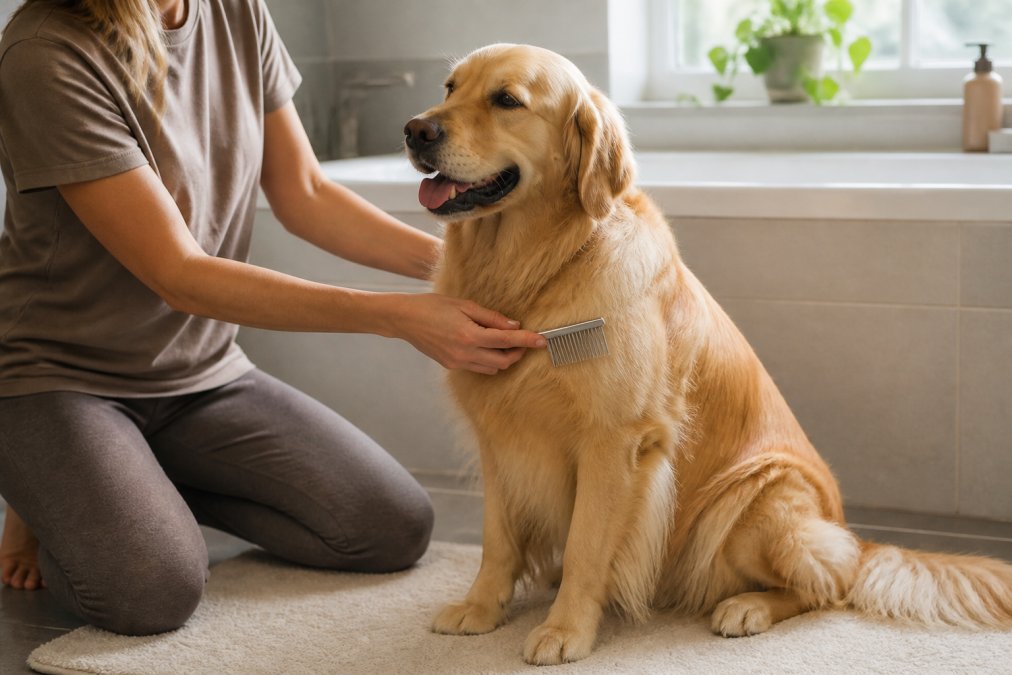
| Stainless Steel Pet Comb | $19.95 | Finishing & detangling | Ergonomic, durable design |
| Cat and Dog Nail Clipper | $19.95 | Paw maintenance | Replacement blades included |
For heavy shedders, the Pet Hair Remover Vacuum at $379.95 is an efficient all-in-one solution that manages loose fur while you groom. For maintenance between full trims, the Stainless Steel Pet Comb for Dog and Cat Grooming at $19.95 is an essential finishing tool that removes floating hair and promotes healthy skin.
Pet Grooming Desensitization Tips for Anxious Pets
Pet grooming desensitization tips are most effective when applied gradually over several weeks, requiring patience and consistency to rewire your pet's fear response. The process involves exposing your pet to the sights, sounds, and sensations of grooming at a tolerable level, then rewarding calm behavior. This is a proven approach for managing grooming anxiety without restraint or force.
Start by placing the turned-off tool near your pet during positive moments, such as while they enjoy a treat. Once comfortable, turn the tool on in a different room so they hear it at a distance. Over successive sessions, slowly decrease that distance while offering high-value rewards, teaching your pet that the noise predicts good things.
Understanding the Fear Response
Most grooming anxiety is not a simple dislike of noise; it is a learned fear response rooted in the autonomic nervous system. When a pet hears a sudden, loud noise, their amygdala triggers a fight-or-flight response before their conscious brain can process the situation (the NIH). This is why a dog can go from calm to panicked in a split second.
A common pattern is that pets do not fear the clipper itself; they fear the loss of control and physical restraint that accompanies grooming. The noise is the warning signal; the restraint is the threat. Desensitization must address both the sound and the handling, or you have only solved half the problem.
Troubleshooting Setbacks
Desensitization is rarely linear. You may have a great session on Tuesday, only to have your pet regress on Thursday. This is normal, and it does not mean you have failed. Pets will tolerate a new stimulus until they reach a 'threshold', the point at which their stress becomes overwhelming. Signs of approaching threshold include:
- Lip licking or yawning when not tired
- Sudden scratching or shaking off
- Whale eye (showing the whites of their eyes)
- Freezing or stiffening of the body
- Panting in a cool room
When you see these signs, you have pushed too far, too fast. The correct response is to step back to the last level your pet was comfortable with and end the session there. This is called 'staying under threshold,' the core principle of professional desensitization work.
The Role of Counter-Conditioning
Desensitization works best when paired with counter-conditioning, the process of changing your pet's emotional response from negative to positive. The most effective counter-conditioner is food, specifically, high-value treats your pet only receives during grooming preparation. This creates a powerful association: the clipper sound predicts chicken or cheese, not stress.
For pets with severe anxiety, consider a licking mat smeared with peanut butter or yogurt during grooming sessions. The act of licking releases calming endorphins and occupies the mouth, naturally reducing stress (peer-reviewed research). This simple tool can transform a panicking pet into a focused, calm one.
How to Groom a Nervous Dog at Home: Step-by-Step
Learning how to groom a nervous dog at home requires a structured approach that prioritizes the animal's emotional state over speed. Before you begin, ensure you have all your quiet tools laid out, including your clipper, combs, and treats for positive reinforcement.
- Begin in a quiet room with minimal distractions. Place a non-slip mat on the floor or table to give your dog a secure footing.
- Spend five minutes petting your dog with the clipper turned off, letting them sniff and investigate the tool.
- Turn the clipper on and hold it away from your dog, rewarding them for staying calm. If they remain relaxed, slowly bring the tool closer.
- Touch the back of the clipper to their shoulder or back without engaging the blade, continuing to reward calm behavior.
- Start trimming in a low-sensitivity area, like the back, using short, gentle strokes. Stop frequently to offer praise and breaks.
- If your dog shows signs of stress, such as lip licking or yawning, stop and take a break. End the session on a positive note if necessary.
Maintenance and Blade Care for Quiet Operation
Regular maintenance and blade care are critical to preserving quiet operation, as a dull or dry blade forces the motor to work harder and produces more noise. A well-maintained blade glides through the coat smoothly, reducing sound and the risk of clipper burn or skin irritation.
After each use, remove the blade and brush away hair clippings with the included cleaning brush. Apply a few drops of maintenance oil to the blade's moving parts before storing the tool. This lubrication prevents friction, a primary source of heat and noise. Keeping blades sharp ensures you do not have to press hard against your pet's skin, a common cause of grooming aversion.
Final Thoughts: Building a Calm Grooming Routine
Building a calm grooming routine is about more than purchasing the quietest equipment; it is about creating a predictable, positive experience your pet can trust. By combining quiet pet grooming tools for home with gradual desensitization and consistent handling, you transform a dreaded chore into a bonding opportunity.
At Bentley's Bark, we curate products that solve real problems for pet parents, with a focus on clean design and honest materials. Every order ships with complimentary delivery, and our selection is hand-picked to ensure your furry family members stay happy, healthy, and well-groomed.
Frequently Asked Questions
What is the quietest dog nail trimmer for nervous pets?
Manual nail clippers, like the Cat and Dog Nail Clipper from Bentley's Bark, are completely silent. They offer the quietest option because they produce no motor noise or vibration. For pets sensitive to the sensation of clipping, introduce the clipper slowly, let them sniff it, and pair each trim with a high-value treat to build a positive association.
Are there truly silent dog grooming clippers available?
No clipper is completely silent, but many are designed for quiet operation. Look for low-noise dog clippers with decibel ratings around 40-50 dB, which is similar to a quiet conversation. The Pet Hair Vacuum and Grooming Kit is engineered for low noise to help keep pets calm during home grooming sessions.
How do I desensitize my pet to grooming tools at home?
Start by placing the unplugged tool near your pet during positive moments, like meal times. Reward calm behavior with treats. Next, turn the tool on at a distance, rewarding your pet for staying relaxed. Gradually bring it closer over several sessions. These pet grooming desensitization tips work best when you move at your pet's pace and never force interaction.
What features should I look for in quiet pet grooming tools?
Prioritize tools with low vibration and quiet operation. A high-torque motor can maintain speed without excessive noise. For home grooming, consider cordless trimmers for maneuverability and kits with attachment combs for safety. Tools with ergonomic design reduce hand fatigue, and detachable blades simplify cleaning, which helps maintain low noise levels over time.
Grooming a nervous pet is a challenge that requires both the right hardware and the right mindset. Bentley's Bark offers a curated range of low-noise grooming tools and accessories designed to minimize stress and keep your home clean. Get started with Bentley's Bark and build a grooming routine that works for both of you.