 Listicle
5 Humane Anti-Barking Solutions for Apartment Dogs
Quick Summary
The best humane anti-barking approach matches the solution to why your dog barks: enrichment like snuffle mats and puzzle feeders for boredom, gradual training for separation distress, and white noise to mask outside triggers. Pick one option, change one thing at a time, and track results for at least two weeks.
- Identify the trigger first: boredom, passersby, separation distress, or outside noise.
- Puzzle feeders and snuffle mats give bored dogs a task that drains energy.
- Muzzles and bark control devices are management tools, not standalone training methods.
- Stop any device if your dog shows stress signals like lip licking, yawning, or tucked tail.
- Track barking times and triggers for at least two weeks before changing anything else.
Table of Contents
- Why Your Apartment Dog Barks and Which Solution Fits the Cause
- 1. Dog Puzzle Snuffle Mat with Suction for Boredom Barking
- 2. Interactive Pet Puzzle Feeder Toy for Dogs and Cats
- 3. Pet Bark Control Device and Anti-Bite Dog Muzzle for Trigger Barking
- 4. The Home Alone Separation Anxiety Guide and Positive Reinforcement Training for Apartment Dogs
- 5. White Noise and Sound Management: Best White Noise Machines for Dogs in Apartments
- Separation Anxiety in Apartment Dogs: When Barking Is a Distress Signal
- Start With One Change and Track Your Results
- Frequently Asked Questions
Why Your Apartment Dog Barks and Which Solution Fits the Cause
Most apartment dogs bark for a reason, and the cause decides which humane anti-barking fix works. A dog barking at people passing the front door is not the same problem as one that cries when left alone for an hour. Matching the solution to the trigger is the fastest route to quiet, and it is the approach this humane anti-barking list is built around.
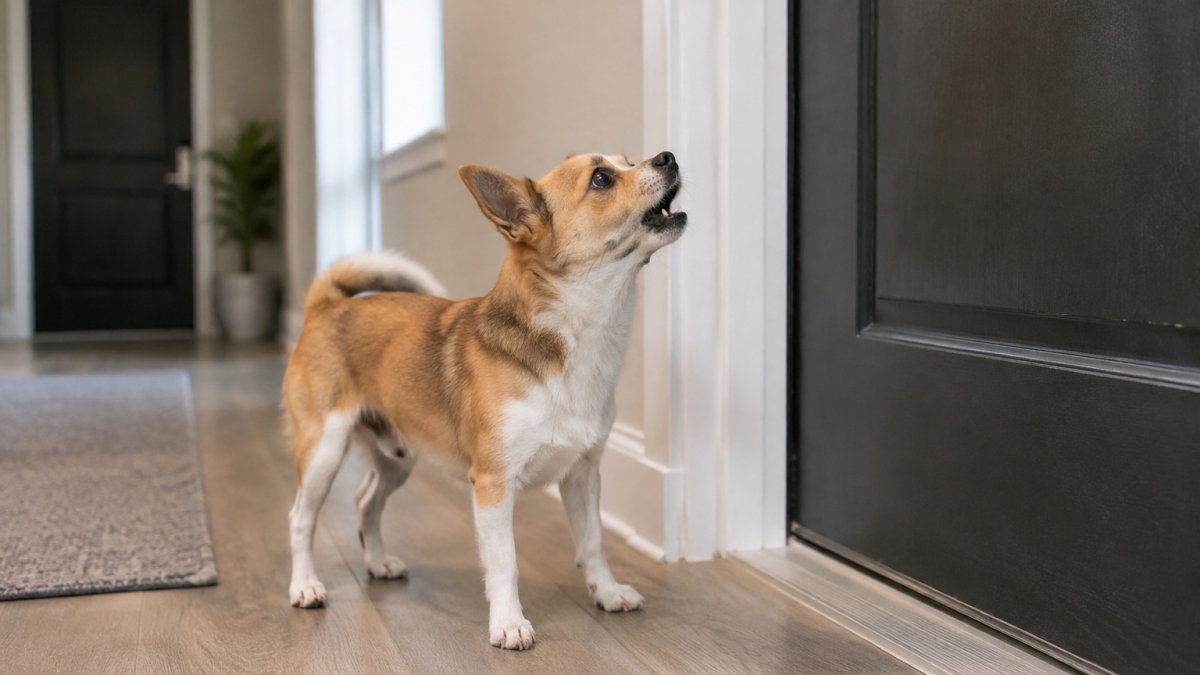
A ranked list only helps if you can match it to your dog. Before buying anything, watch for the pattern. Is the barking tied to visitors in the hallway, to a bored dog with nothing to do, to a specific sight or sound outside, or to the dog being alone? Each answer points to a different tool.
Here is how the five options below map to the most common causes:
| Likely Cause | Best-Fit Option | Why It Fits |
|---|---|---|
| Boredom and under-stimulation | Snuffle mat or puzzle feeder | Gives the dog a job that tires the brain |
| Trigger barking at passersby | Bark control device or muzzle | Interrupts the reflex while you train |
| Separation distress | Home-alone guide with gradual training | Builds confidence rather than suppressing the noise |
| Ambient noise setting off barking | White noise machine | Masks outside sounds that set the dog off |
Environmental management also matters in an apartment. Closing blinds or covering windows cuts down the visual triggers that set off territorial barking. The Tufts University Cummings School of Veterinary Medicine guidance on territorial barking recommends this as a first step before any device.
1. Dog Puzzle Snuffle Mat with Suction for Boredom Barking
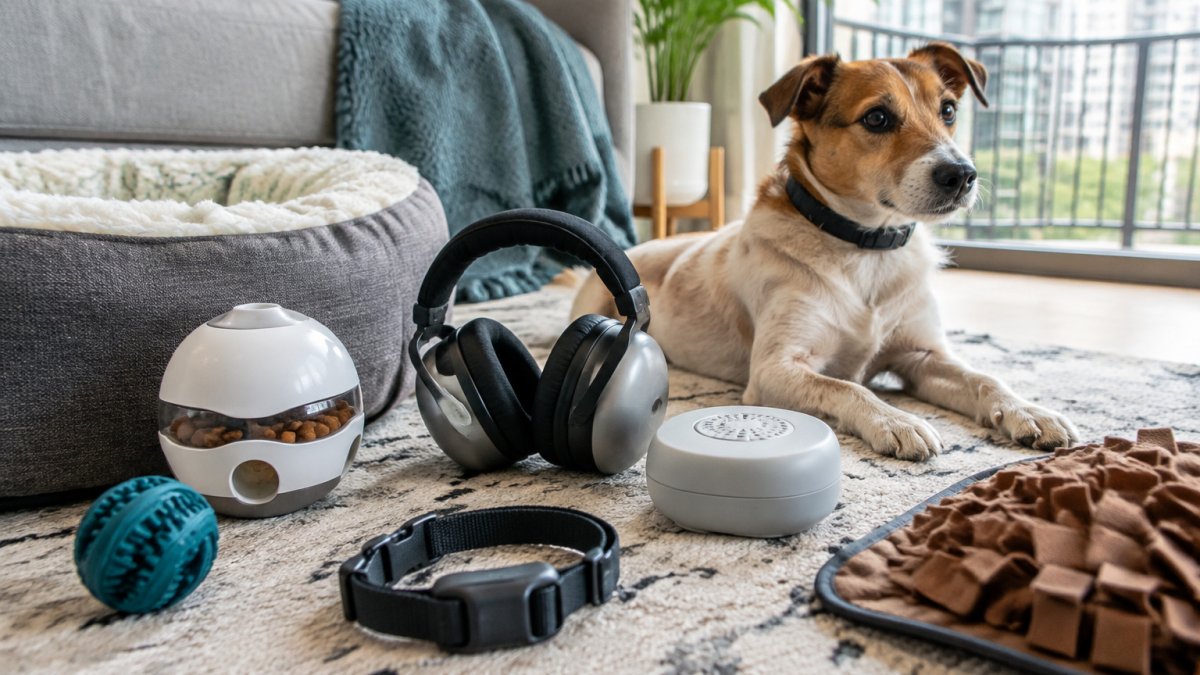
Boredom is one of the most common drivers of nuisance barking in apartments, especially for high-energy dogs left alone during the day. The Dog Puzzle Snuffle Mat with Suction hides kibble and treats in soft textured fabric folds, so the dog spends time sniffing and working for food instead of looking for something to bark at.
The suction cup base keeps the mat in place on smooth floors. It is machine washable, so you can clean it after each session.
Best for: dogs that gulp their food and get restless when left alone for long stretches.
2. Interactive Pet Puzzle Feeder Toy for Dogs and Cats
A puzzle feeder gives a dog a structured task, and that task drains energy that might otherwise go into barking. The Interactive Pet Puzzle Feeder Toy for Dogs and Cats combines play with meal time and is designed for both dogs and cats.
Its detachable design makes cleaning and refilling straightforward. A basic option is also available as the Pet Puzzle Feeder Toy if you want a simpler starting point before committing to a larger setup.
3. Pet Bark Control Device and Anti-Bite Dog Muzzle for Trigger Barking
Trigger barking, reacting to people in the hallway, dogs passing the building, or the elevator chime, often needs an immediate interruption while you teach a replacement behavior. The Pet Bark Control Device and Anti-Bite Dog Muzzle is designed to curb excessive barking and comes in multiple sizes.
Before relying on any device, it helps to understand what it can and cannot do. A device that stops the noise without addressing the cause can leave anxiety untreated, which is why the training steps in the next section matter.
A muzzle is a management tool, not a training method on its own. Use it during supervised training sessions and pair it with rewards for calm behavior. Choose a muzzle that lets your dog breathe and drink comfortably, and never leave a muzzled dog unattended.
Watch out: if your dog shows stress signals, lip licking, yawning, tucked tail, turning away, or freezing, when the device activates, stop using it. Those signals mean the tool is adding fear, not reducing barking. If barking persists after two weeks of consistent training, consult your veterinarian, who can rule out pain or medical triggers and refer you to a certified behavior consultant.
Test any device while you are home and observe your dog's body language for several sessions before using it when you are away.
Dog Muzzle for Anti-Bite and Barking Protection →
4. The Home Alone Separation Anxiety Guide and Positive Reinforcement Training for Apartment Dogs
Barking that starts when you leave, and continues for much of the time you are gone, is often a sign of distress rather than mischief. A device can suppress the sound, but it does nothing for the fear behind it. A structured, gradual approach works better.
The Home Alone Separation Anxiety Guide is a printable PDF that walks through gentle steps and includes an absence log to track progress. For broader positive reinforcement training across several behaviours, the Dog Training Bundle combines three step-by-step guides with a training journal.
If the barking continues despite steady training, speak with your veterinarian, who can rule out health problems and suggest further support.
5. White Noise and Sound Management: Best White Noise Machines for Dogs in Apartments
Many apartment dogs react to outside sounds: footsteps in the corridor, a neighbor's door, the garbage truck, or traffic. White noise can help mask some of these sounds.
A few practical moves can help when using white noise in a multi-unit building:
- Place the machine at the boundary, not the center of the room. Put it near the door or the wall that faces the noisy side of the building so the masking sound reaches the dog's ears before the trigger does.
- Keep the volume low. The goal is to blend with normal household sound, not compete with it. If you have to raise your voice to talk over the machine, it is too loud for the dog and likely audible to neighbors.
- Run it during the trigger window, not all day. If barking clusters around hallway traffic in the morning and evening, schedule the machine for those periods and give the dog quiet rest time in between.
- Pair it with visual blocking. Closing blinds or covering the lower half of windows cuts the visual triggers that white noise cannot address.
- Mind quiet hours. Check your building's policy on quiet hours before running any device continuously.
Watch out: white noise can mask sounds your dog needs to hear. Test the setup while you are present and confirm the dog still responds to normal household cues.
If noise complaints are already an issue, a short, factual conversation with neighbors or the property manager, explaining that you are actively working on the behavior and asking which times are most disruptive, often buys goodwill while training takes effect. Keep a simple log of when barking happens and what you changed, so you can show progress rather than promise it.
Separation Anxiety in Apartment Dogs: When Barking Is a Distress Signal
Separation-related barking is different from a dog that barks for attention or to defend territory, and a humane anti-barking plan treats each case differently. It usually starts within minutes of you leaving, comes with pacing or destructive behaviour, and continues for as long as the dog is alone. Some dogs also drool, whine, or have accidents indoors.
In this situation, a bark collar or muzzle will not solve the underlying problem, so a humane anti-barking approach should focus on the fear itself. Gradual desensitisation, in which you practise short absences and build up the time over days or weeks, is the approach most behaviour professionals recommend. If the signs are severe, ask your veterinarian for a referral to a certified behaviour specialist.
Start With One Change and Track Your Results
Trying five solutions at once makes it impossible to know what worked. Pick the option that matches your dog's most likely cause, change one thing, and keep notes for at least two weeks. Record when the barking happens, how long it lasts, and what was going on beforehand.
If the numbers do not improve, change the variable rather than adding another device. Most apartment barking problems respond to a combination of management, enrichment, and steady training, and a small log makes that progress visible.
Frequently Asked Questions
Are ultrasonic bark deterrents considered humane for dogs?
Ultrasonic devices are marketed as shock-free, and many list a range of about 23 feet (7 metres). Whether they are humane depends on how they are used. A device that stops the noise without addressing why the dog barks may suppress the symptom while leaving stress or anxiety in place. Pair any device with training rather than relying on it alone.
How can I stop my dog from barking at noises in the hallway?
Start by reducing the trigger. Close the apartment door's gap, add a draft stopper, and use a rug or door sweep to dampen sound. Then use positive reinforcement: during quiet moments, give a treat, then gradually expose your dog to hallway sounds at low volume while rewarding calm behaviour. Enrichment, such as a snuffle mat, can also lower overall arousal before triggers occur.
What are the best positive reinforcement tools for apartment barking?
Food puzzles and slow feeders work well because they give the dog something to do with its nose and mouth instead of barking. The Dog Puzzle Snuffle Mat with Suction, sold at CAD 31.95, is a food-hiding enrichment mat with a suction base. The Interactive Slow Feeder Dog Puzzle Ball, sold at CAD 23.95, is an interactive slow feeder for dogs. Use these alongside a clear 'quiet' cue and treat delivery.
How do I tell boredom barking from separation anxiety?
Boredom barking tends to happen whenever the dog has spare energy and no outlet, and it often stops once the dog is tired or occupied. Separation anxiety shows up mainly when the dog is alone, often with pacing, drooling, destructive chewing near doors or windows, or barking that continues for long periods. The Home Alone Separation Anxiety Guide (CAD 7.99) explains how to separate these causes. If signs persist, consult your veterinarian, who can rule out health problems.