 Listicle
Is a Dog Car Seat Worth It for Small Breeds?
Quick Summary
A dog car seat is worth it for a small breed mainly for comfort, visibility and keeping the dog settled, not as a verified crash-safety device. No regulated standard exists for pet car seats, so a "crash-tested" label is a claim to check rather than a guarantee. A dog car seat paired with a properly anchored, well-fitted harness is the most protective setup.
- No official regulatory standard exists for pet car seats, so crash-safety labels are unverified.
- Ask for the test speed, dummy weight and whether the test was dynamic or static.
- Measure internal dimensions and aim for about 10 cm longer than nose-to-tail.
- Introduce the seat gradually over several days, starting with two to three minute trips.
- Treat the weight limit as a ceiling and aim for the middle of the stated range.
Table of Contents
- What a Dog Car Seat Actually Does for a Small Breed
- Dog Car Seat vs Harness Safety: Which Protects a Small Dog Better
- Why Crash-Tested Dog Car Seats Are Hard to Verify
- Best Crash-Tested Dog Car Seats: What to Look For
- Preventing Distracted Driving With Pets in the Car
- Choosing the Right Size Carrier or Seat for Your Dog
- Deciding Whether a Dog Car Seat Is Worth It for Your Dog
- Frequently Asked Questions
Dog car seats are popular for small breeds, but whether one is worth the money depends on what you need it to do. Some seats are sold on comfort and visibility, others on crash protection, and the two are not the same thing. This guide from Bentley's Bark walks through the trade-offs so you can decide with clear expectations rather than marketing claims.
Dog car seats for small breeds are sold as safety products, which is the first thing to question. Find the best pet car safety harnesses for calmer, safer rides on Best Pet Car Safety Harnesses for Safer Dog Rides. Car and Driver's 2026 review of pet travel safety equipment makes the same point: because these products are not held to the premarket standards that apply to human safety gear, a seat can be labelled "safe" without meeting any standardized crash test Car and Driver review of best dog car seats and restraints.
What a Dog Car Seat Actually Does for a Small Breed
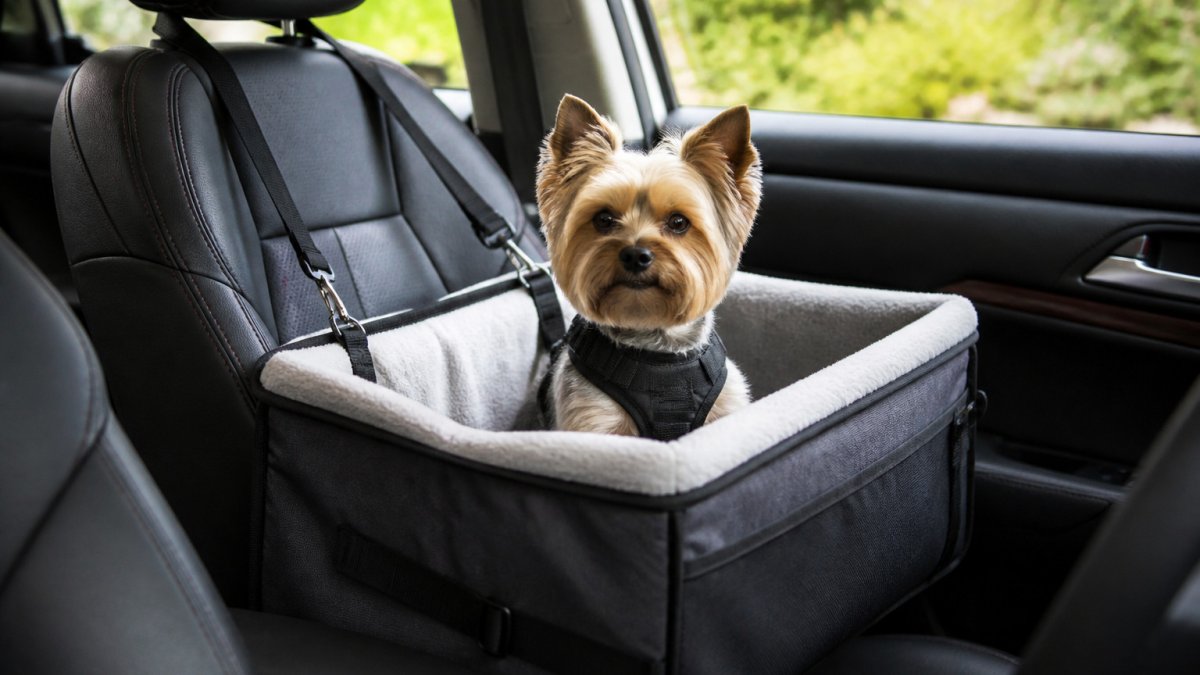
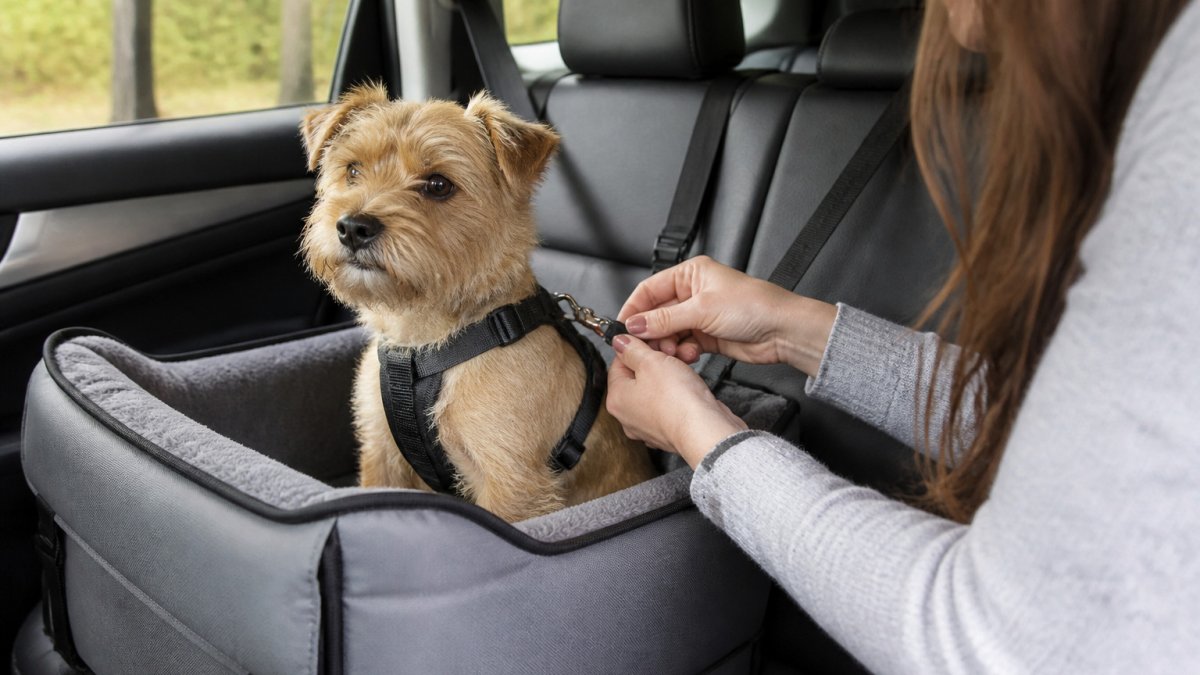
For a small dog, a booster seat mostly changes the ride. It raises the dog so it can see out the window, it gives a dog a stable, familiar spot that many owners find reduces travel anxiety, and it keeps the dog off the seat and floor where it can slide around.
The Pet Travel Seat Guard - Waterproof Car Cover is available at $79.95 CAD.
Dog Car Seat vs Harness Safety: Which Protects a Small Dog Better
Many owners combine a seat or carrier with a harness for better control, and a poor-fitting harness can cause its own problems, so check that it fits your dog's chest and back properly.
Why Crash-Tested Dog Car Seats Are Hard to Verify
"Crash-tested" is one of the most used and least verifiable phrases in this category. Because pet car seats lack a government-mandated standard, a manufacturer can run its own test, cite a third-party lab, or simply print the words on the box. Without a shared protocol, two products labelled crash-tested may have been tested in very different ways at very different speeds.
The certification landscape, explained
Most articles stop at "there is no standard." True, but not the whole picture. A handful of organizations have stepped in to fill the gap, and knowing what each one actually certifies helps you separate a real test from a marketing claim.
- Crash test protocol basics. A meaningful crash test typically simulates a frontal impact at a defined speed (often around 30 mph, or roughly 48 km/h) using an instrumented dummy that approximates the weight and dimensions of a dog. It measures whether the seat stays attached, whether the dummy stays contained, and whether the seat structure fails. A product tested at low speed, or only for static strength, is not equivalent to one tested under dynamic crash conditions.
- What "passed" should mean. A credible pass means the seat remained anchored, the dummy did not eject, and no structural component broke in a way that would injure an occupant. Ask the manufacturer for the test speed, the dummy weight used, and whether the test was dynamic or static. Vague answers are a red flag.
How to verify a crash-test claim before you buy
- Search the manufacturer's site for the test report. Reputable brands publish a summary or a link to third-party results. If the only evidence is a badge on the product page, treat it as marketing.
- Cross-check against CPS's published results. If the brand says CPS-tested, confirm the exact model appears in CPS's public results, not just the brand family.
- Ask for the test speed and dummy weight. A seat tested at 48 km/h with a dummy matching your dog's weight class tells you far more than a generic "crash-tested" badge.
- Check the anchoring method. A seat that relies on the vehicle's seat belt and a tether is generally more credible than one that sits unsecured.
- Read the fine print on "tested to." "Tested to" is not the same as "passed." A product can be tested and fail, or tested under conditions that do not resemble a real collision.
What this means for a small breed
Small breeds are lighter, which sounds safer, but a 5 kg dog becomes a serious projectile in a 48 km/h stop if it is not restrained. The seat's job is to keep the dog contained and anchored; the harness or tether's job is to keep the dog from being thrown. That is why the most defensible setup pairs a crash-tested seat or carrier with a properly fitted harness anchored to the vehicle.
Best Crash-Tested Dog Car Seats: What to Look For
Since a full standard is missing, focus on features you can check in the store or on the listing:
- Weight and size limits that match your dog, not just the seat's marketing photo.
- A tether or harness attachment so the dog can be secured, not just placed.
- A stable base that installs firmly using the vehicle's seat belt.
Bentley's Bark stocks several carriers at different price points. The Pet Carrier Bag for Dogs and Cats is $21.95 CAD and the Stylish Pet Carrier Bag for Cats and Dogs is $89.95 CAD, while the Pet Airline Carrier for Cats and Dogs is $29.95 CAD. Check each listing's stated sizes against your dog's weight and length before buying.
Preventing Distracted Driving With Pets in the Car
A loose dog on the lap, the front seat or the dashboard is a distraction for the driver, which is one reason many people use a seat or carrier for their dog. To keep a dog settled in the back and protect the seat, a back-seat cover that contains the dog is one option. The Pet Carrier Shoulder Bag for Dogs and Cats is $39.95 CAD, and the Foldable Pet Backpack for Cats and Small Dogs, 13 kg, is $23.95 CAD and suits pets up to its weight limit.
Choosing the Right Size Carrier or Seat for Your Dog
Size is the most common mistake, and most buying guides stop at "measure your dog." For help matching harness fit to your dog's size and build, read How to Choose the Right Pet Harness: Guide. Outer dimensions on a listing tell you almost nothing about whether your dog will fit comfortably, and a seat that is too small is not just uncomfortable, it can be unsafe if the dog is wedged against a hard edge in a stop.
Pet Travel Seat Guard - Waterproof Car Cover →
Measure the dog, not the seat
Take three measurements with your dog standing on a flat surface:
- Nose to base of tail (length).
- Floor to top of shoulder (height).
- Widest point across the chest (width).
Then compare those numbers with the product's internal dimensions, not its outer footprint. A seat listed as 45 cm wide may have an internal width of 30 cm once you account for walls and padding. Look for listings that publish internal dimensions; if they do not, assume the usable space is meaningfully smaller than the outer size.
A practical sizing rule
Your dog should be able to stand, turn around, and lie down without its head touching the top or its body pressed against the sides. As a working rule, look for internal height at least 5-8 cm above your dog's shoulder height, and internal length at least 10 cm longer than your dog's nose-to-tail measurement. For a small breed in the 4-8 kg range, that usually means an internal length around 40-50 cm and internal height around 30-35 cm, but always check the specific product's numbers.
Weight limits are a ceiling, not a target
A seat rated to 13 kg does not mean a 13 kg dog will be comfortable in it. Weight limits describe the structural load the product is built to handle, not the space the dog needs. Aim for the middle of the stated range, and size up if your dog is long-bodied or broad-chested.
Match the seat type to your dog's temperament
- Booster seats suit dogs that want to see out and stay elevated. They work best for dogs that settle easily and do not try to climb out.
- Carrier-style seats suit dogs that feel safer enclosed. They contain the dog more fully and are easier to secure with a seat belt.
- Backpack carriers are for short trips and transfers, not for leaving a dog unattended in a vehicle.
Acclimating a nervous dog to a new seat
A correctly sized seat can still fail if your dog refuses to use it. Trainers commonly recommend a gradual introduction over several days rather than forcing the dog in on the first trip:
- Bring the seat inside. Let the dog sniff and investigate it in the house with the door open. Put a familiar blanket or toy inside.
- Feed near and then in the seat. Move the food bowl closer over a few days, then place it inside the seat so the dog associates the seat with something positive.
- Practice in the parked car. With the engine off, place the dog in the seat, reward, and remove. Repeat until the dog is calm.
- Short engine-on sessions. Start the car, reward calm behavior, and turn it off. Do not drive yet.
- First short trips. Drive for two to three minutes and return home. Build duration only when the dog stays settled.
Check the fit in the car, not just on paper
Once the seat is installed, put your dog in and check three things: the dog can lie down without its head hitting the top, the seat does not rock when you push it side to side, and the seat belt or tether path does not cross the dog's throat or chest. If any fail, the size or installation is wrong, regardless of what the listing said.
The Portable Pet Carrier Bag for Dogs, Cats, and Rabbits comes in Small, Medium and Large at $21.95 CAD, and the Transparent Space Capsule Pet Backpack Carrier at $23.95 CAD is designed for small to medium pets up to 15 lb. Measure against the internal dimensions before choosing a size, and treat the weight limit as a ceiling rather than a target.
Use these sizing checks, drawn from the guidance above, before you buy.
| Measurement or check | Target | Note |
|---|---|---|
| Internal length | 10 cm longer than nose-to-tail | Compare internal, not outer, dimensions |
| Internal height | 5-8 cm above shoulder height | Dog should sit and lie down with head clear |
| Weight limit | Middle of stated range | The limit is a ceiling, not a target |
| Introduction period | Several days | Move from indoors to short drives |
| First trip length | 2-3 minutes | Build duration only when dog stays settled |
Deciding Whether a Dog Car Seat Is Worth It for Your Dog
A dog car seat is worth buying if your small dog is anxious in the car, needs a view out the window, or is likely to roam the cabin. It is less useful as a crash-safety device, because no seat on the market is held to a regulated standard. The most protective setup is usually a seat or carrier paired with a harness properly anchored to the vehicle.
Frequently Asked Questions
What is the safest way for a small dog to ride in a vehicle?
The safest option is a dog car seat or carrier that is secured to the vehicle, combined with a harness attached to a tether. Loose dogs can be thrown forward in a sudden stop, and a harness clipped only to a seat belt can be pulled out of position. Look for a seat that uses the vehicle's belt or anchor points and keeps the dog low and contained. Bentley's Bark's Pet Travel Seat Guard protects the seat itself, but for restraint you still need a secured system.
Do small dogs actually need a car seat or is a harness enough?
A harness is better than nothing, but it does not control the body during a collision the way a secured seat or carrier can. Small dogs in a harness alone can still be launched forward or sideways. A car seat keeps the dog in one place and out of the footwell, which also reduces distraction for the driver. Whether it is worth the cost depends on how often your dog rides and how much you value containment.
Are there specific safety standards for pet travel gear?
There are currently no formal government regulations that require dog car seats to pass standardized crash tests. Any product can describe itself as safe without meeting a recognized standard. Some manufacturers test their own products or market crash-tested labels, but these claims vary in rigour. Ask for the test method and results before relying on a claim, and remember that the Pet Travel Seat Guard is a protective cover rather than a restraint.
How do I choose the right size car seat for my small dog?
Measure your dog from the base of the neck to the base of the tail and check the weight limit on the product. The dog should be able to stand, turn around and lie down without touching the top or sides. For carriers, the Pet Airline Carrier is offered in small (48 x 32 x 30 cm) and medium (58 x 37 x 37 cm) sizes, and the Foldable Pet Backpack handles pets up to 13 kg. Choose the size that gives room without allowing the dog to be thrown around.