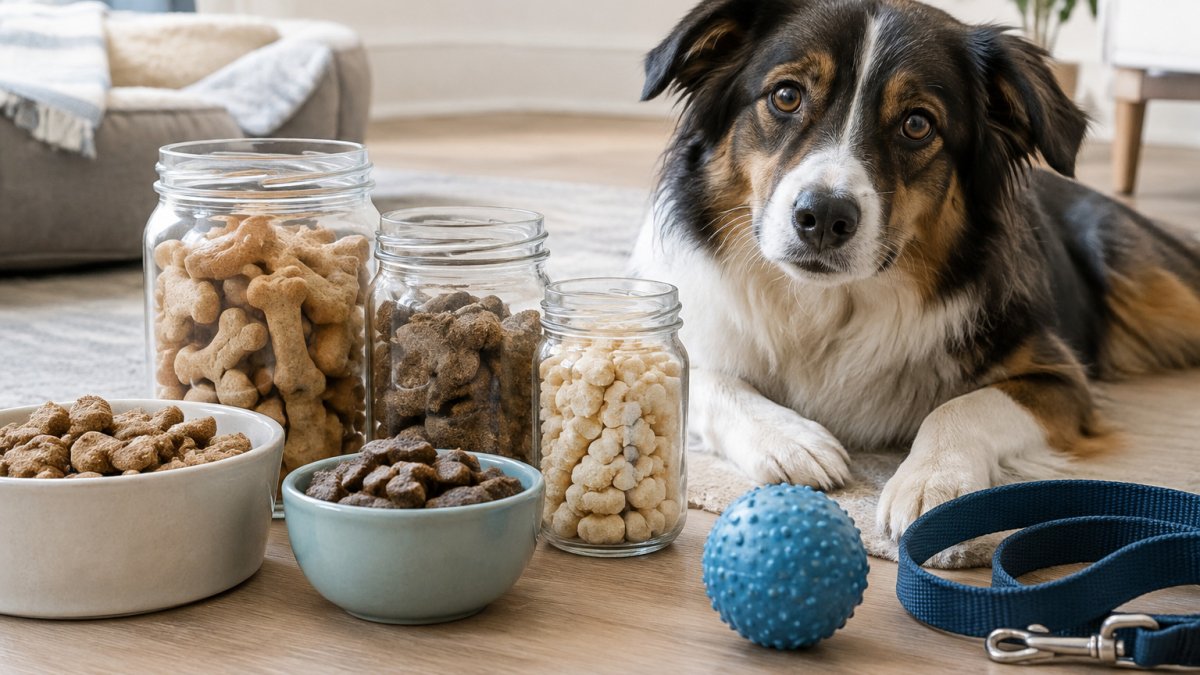
 Listicle
5 Best Dog Training Treats for Sensitive Stomachs
Last Updated: November 5, 2026
Quick Summary
The best dog training treats for sensitive stomachs have short, specific ingredient lists, small pieces, and modest calories. Bentley's Bark's five picks include beef liver, pumpkin, salmon, and peanut options, all listed as low in fat and gluten-free. Introduce each one slowly and watch your dog's stool.
- Training sessions multiply every reward, so ingredient list and piece size matter more than usual.
- All five treats are sold in 170g and 680g bags, starting at $15.99 CAD.
- Introduce one new treat at a time and track stool quality daily.
- Skip peanut treats if anyone in the household has a peanut allergy.
- Contact your veterinarian for persistent vomiting, bloody stool, or weight loss.
Table of Contents
- Why Training Treats Matter More for Sensitive Stomachs
- How We Chose These 5 Training Treats
- Quick Comparison: 5 Gentle Training Treats at a Glance
- 1. Canadian Beef Liver Training Treats: Single-Ingredient Pick for Protein Lovers
- 2. Fresh Soft Pumpkin Training Treats: Fibre-Rich Option for Digestion
- 3. Wild Pacific Salmon Training Treats: High-Value Reward for Picky Dogs
- 4. Soft Natural Peanut Training Treats: Simple Recipe, Bulk-Friendly Size
- Homemade vs Store-Bought: What Sensitive-Stomach Owners Should Weigh
- Frequently Asked Questions
Dog training treats do more work than most dog owners realize. A dog gets rewarded dozens of times in a single training session, and every reward is a chance to add something the stomach has to process. For a dog with a sensitive stomach, that repetition matters. A treat that is fine once can cause loose stools when it is given fifty times in a week. Bentley's Bark has put together this guide to help you choose training treats that are gentle on the stomach, even when you are rewarding often.
Here is the short version: look for single-ingredient or limited-ingredient treats, keep the pieces small, and watch the calories. The sections below explain what to look for and how each treat in the Bentley's Bark catalogue fits those criteria.
Why Training Treats Matter More for Sensitive Stomachs
Training treats are different from a bedtime biscuit. A dog might eat a few during a meal-style reward, but during a training session the same dog can earn many treats in a few minutes. That adds up fast. The ingredient list, the fat content and the size of each piece all get multiplied by the number of rewards.

Many owners focus on the flavour of their dog training treats and forget the volume. A treat that feels small to you can still be a large share of your dog's daily intake once training is part of the routine. Keeping the ingredient list short makes it easier to spot the cause if your dog starts having digestive trouble.
Stomach sensitivity also varies from dog to dog. Some dogs react to one protein, and others react to a grain or a fat. A simple treat with few ingredients gives you fewer variables to test.
How We Chose These 5 Training Treats
We kept the list to five products from the Bentley's Bark catalogue, all sold as training treats. We did not include competitor products, because the goal here is to help you pick among well-described options.
Each treat can be compared against four practical questions:
- Ingredient count: Does the listing name a short, specific ingredient list?
- Protein or base: Is the main ingredient one that many owners use as a starting point for sensitive dogs?
- Texture and size: Is the treat soft and easy to break into small pieces?
- Format: Does it come in a bulk size that suits frequent training, or a smaller size for trying it first?
When reading a product listing, note what it does and does not state. If a listing does not mention an ingredient, do not assume it contains or lacks that ingredient. Please check the label on the bag you receive, and talk to your veterinarian before making a major diet change for a dog with a medical condition.
Quick Comparison: 5 Gentle Training Treats at a Glance
| Treat | Main Ingredient | Starting Price (CAD) | Best For |
|---|---|---|---|
| Canadian Beef Liver Training Treats | Beef liver | $15.99 / $48.99 | Protein-focused training |
| Fresh Soft Pumpkin Training Treats | Pumpkin | $15.99 / $48.99 | Fibre-focused digestion support |
| Wild Pacific Salmon Training Treats | Salmon | $15.99 / $48.99 | High-value rewards |
| Soft Natural Peanut Training Treats | Peanut | $15.99 / $48.99 | Simple recipe, bulk use |
Prices are the starting prices listed in the Bentley's Bark catalogue, and they are the same for each size shown.
1. Canadian Beef Liver Training Treats: Single-Ingredient Pick for Protein Lovers
These treats are built around beef liver, which is a strong option if you want a single, recognisable protein for training. The listing describes them as low in fat, gluten-free and soft in texture, which makes them easy to break into smaller pieces.
Beef liver carries a strong flavour, which some owners find useful when they want a rewarding treat in smaller amounts.
Watch out: Introduce any new protein slowly. Start with a few pieces a day, and watch for changes in stool over several days before you increase the number.
The 680g bag is the larger size for frequent training, and the 170g bag is a smaller size for trying the treat first.
2. Fresh Soft Pumpkin Training Treats: Fibre-Rich Option for Digestion
Pumpkin is a plant-based base that many owners choose when they want to keep the ingredient list short and avoid meat. The listing describes these treats as soft, low in fat, gluten-free and free of meat, which can suit dogs that struggle with animal proteins.
The listing notes that pumpkin contains fibre. Watch your dog's response to any new treat and adjust the number given if needed.
Best for: owners who want a meat-free option and a short ingredient list.
Skip if: your dog has been advised by a vet to limit fibre.
3. Wild Pacific Salmon Training Treats: High-Value Reward for Picky Dogs
Salmon is one of the most popular high-value rewards, and these treats are described as made with real salmon, low in fat and gluten-free. The listing describes a soft texture, which can make the treats easier to break into smaller pieces for training.
Why it earns a place in a training rotation: Fish is one protein option that some owners consider. It is not a universal choice. If your dog has reacted to fish before, skip this one and choose a different protein. A common pattern is that owners switch proteins after a bad reaction to one food, then assume the new protein is safe without testing it slowly. Introduce salmon the same way you would any new food: a few small pieces on day one, then watch stool quality for several days before increasing the amount.
Training practicality:
- Size and breaking: The soft texture can make it easier to tear into smaller pieces.
- Odour: Fish treats can carry a noticeable smell, which may transfer to your hands and training pouch.
- Storage: Keep the bag sealed between sessions.
- Mess: Soft fish treats can leave a residue on fingers. A small towel in your training bag solves this.
Portion and calorie awareness: The listing does not publish a calorie count per treat, so use the bag's guaranteed analysis and feeding directions as your starting point. A general approach is to set aside a fixed number of pieces per session and count them against the day's overall food intake rather than adding them on top. If the bag gives a calorie figure, use it to estimate calories per reward.
Soft Natural Peanut Training Treats 680g →
Best for: dogs who need a strong reward to hold attention during a busy training session, and dogs who have done well on fish-based foods.
Skip if: your dog has previously reacted to fish, or your vet has placed your dog on a specific elimination diet that excludes fish.
Watch out: Rotate any high-value treat with other rewards rather than using it as the only reward.
The 170g bag is a smaller size for trying salmon before choosing the 680g size.
4. Soft Natural Peanut Training Treats: Simple Recipe, Bulk-Friendly Size
These treats are made from peanut, chickpea flour and vegetable glycerine. The listing says they are handmade in Canada in small batches, are low in fat, gluten-free and soft enough for dogs with difficulty chewing.
Peanut is not a food to give to every dog. Some dogs have peanut sensitivities, and the listing notes that these treats may trigger human peanut allergies. Keep them away from people with peanut allergies, and wash your hands after handling them.
Best for: owners who want a simple recipe and a bulk size for frequent training.
Skip if: anyone in your household has a peanut allergy, or your dog has previously reacted to peanuts.
Homemade vs Store-Bought: What Sensitive-Stomach Owners Should Weigh
Some owners make their own training treats at home, which lets them control every ingredient. That approach has real advantages. You can keep the recipe as simple as you like and adjust it quickly if your dog reacts. Store-bought treats have a different advantage: consistency.
The decision matters most when you are trying to identify a trigger. A homemade treat with one ingredient gives you a clean variable. A commercial treat with a short, fixed ingredient list gives you a repeatable one. Either can work; the mistake is changing several things at once.
How to introduce a new treat without losing the signal
A common pattern among owners of sensitive-stomach dogs is to switch foods and treats together, then have no way to tell which change helped or hurt. A slower approach gives you usable information:
- Start with one new treat at a time. Keep the rest of the diet unchanged for at least several days.
- Begin with a small number of pieces. A few small pieces on day one is enough to see whether your dog accepts it.
- Watch stool quality daily. Note firmness and frequency rather than just whether the dog seems fine.
- Increase gradually only if stools stay normal. If they loosen, stop the new treat and let things settle before trying a different single ingredient.
- Keep a simple log. Record the treat, the amount, and the stool response. This is the record your veterinarian will want if symptoms persist.
If your dog is on a veterinarian-directed elimination trial
An elimination trial is designed to remove suspected trigger ingredients for a set period, then reintroduce them one at a time. Treats are the most common place trials break down, because owners do not think of training rewards as part of the diet. If your dog is on a trial, confirm with your veterinarian which proteins and ingredients are allowed, and choose training treats that fit inside those limits.
When symptoms need veterinary attention
Routine food sensitivity usually shows up as soft stools, occasional gas, or mild itching that improves when the trigger is removed. Some signs are different and should not wait for a treat experiment to play out.
Whichever route you choose, the same rules apply. Keep the pieces small, count the calories, and introduce one new food at a time so you can identify any trigger.
Bentley's Bark sells treats for dogs and cats, plus toys, apparel and smart gadgets. The 170g bags are a smaller size for trying the training treats above.
Frequently Asked Questions
What are the best training treats for dogs with sensitive stomachs?
Look for short ingredient lists with one protein or one vegetable, soft textures that are easy to digest, and low fat content. Among the options in the Bentley's Bark catalogue, the Canadian Beef Liver, Fresh Soft Pumpkin, and Soft Natural Peanut Training Treats each use a short ingredient list and are described as low in fat and gluten-free. Start with a small piece and watch your dog's stool and energy over the following day before using the treat regularly during training.
What ingredients should I avoid in dog treats for a sensitive stomach?
Avoid treats with long ingredient lists, heavy fats, and artificial colours or flavours, since each added ingredient is another possible trigger. Dogs with known food sensitivities should also avoid any protein they react to. Check labels carefully, and remember that a treat can be low in fat and still contain an ingredient your dog cannot tolerate, so review the full list before buying.
Are single-ingredient treats better for dogs with sensitive stomachs?
Single-ingredient or limited-ingredient treats are often easier to manage because you can identify a problem ingredient quickly if your dog reacts. The Canadian Beef Liver Training Treats and Fresh Soft Pumpkin Training Treats are listed with short ingredient lists. Single-ingredient does not automatically mean safe for every dog, so introduce any new treat slowly and keep notes on how your dog responds.
Can training treats cause diarrhea in dogs?
Yes, training treats can cause loose stools, especially when they are introduced suddenly or given in large quantities. Rich or fatty treats are more likely to cause problems in dogs with sensitive digestion. If diarrhea, vomiting, or lethargy lasts more than a day or two, or if your dog seems unwell, contact your veterinarian rather than continuing to experiment with treats.