 listicle
Pet-Safe Carpet Cleaning Alternatives
Table of Contents
- Why Pet-Safe Carpet Cleaning Matters
- DIY Pet Safe Carpet Cleaner Recipe
- Enzymatic Cleaners vs Non-Enzymatic Options
- How to Remove Pet Urine Stains from Hardwood Floors Safely
- Pet Safe Carpet Cleaning Best Practices
- Odor Neutralization and Long-Term Carpet Health
- Professional-Grade Pet-Safe Solutions
- Frequently Asked Questions
Last Updated: September 27, 2026
Why Pet-Safe Carpet Cleaning Matters
Pet accidents happen. Whether it's a puppy learning house training or an older dog with occasional mishaps, urine stains and odors become part of pet ownership. The question isn't whether your carpet will need cleaning, it's how you'll handle it without exposing your pet to harsh chemicals. This guide from Bentley's Bark covers pet-safe carpet cleaning alternatives that actually work, from simple DIY solutions to professional-grade options designed with your pet's health in mind.
Many pet parents assume they need industrial-strength chemical cleaners, but effective pet-safe carpet cleaning relies on understanding how stains work and matching the right method to the problem.
DIY Pet Safe Carpet Cleaner Recipe
White vinegar and baking soda create a powerful cleaning combination that neutralizes odors while lifting stains from carpet fibers.
Vinegar and Baking Soda Method
White vinegar breaks down organic compounds in pet urine while remaining safe for pets and carpet. Baking soda absorbs odors by trapping odor molecules rather than masking them.
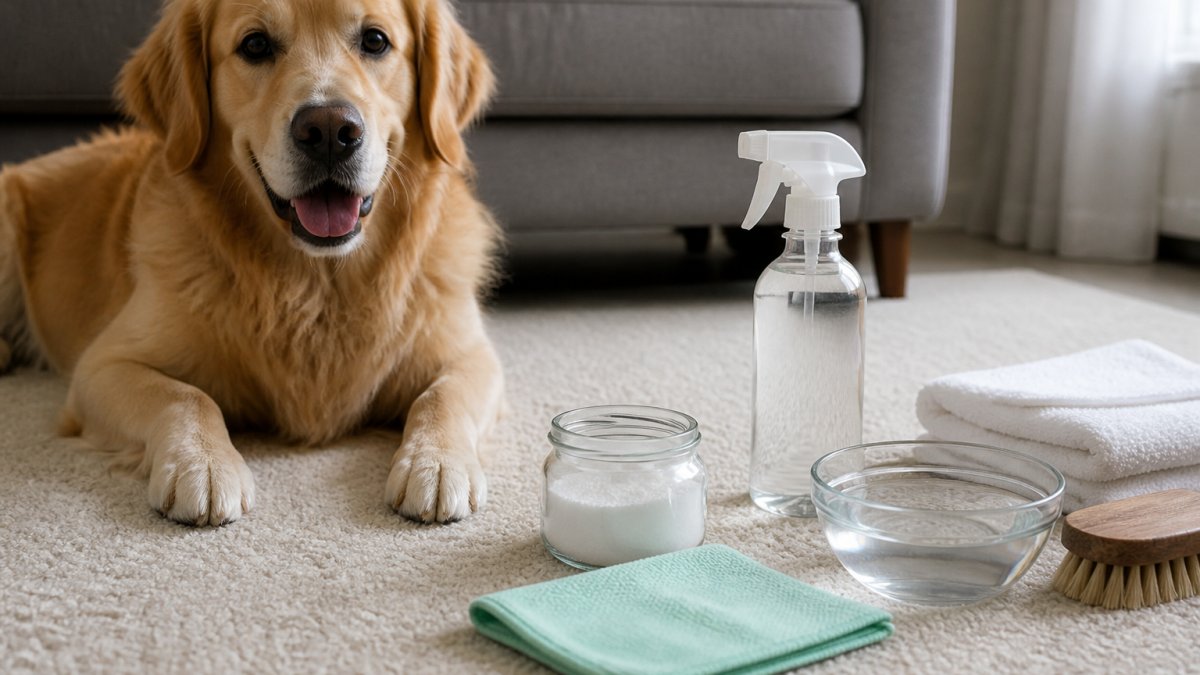
What you'll need:
- White vinegar
- Baking soda
- Spray bottle
- Clean white cloth or paper towels
- Vacuum
Steps:
- Blot the fresh stain thoroughly with a white cloth, pressing firmly without rubbing, rubbing pushes urine deeper into fibers.
- Mix equal parts white vinegar and water in a spray bottle.
- Spray the affected area until the carpet is damp but not soaked.
- Let it sit for 5-10 minutes to allow the vinegar to break down urine compounds.
- Blot again with a clean cloth, pressing firmly to absorb the vinegar solution.
- Sprinkle baking soda generously over the area and let it sit for several hours or overnight.
- Vacuum thoroughly to remove all baking soda residue.
This method works best on fresh stains; for set-in stains, repeat or use a stronger alternative.
Hydrogen Peroxide and Dish Soap Solution
Hydrogen peroxide breaks down organic stains; combined with dish soap, it lifts both visible stains and embedded odor molecules.
What you'll need:
- 3% hydrogen peroxide (standard drugstore variety)
- Dish soap (unscented works best)
- Spray bottle
- Clean cloth
- Vacuum
Steps:
- Test the solution on a hidden corner first, hydrogen peroxide can lighten some carpet dyes.
- Mix one part hydrogen peroxide with one part dish soap in a spray bottle.
- Apply the solution directly to the stain and let it sit for 10-15 minutes.
- Blot thoroughly with a clean cloth, pressing to extract the solution and dissolved stain material.
- Rinse with plain water by spraying lightly and blotting again.
- Allow the carpet to air dry completely before allowing pets back on the area.
This solution is particularly effective on protein-based stains like urine, blood, or vomit because the hydrogen peroxide actively breaks down the organic compounds.
Enzymatic Cleaners vs Non-Enzymatic Options
Enzymatic and non-enzymatic cleaners work through different mechanisms, and each excels in different situations, but not all methods are safe for all carpet materials.
Non-enzymatic cleaners (vinegar, hydrogen peroxide, baking soda) dissolve or suspend stain particles for extraction. They're fast-acting, safe for pets, and work well on fresh stains.
Enzymatic cleaners contain bacteria or enzymes that consume organic matter, breaking down urine molecules rather than suspending them. They're particularly effective on old, set-in stains.
Material-Specific Safety Considerations
Not all carpet fibers tolerate the same cleaning methods. This is where many pet owners run into trouble, unknowingly damaging their carpet while trying to clean it.
Wool and silk carpets are vulnerable to acidic cleaners like vinegar, which strip natural oils and cause brittleness. Avoid vinegar-based solutions; use enzymatic cleaners or consult a professional. Always test on a hidden corner first.
Synthetic carpets tolerate vinegar and hydrogen peroxide well, though hydrogen peroxide can lighten some dyes. Thorough rinsing prevents acidic residue buildup, which attracts dirt.
Antique or hand-knotted rugs should never be treated with DIY solutions. The dyes, fibers, and backing are often irreplaceable. Professional restoration is the only safe option.
Enzymatic cleaners are generally safer across all fiber types because they work by breaking down organic matter rather than chemically attacking the fiber itself. However, they still require thorough rinsing to prevent enzyme residue from attracting dirt or causing mold growth in the carpet backing.
Trade-offs: Speed vs. Depth
Non-enzymatic cleaners work faster but may not eliminate deep odors; enzymatic cleaners need 24-48 hours but address root causes.
Match the method to stain age and carpet material: non-enzymatic for fresh synthetic stains, enzymatic for persistent odors or natural fibers.
How to Remove Pet Urine Stains from Hardwood Floors Safely
Hardwood requires quick action: urine seeps between boards and into the subfloor, causing permanent damage if not addressed immediately.
Loona - Odour Eliminator- 500 ml →
Use a blacklight or UV flashlight to locate all affected areas, urine often spreads beyond visible stains. Act immediately.
For surface-level urine, spray vinegar and water solution onto a cloth (not directly on the floor) to avoid excess moisture. Wipe and dry immediately.
For soaked-in urine, professional hardwood restoration is needed. Prevention through immediate cleanup is key.
Pet Safe Carpet Cleaning Best Practices
Effective cleaning combines the right technique with the right products. How you clean matters as much as what you use.
Spot Cleaning and Blotting Technique
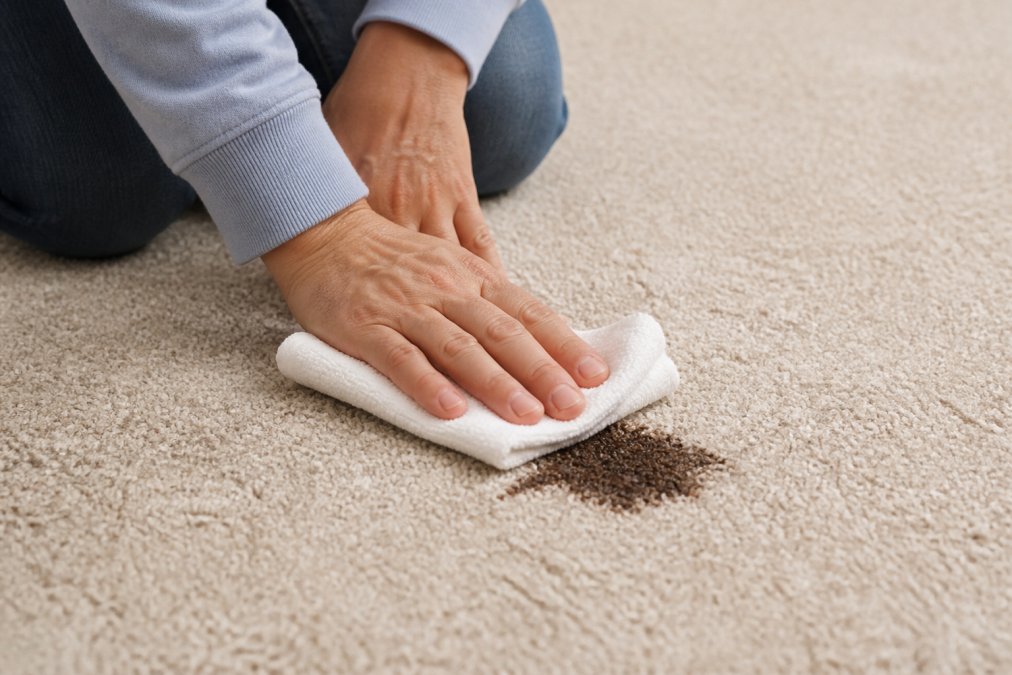
Blotting lifts stain material out; rubbing pushes it deeper and spreads it across a larger area.
Grab a white cloth immediately and press firmly on the stain for several seconds. Repeat with clean sections until no more moisture transfers, this removes most urine before it sets.
Always use white or light-colored cloths for blotting. Colored cloths can transfer dye onto your carpet, creating a new stain problem. Paper towels work in a pinch but cloth absorbs more liquid and allows better pressure application.
Deep Cleaning Without Toxic Residue
Deep cleaning saturates the carpet backing where embedded odors hide, then extracts as much liquid as possible.
Spray generously until noticeably damp, let sit 15-20 minutes, then extract by pressing with towels from outside toward center.
Follow up with a rinse: spray lightly with plain water and extract again. This removes any cleaning solution residue that could attract dirt or cause resoiling. Allow the area to air dry completely, open windows, run a fan, or use a dehumidifier to speed drying.
Odor Neutralization and Long-Term Carpet Health
Lingering odors persist for weeks or months if the underlying cause isn't addressed. How you clean and what residue remains determines whether your carpet lasts or deteriorates.
How Residue Buildup Damages Carpet Structure
Every cleaning method leaves behind something. Vinegar leaves acidic residue. Enzymatic cleaners leave enzyme and bacterial residue. Hydrogen peroxide leaves oxidizing agents. If these residues aren't completely rinsed away, they accumulate in the carpet fibers and, more critically, in the carpet backing and padding underneath.
Carpet backing is typically made of latex or polyurethane. When acidic or enzymatic residues accumulate in the backing, they break down the adhesive that holds the backing to the carpet fibers. Over months, this causes the carpet to separate from its backing, creating wrinkles, soft spots, and eventually bare patches where the fibers pull away entirely. This damage is irreversible and often requires carpet replacement.
Carpet padding, the foam or rubber layer beneath the backing, is equally vulnerable. Residue buildup traps moisture in the padding, creating an environment where mold and mildew thrive.
Odor Neutralization vs. Odor Masking
Baking soda and enzymatic cleaners both neutralize odors rather than masking them. Baking soda works by absorbing odor molecules; enzymatic cleaners work by destroying the organic compounds that create the smell. Neither approach just covers the problem with fragrance; they address the actual source.
Preventing the Repeat-Accident Cycle
For long-term carpet health, address accidents quickly and completely. Pets often return to spots where they've eliminated before because residual odor signals that location as appropriate. Complete odor elimination prevents this cycle and protects your carpet from repeated damage.
Professional-Grade Pet-Safe Solutions
When DIY methods aren't sufficient, professional-grade pet-safe products offer concentrated cleaning power without harsh chemicals. These products are designed specifically for pet messes and often contain enzymes or advanced odor-neutralizing technology.
Frequently Asked Questions
How can I clean my carpet without toxic chemicals?
Use natural alternatives like white vinegar mixed with water, baking soda, or hydrogen peroxide solutions. These break down organic matter and neutralize odors without harmful residues. For pet urine specifically, enzymatic cleaners work by breaking down the bacteria causing the smell, making them safer than ammonia-based products. Always blot rather than scrub to protect carpet fibers, and ensure the area dries completely to prevent mold and fungi growth.
What is the best DIY pet safe carpet cleaner recipe?
Mix one part white vinegar with one part water in a spray bottle for general cleaning, or combine hydrogen peroxide with a few drops of dish soap for tougher stains. For odor neutralization, sprinkle baking soda on the affected area, let it sit for 15 minutes, then vacuum. These recipes are non-toxic and won't damage carpet fibers or harm pets. Test any solution on a hidden area first to check for color bleeding.
Are enzymatic cleaners considered chemical cleaners?
Enzymatic cleaners contain biological agents that break down organic matter, making them chemically different from synthetic pet carpet cleaners. They use natural bacterial breakdown to eliminate the source of stains and odors rather than masking them. While they are technically chemical products, they're considered pet-safe because they target specific proteins in urine without leaving toxic residue or ammonia-based compounds that harm pets.
What should I do if my pet has an accident on hardwood floors?
Act quickly to prevent the urine from seeping into the wood. Blot the area immediately with a damp cloth, then apply a pet-safe solution like diluted white vinegar or an enzymatic cleaner designed for hardwood. Avoid soaking the wood, as excess moisture causes damage. Once treated, dry the area thoroughly with a cloth. For old stains, sand the affected spot lightly and apply a wood-safe finish to restore the surface and eliminate lingering odors.