 Listicle
7 Best Portable Water Bowls for Hiking Dogs in 2026
Last Updated: October 26, 2026
Quick Summary
The best portable water bowls for hiking dogs pack small, open fast, and hold enough water for your planned distance, with leak resistance as a key trait. Our picks include the Summer Cooling Pet Bowl at $19.95 for hot-weather hikes and the Stainless Steel 18oz Personalized Bowl at $48.33 for long trails. Match bowl capacity to one drinking session and carry bottles for the total trip.
- We judged each bowl on compactness, ease of filling and cleaning, stability, and durability, with price last.
- The Summer Cooling Pet Bowl holds 470ml and weighs 365g for hot-weather day hikes.
- A common range is roughly 30 to 60ml of water per kilogram of body weight per hour of activity.
- Build in a water break every 20 to 30 minutes on half-day hikes rather than one big stop.
- Rinse the bowl after each use and let it dry fully before folding it away.
Table of Contents
- What to Look For in Portable Water Bowls for Hiking Dogs
- Quick Comparison: 7 Portable Water Bowls at a Glance
- 1. Summer Cooling Pet Bowl: Best for Hot-Weather Hikes
- 2. Stainless Steel 18oz Personalized Bowl: Best for Long Trails
- 3. Stainless Steel Double Bowl: Best for Two-Dog Households
- 4. Silicone Pet Food Mat: Best Spill-Proof Base for Camp
- How Much Water Does a Dog Need on a Hike?
- Best Collapsible Dog Bowls for Hiking: What to Know
- Frequently Asked Questions
What to Look For in Portable Water Bowls for Hiking Dogs
The right portable water bowls for hiking dogs solve one problem: getting clean water into your dog on a trail without carrying a bulky kitchen bowl or spilling half of it on the rocks. A good trail bowl packs small, opens fast, and holds enough water for the distance you plan to cover. This guide walks through what to consider when choosing a portable water bowl for hiking.
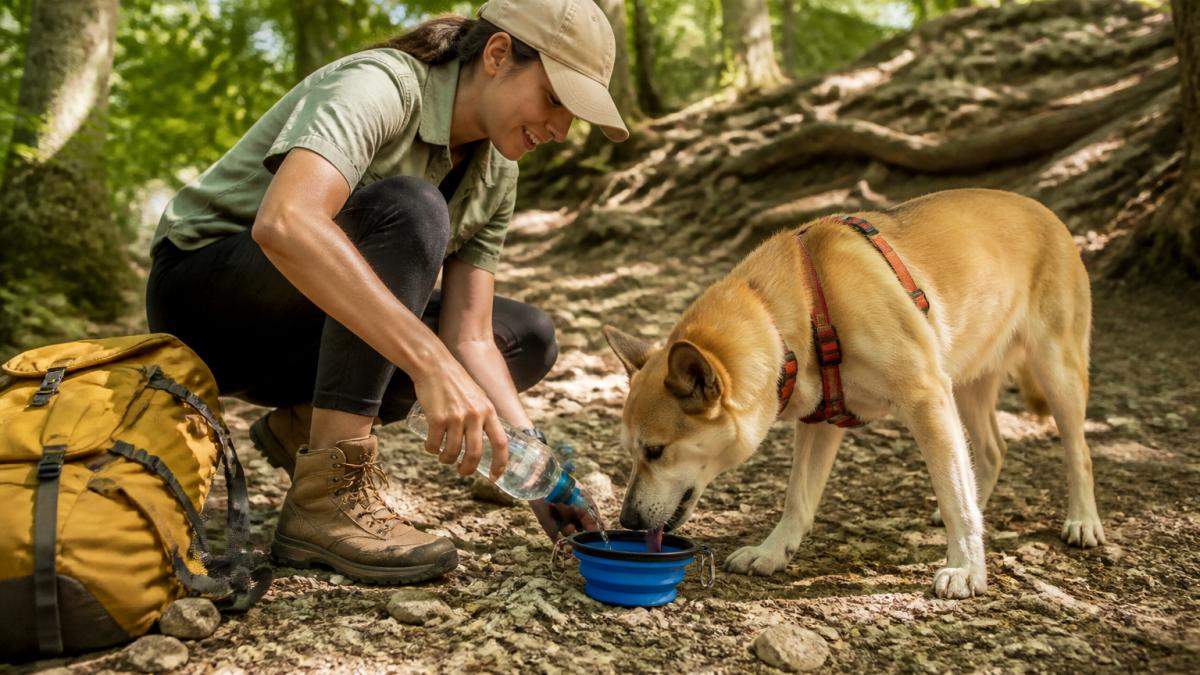
Capacity, Materials, and Leak Resistance
Capacity should match your dog's size and the length of the hike. A small dog on a short loop needs far less than a large dog on a full-day climb. Materials matter just as much. Leak resistance is the third leg. A bowl that seals shut in your pack beats a bigger one that soaks your spare socks. If you are weighing materials in more depth, our guide to ceramic versus stainless pet bowls covers the trade-offs.
How We Evaluated These Bowls
We judged each bowl on four things: how compact it is when empty, how easy it is to fill and clean on the trail, how stable it sits on uneven ground, and how well it holds up over repeated use. Price and value came last, because a cheap bowl that tips over wastes water you carried for kilometres. Our picks lean toward products we would actually carry, not the flashiest listing.
Quick Comparison: 7 Portable Water Bowls at a Glance
Here is a comparison of the bowls before we get into the detail.
| Bowl | Price (CAD) | Best For | Key Trait |
|---|---|---|---|
| Summer Cooling Pet Bowl | $19.95 | Hot-weather hikes | Cooling material, 470ml |
| Stainless Steel 18oz Personalized Bowl | $48.33 | Long trails | Insulated, 18oz |
| Stainless Steel Double Bowl | $19.95 | Two-dog households | Dual bowls, two sizes |
| Silicone Pet Food Mat | $19.95 | Spill-proof camp base | Non-slip, waterproof |
| Stainless Steel Food Bowls | $29.95 | Everyday durability | Non-slip base, many sizes |
| Inclined Stainless Steel Bowl | $29.95 | Flat-faced dogs | Angled design, 200ml |
| Double Bowls Pet Feeder | $19.95 | Car camping | Combined food and water |
1. Summer Cooling Pet Bowl: Best for Hot-Weather Hikes
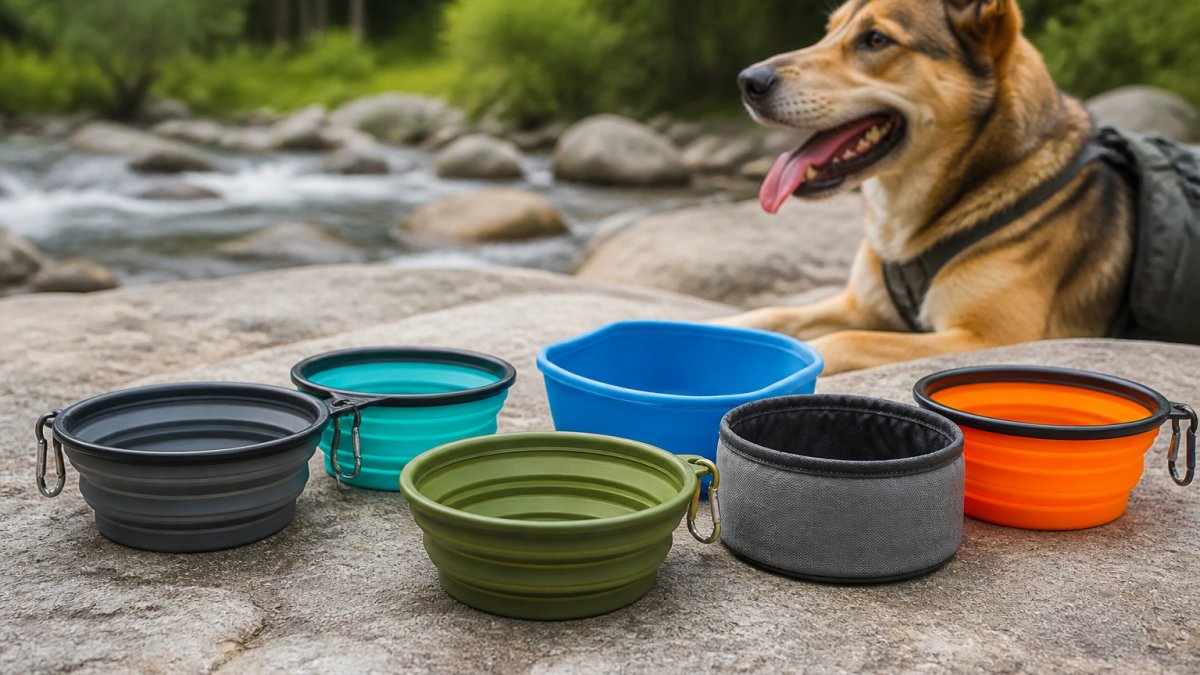
For a summer hike, heat is the real enemy, and this bowl is our pick for keeping water cooler longer. It is made from PP material infused with condensation beads, which helps hold a cool temperature on warm days. At 470ml it suits small to medium dogs, and at 365g it stays light in a pack.
For a hot-weather day hike with a small dog, this bowl is one option to consider. You can shop the Summer Cooling Pet Bowl in blue or green.
Best for: hot-weather day hikes with small to medium dogs. Skip if: you need something that packs completely flat.
2. Stainless Steel 18oz Personalized Bowl: Best for Long Trails
This 18oz stainless steel bowl has double-wall insulation, a powder-coated exterior, and is described as dishwasher-safe and resistant to rust.
At $48.33, this personalized bowl is one option to consider. Order the personalized stainless steel bowl before your next long hike.
Best for: full-day trails and dogs that need a durable, insulated bowl. Skip if: you are counting every gram in your pack.
3. Stainless Steel Double Bowl: Best for Two-Dog Households
This double bowl pairs PP and stainless steel in a dual setup. It comes in Large (37.5 x 25 x 7.5cm) and Small (29 x 18.5 x 6.2cm).
Get the stainless steel double bowl in pink, blue, or green.
Best for: households with two dogs and short-to-moderate hikes. Skip if: you are solo with one small dog.
4. Silicone Pet Food Mat: Best Spill-Proof Base for Camp
This food-grade silicone mat is non-slip and waterproof. It measures 250mm by 300mm and weighs 0.202kg.
The listing describes the mat as easy to clean and available in six colors. Add the silicone pet food mat to your camp kit.
Summer Cooling Pet Bowls for Dogs and Cats →
Best for: camp setups and dogs that knock their bowl around. Skip if: you are travelling ultralight and counting every item.
How Much Water Does a Dog Need on a Hike?
The baseline. A common practitioner range is roughly 30 to 60ml of water per kilogram of body weight per hour of activity. A 20kg dog on a two-hour hike therefore needs somewhere between 1.2 and 2.4 litres once you account for activity, and more in heat or on steep climbs. Treat the low end as a cool, flat, shaded walk and the high end as a hot, exposed climb.
Adjust for duration. Short loops under an hour rarely need more than a small bowl and a bottle. Half-day hikes are where planning pays off: build in a water break every 20 to 30 minutes rather than one big stop, and offer small amounts so the dog does not gulp and bloat. Full-day hikes need a refill plan, not just a bigger bowl.
Adjust for weather. On hot days, water demand rises and so does the risk of overheating. A cooling bowl helps keep water palatable, but the bigger lever is frequency: more stops, smaller drinks. On cold days, dogs often drink less than they should, so offer water at every break even if the dog seems uninterested. Never let a dog eat snow as a substitute for water.
Adjust for terrain. Steep climbs and loose scree burn more energy and raise water needs. Rocky ground also makes bowl stability matter: a bowl that tips on a slope wastes water you carried for kilometres. Pair a lightweight bowl with a non-slip mat on uneven ground.
Adjust for dog size and shape. Small dogs need less total volume but more frequent offers. Large dogs need a bowl that holds enough for a real drink, not a splash. Flat-faced dogs drink more slowly and messily, so a wider, shallower bowl or an inclined design helps them get water without dunking their whole face. Fast drinkers benefit from a bowl with a slower fill or a bottle-and-bowl combo so they do not inhale water.
Plan bowl capacity against bottle supply. A 470ml bowl is a serving vessel, not a reservoir. Match bowl capacity to one drinking session, and carry bottles for the total trip. A dog water bottle with a built-in bowl makes quick stops easy; pairing it with a portable bowl gives you a backup and a way to share water without backwashing into your bottle.
Best Collapsible Dog Bowls for Hiking: What to Know
Test them the way a trail tests them. A bowl that works on a kitchen floor can fail on a hike. Before you trust a bowl in your pack, run it through four repeatable checks:
Durability over time. The wear points on a collapsible bowl are the seam, the hinge, and the clip. Silicone can develop small tears at the fold line after repeated folding and washing; fabric can fray at the rim; plastic clips can crack in cold weather. A bowl that still holds water after a season of folding and washing is worth the weight. Check the seam after every few trips, and retire any bowl that weeps.
Cleaning and water safety on the trail. Residue and odor are the practical downsides of silicone and fabric. Rinse the bowl after each use, shake it out, and let it dry fully before folding it away; folding a wet bowl traps moisture and odor. On multi-day trips, a small bottle of water and a quick scrub is usually enough, but do not share a bowl between dogs without rinsing if one is showing signs of illness. Stainless steel is the easiest to keep clean and the least likely to retain odor.
Match the bowl to the hike. A short loop with a small dog suits a lightweight collapsible bowl. A long, hot climb with a big dog favors a larger insulated or cooling bowl, with a mat underneath for stability. Buy for the conditions you actually hike in, not the ones you imagine.
Frequently Asked Questions
Are collapsible dog bowls good for hiking?
Collapsible silicone bowls are popular for hiking because they pack flat and weigh little, but they can tip on uneven ground and offer no insulation. For long or hot hikes, a rigid bowl with a weighted base or a dog water bottle with an attached bowl tends to be more reliable. Match the bowl to trail length, dog size, and how much water you plan to carry.
How much water should I bring for my dog on a hike?
A practical starting point is roughly 0.5 to 1 milliliter of water per kilogram of body weight per hour of activity, then adjust for heat, humidity, and the dog's coat. A 20 kg dog on a two-hour summer hike may need around 0.5 to 1 liter beyond what it drinks at home. Bring extra and offer water every 15 to 20 minutes rather than waiting for signs of thirst.
Are dog water bottles with attached bowls better than collapsible bowls?
A dog water bottle with bowl is convenient because the water and drinking surface travel together, which reduces spill risk and saves space. Collapsible bowls are lighter and can double as food bowls at camp. Many hikers carry both: a bottle with an integrated bowl for the trail and a collapsible or stainless bowl for meals at the trailhead or campsite.
How do I clean a portable dog water bowl on the trail?
Rinse the bowl with clean water after each use and let it air dry. Silicone and stainless steel bowls are the easiest to wipe down; food-grade silicone and dishwasher-safe stainless can be fully washed at home. On multi-day trips, carry a small cloth and a bit of pet-safe soap, and avoid letting water sit in the bowl between stops, since warm standing water encourages bacteria.
What should I look for in a portable water bowl for hiking with my dog?
Prioritize leak resistance, a stable base for uneven ground, and capacity matched to your dog's size and hike length. Food-grade silicone, BPA-free plastic, and stainless steel are the safest material choices. Check the weight and whether the bowl packs flat or clips to a bag. A 470 ml bowl suits small to medium dogs on shorter hikes, while larger dogs on long trails need closer to 1 liter.
The trail is no place to run out of water or wrestle a tipping bowl. Bentley's Bark curates gear that solves real problems, from cooling bowls for hot days to insulated stainless options for long routes, all with complimentary shipping on every order. Browse the collection and get your dog trail-ready with bowls built to last.