 How-to
Understanding Pet Food Safety Standards in Canada
Quick Summary
Pet food in Canada is regulated mainly by the Canadian Food Inspection Agency, but oversight is lighter than for human food. Shared federal responsibility, required labelling, and voluntary standards together shape pet food safety in Canada. Checking labels, manufacturer details and recall notices helps pet owners make safer choices.
- The Canadian Food Inspection Agency is the main federal regulator for pet food.
- Pet food faces less comprehensive oversight than food made for people.
- Ingredients must be listed by weight, heaviest first, on the package.
- Match your package's lot code and best-before date against the recall notice.
- AAFCO standards are a United States voluntary benchmark, not Canadian law.
Table of Contents
- Why Pet Food Oversight Is Lighter Than Human Food Rules
- Which Federal Bodies Oversee Pet Food and What Each Does
- Pet Food Labeling Requirements: What Must Appear on the Package
- AAFCO Pet Food Standards and How They Compare With Canadian Rules
- Step-by-Step: How to Check a Pet Food or Treat Before You Buy
- Pet Food Recalls in Canada and What to Do With Affected Products
- Reporting a Suspected Pet Food Illness and Choosing Your Next Treat
- Frequently Asked Questions
How Pet Food Is Regulated in Canada
Pet food in Canada is regulated, but far less tightly than food for people. Most pet owners assume a single rulebook covers everything in the bowl. It does not. The rules are spread across federal agencies, and they leave a lot of room for voluntary standards and company practices.
If you want to know what a bag of kibble or a box of treats has to meet before it reaches a store shelf, start with federal oversight.
Why Pet Food Oversight Is Lighter Than Human Food Rules
Food for people is held to a demanding, comprehensive framework. Pet food is not.
This matters in practice. Pet food and treats are not held to the same testing expectations as human food.
- Human food faces the most detailed federal requirements
- Livestock feed has its own set of rules
- Pet food sits in between, with less direct oversight
- Voluntary standards fill some of the gap
Which Federal Bodies Oversee Pet Food and What Each Does
Several federal bodies share a role in pet food safety. No single agency controls every part of a product's life, from ingredients to the store shelf. Knowing who does what helps you know where to look when something goes wrong.
- Canadian Food Inspection Agency (CFIA): The main regulator for pet food, including inspection, labelling oversight and recalls.
- Public Health Agency of Canada: Issues public guidance on risks such as germs in pet food and treats.
- Health Canada: Sets broader product safety rules that can touch on pet products.
- Importers and manufacturers: Carry primary responsibility for making sure products meet requirements before sale.
Responsibility is shared, so a product can pass one check and still raise questions at another step. This is one reason to read labels closely and watch for recall notices.
Pet Food Labeling Requirements: What Must Appear on the Package
Labels are the main way a buyer learns what is in a bag, and they are also where legal requirements and marketing language get mixed together. Some information is required under federal rules. Other claims are added by the company and are not checked the same way. Knowing which is which is the core label-reading skill.
Required information generally includes the product name, the net quantity, and the name and address of the manufacturer or distributor responsible for the product. The ingredient list must appear on the package, with ingredients listed by weight, heaviest first. A guaranteed analysis panel typically lists minimum or maximum levels for crude protein, fat, fiber and moisture. A statement of nutritional adequacy, where present, tells you which life stage the food is intended for.
Reading the Panel in Order
A practical walkthrough helps more than a list. Start with the product name and net quantity to confirm what the package actually contains. Move to the ingredient list and read the first five to eight items, since those make up most of the formula by weight. Then check the guaranteed analysis for the protein, fat and fiber levels and compare them with the life-stage statement. Finally, find the responsible party details so you know who stands behind the product.
- Product name and net quantity: confirms identity and amount
- Ingredient list: ordered by weight, heaviest first
- Guaranteed analysis: minimums and maximums for key nutrients
- Nutritional adequacy statement: ties the food to a life stage
- Responsible party: manufacturer or distributor name and address
Required Information Versus Voluntary Claims
Many packages carry eye-catching claims such as "natural," "premium" or "vet recommended." These are often voluntary marketing claims, not legal requirements. A claim on the front of the bag does not prove the product meets a higher standard.
- Required: product name, net quantity, ingredient list, guaranteed analysis, responsible party details
- Voluntary: "grain-free," "human-grade," "ethically sourced," "vet formulated"
- Test: if a claim is not on the required list, check whether the company backs it with evidence
Watch out: a "complete and balanced" statement tells you the food is meant to meet a nutrient profile for a stated life stage, but it is not a guarantee of quality or of how the food was made.
For more detail on reading the back panel and comparing bags, see our guide to How to Read Pet Food Labels for Quality Ingredients.
AAFCO Pet Food Standards and How They Compare With Canadian Rules
Many pet food labels in Canada refer to standards set by the Association of American Feed Control Officials (AAFCO). AAFCO is a United States organization. Its nutrient profiles are not Canadian law.
AAFCO profiles give a useful benchmark for whether a food is nutritionally adequate. When you see an AAFCO statement, read it as a voluntary standard that the company has chosen to meet, not as a Canadian regulatory approval.
Step-by-Step: How to Check a Pet Food or Treat Before You Buy
A quick check before you buy can catch problems early. Follow these steps each time you try a new product.
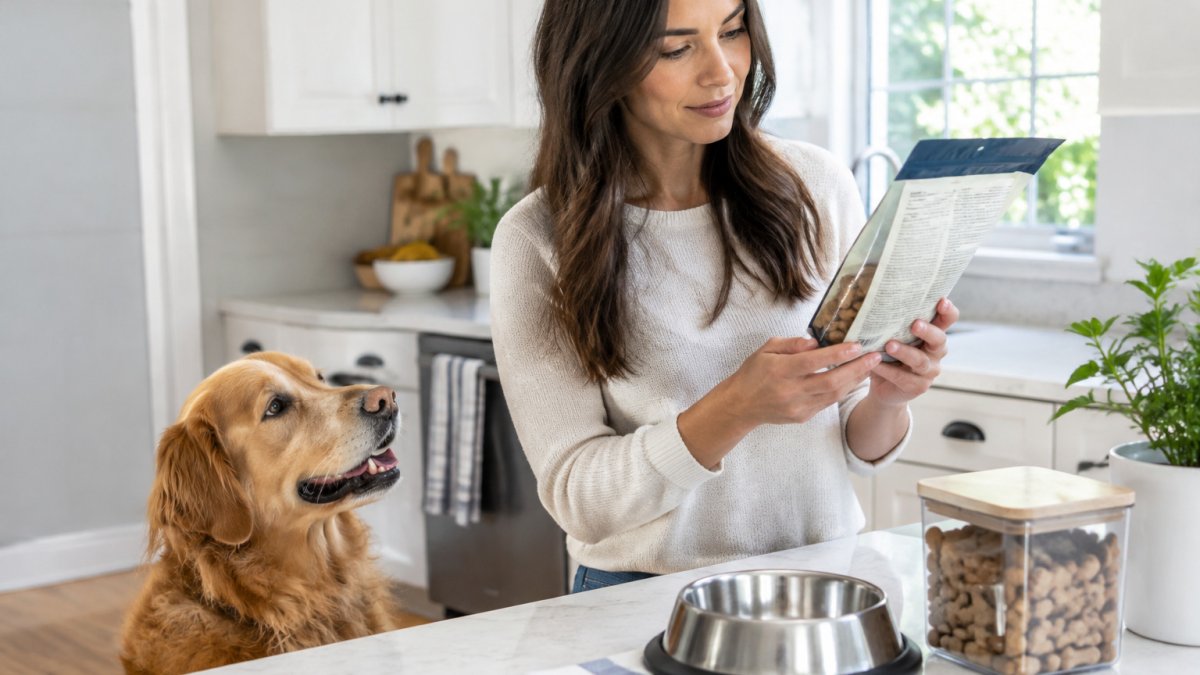
- Read the product name and net weight. Make sure the package says what it contains.
- Find the ingredient list. Look for named protein sources, such as "beef" or "chicken," rather than vague terms.
- Look for a complete and balanced statement. It should say the food is meant for a specific life stage.
- Check for a responsible company. Confirm the manufacturer or distributor is named on the package.
- Store and handle it safely. Keep treats sealed and wash your hands after handling pet food.
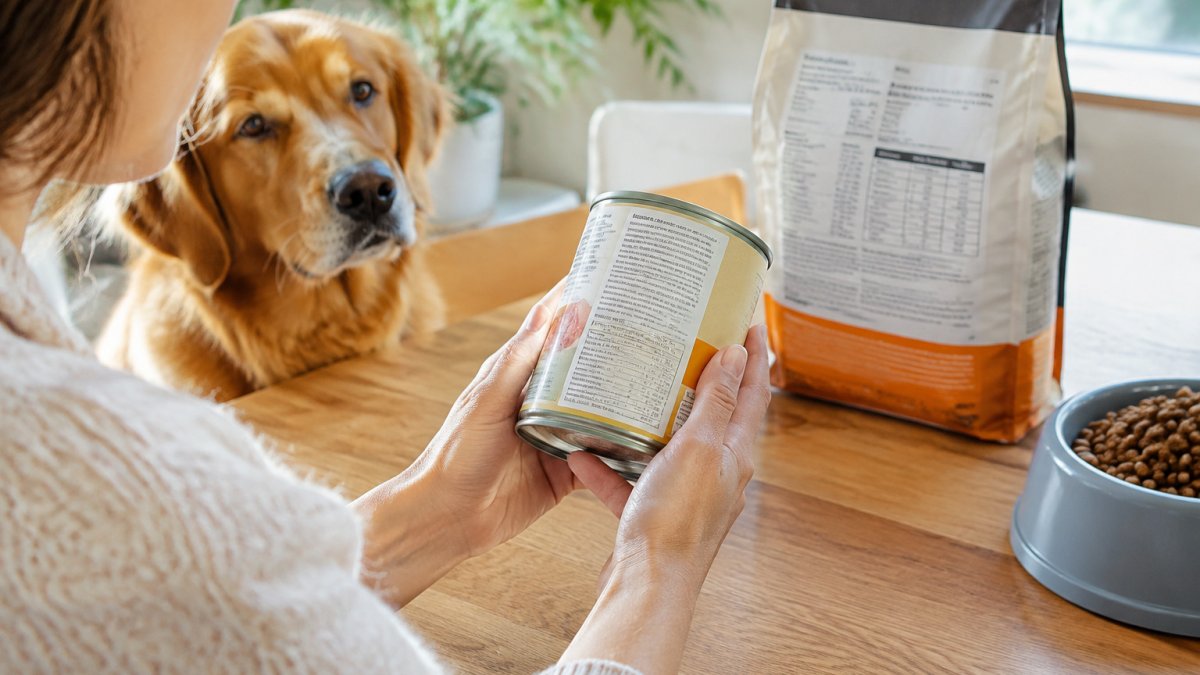
!A pet owner reading the ingredient panel on a bag of dog treats in a bright kitchen while a golden retriever waits nearby
Our raw food guide explains how to check complete and balanced labelling and handle raw products safely. If you prefer grain-free options, this selection guide covers protein sources and switching foods.
Use this quick reference to run through each check before you buy a new product.
| Step | What to do | Note |
|---|---|---|
| 1. Read the product name and net weight | Confirm what the package contains | Makes sure the package says what it holds |
| 2. Find the ingredient list | Look for named protein sources | Prefer "beef" or "chicken" over vague terms |
| 3. Look for a complete and balanced statement | Check it names a specific life stage | Shows the food is meant for that stage |
| 4. Check for a responsible company | Confirm a manufacturer or distributor is named | Confirms who stands behind the product |
| 5. Store and handle it safely | Keep treats sealed; wash hands after handling | Protects against contamination |
Pet Food Recalls in Canada and What to Do With Affected Products
Recalls happen when a product may be unsafe or does not meet labeling rules. A recall notice usually names the product, the reason for the recall, the lot codes or best-before dates affected, and what the buyer should do.
How to Check Whether Your Product Is Affected
A recall is specific to certain lots, not to every bag of that brand. The practical step is to match the notice against your package.
- Find the lot code and best-before date. These are usually printed on the back or bottom of the bag or on the lid of a can.
- Compare them with the notice. The notice lists the affected codes and dates; a product outside those ranges is generally not part of that recall.
- Check the product name and size. Recalls often cover only certain package sizes or formulations.
- Keep the package. Do not throw it away until you know whether you need it for a return or a report.
What to Do With an Affected Product
If a product you own is recalled:
- Stop feeding it immediately
- Set it aside where pets and children cannot reach it
- Keep the package and note the lot code
- Wash bowls, scoops and surfaces that touched the food
- Follow the notice's instructions on return, refund or disposal
- Contact your veterinarian if your pet shows signs of illness
Watch out: do not assume a recall applies only to one flavor or size. Read the notice carefully, because a single recall can cover several products made on the same line.
Why Recalls Are a Traceability Story
A recall works because the company and the regulator can trace a problem back to a specific lot. Lot codes are the link between a bag on your shelf and the production run it came from. When a contamination issue is investigated, records of ingredients, production dates and distribution help narrow the affected product. That is why keeping the package and noting the lot code matters: it is the information investigators and the company need to act.
Reporting a Suspected Pet Food Illness and Choosing Your Next Treat
If you think a food or treat made your pet sick, act quickly. Save the package, note the lot number, and write down when the symptoms began. Then contact your veterinarian.
When you choose your next product, focus on the basics: a clear ingredient list, a named manufacturer, and a complete and balanced statement that fits your pet's life stage. Treat marketing claims as a starting point, not proof.
Frequently Asked Questions
Is pet food regulated in Canada? Yes, but pet food has lighter oversight than food for people. The Canadian Food Inspection Agency regulates it at the federal level, with less comprehensive rules than human food.
Who should I contact about a pet food safety concern? Contact your veterinarian first if your pet is ill. You can also report the concern to the Canadian Food Inspection Agency.
Are AAFCO standards required in Canada? No. AAFCO is a United States organization. Its profiles are a voluntary reference, not Canadian law.
What should I do with a recalled product? Stop feeding it, check the lot number against the recall notice, and keep the package until you know what to do with it.
Do "natural" or "premium" claims mean the food is safer? Not necessarily. These are often voluntary marketing claims, so check the ingredient list and manufacturer details instead.
Frequently Asked Questions
Who regulates pet food safety in Canada?
Checking official government sources for current guidance and recall notices is a practical first step.
How can I find out if a pet food has been recalled?
Check official recall notices, which list affected products, brands, lot codes and best-before dates. Check your pet food packaging for lot codes before you feed it. If a product you bought is affected, stop feeding it, keep the packaging, and contact the retailer or manufacturer about a refund.
What should I do if my pet becomes ill after eating a treat?
Contact your veterinarian promptly, especially if your pet has vomiting, diarrhea, lethargy or loss of appetite. Keep the product packaging, including the lot code and best-before date, and stop feeding it until you know the cause.