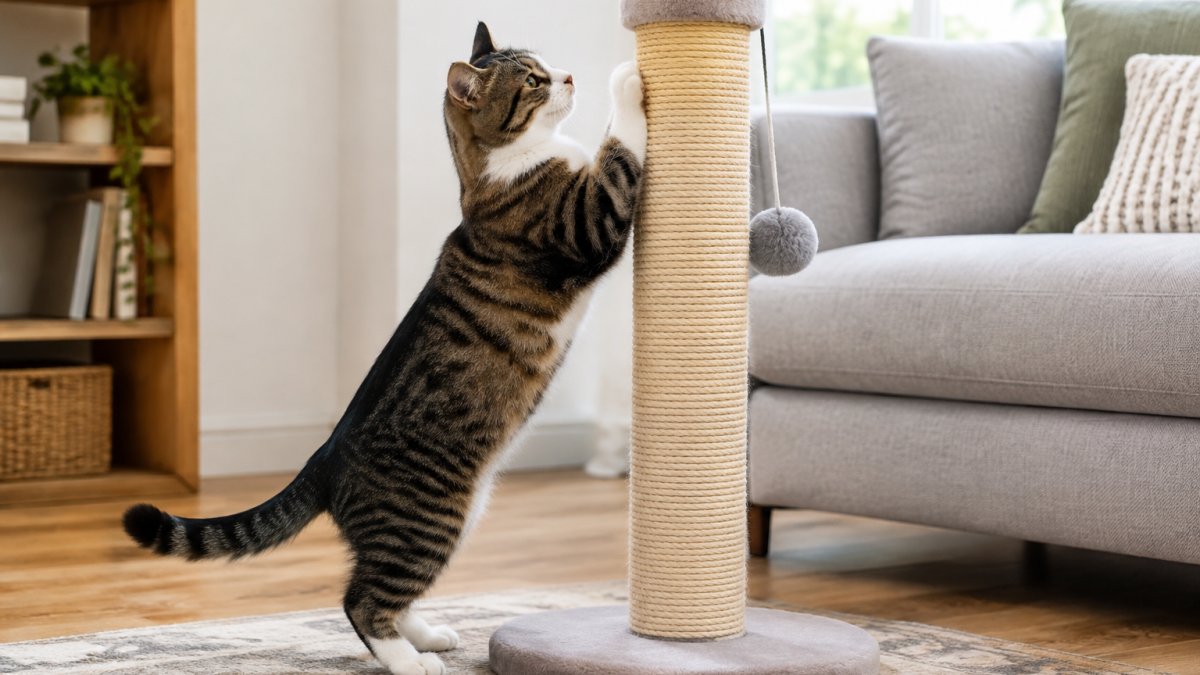
 How-to
7 Benefits of a Cat Scratching Post for Furniture Protection
Last Updated: November 20, 2026
Quick Summary
A cat scratching post protects furniture by redirecting your cat's natural urge to shed claws, stretch, and mark territory onto a safe surface instead of your couch. Place a post directly beside each damaged spot, reward every correct scratch, and the furniture damage can drop.
- Spend five to seven days noting exactly where your cat scratches before buying anything.
- Place a post touching or almost touching each damaged area, not across the room.
- Reward correct scratches within a second or two with treats or calm praise.
- Choose at least 28 inches of height for an average adult cat, taller for large breeds.
- Multi-cat homes need one post per cat plus one extra, placed in different rooms.
Table of Contents
- Why Cats Scratch and How a Scratching Post Protects Your Furniture
- How to Stop Cats From Scratching Furniture: A Step-by-Step Protection Plan
- Where to Place a Cat Scratching Post for Maximum Use
- How to Get a Cat to Use a Scratching Post: Training and Redirection
- What Makes the Best Scratching Post for Cats? Materials, Height, and Stability
- Troubleshooting When Your Cat Ignores the Post
- Multi-Cat Households and Long-Term Post Maintenance
- Choosing the Right Scratching Post at Bentley's Bark
- Frequently Asked Questions
Why Cats Scratch and How a Scratching Post Protects Your Furniture
Claw marks on furniture are one of the most common frustrations for cat parents. The couch gets shredded, and the cat looks innocent.
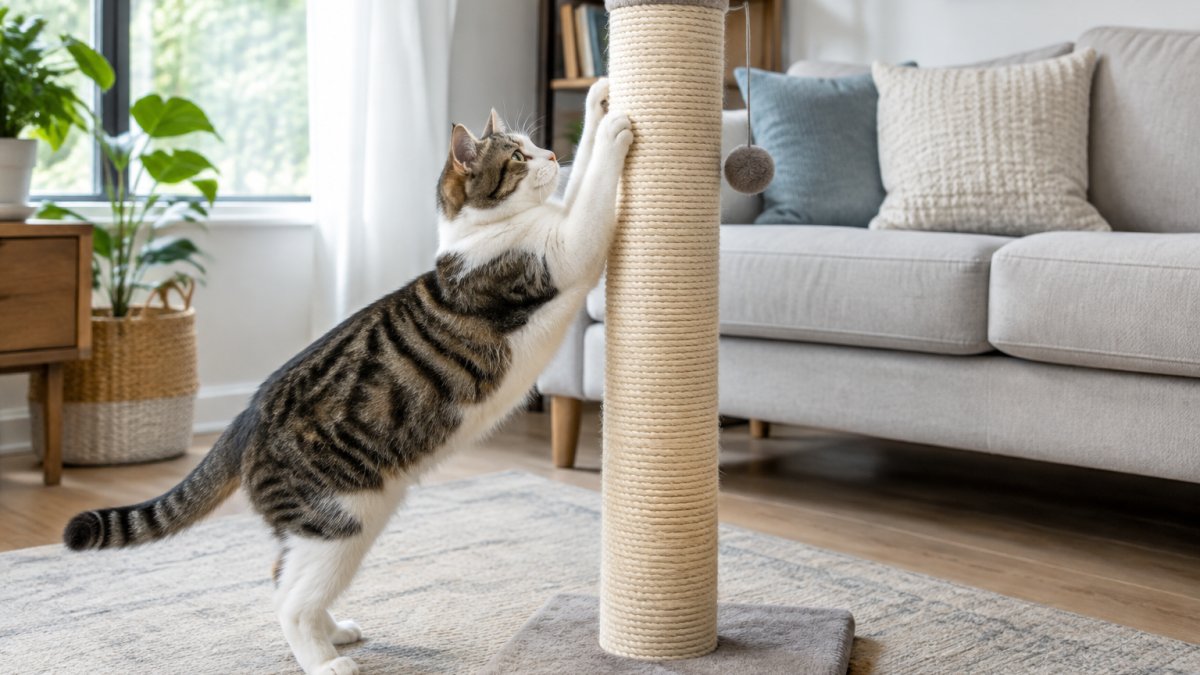
Here's the good news. Scratching is not a behavior problem. It's a need. Give your cat a proper outlet and the furniture damage can drop.
The Natural Instincts Behind Scratching
Scratching is hardwired. Cats scratch to shed old claw layers, stretch tight muscles, and mark territory with scent from glands in their paws. A cat scratching post is the simplest way to meet all three needs indoors, in one safe spot.
A good post lets your cat do what instinct demands without wrecking your upholstery. That's the whole point of the benefits of using a cat scratching post for furniture protection: you redirect the need, not the cat.
What Happens Without an Appropriate Outlet
When there's no appropriate scratching outlet, cats find one. Corners of couches and the edges of walls top the list.
The damage goes beyond looks. Upholstery tears, wood splinters, and repairs cost real money. The cat isn't being naughty. It's solving a problem the only way it knows.
How to Stop Cats From Scratching Furniture: A Step-by-Step Protection Plan
Learning how to stop cats from scratching furniture starts with redirection, not punishment. The sequence below follows a practical approach, and the order matters: you protect the furniture first, build the new habit second, and only then remove the temporary barriers. Rushing the last step is a common reason a plan fails.
Plan on several weeks. Cats are habit-driven, and a scratching routine that has been reinforced for months takes time to change.
Step 1: Map the Damage Before You Buy Anything
Spend five to seven days noting exactly where your cat scratches. Most cats scratch right after waking, when they enter a room, and when they want attention, so watch those moments specifically.
Look for frayed fabric, loose threads, claw snags, and compressed pile on couch arms and corners. Photograph each spot to create a baseline you can compare against in two weeks.
Step 2: Place a Scratching Surface Beside Every Hot Spot
Put a post or scratcher directly next to each damaged area, touching or almost touching the furniture.
Match the orientation to what you observed. A corner cat scratcher and protector is the practical choice for the sofa corner that takes the most abuse.
Watch out: a post that wobbles will be avoided no matter how good the placement is, so tighten the base or brace it against a wall before you judge whether the cat likes it.
Step 3: Add a Humane Barrier to the Furniture
While the habit shifts, make the furniture itself less rewarding. Double-sided tape, a fitted slipcover, or a tightly tucked throw over the couch arm all work by making the surface feel wrong under the claws.
Use barriers only on the specific hot spots, not the whole room. You are buying time, not locking the cat out of its home. Never use physical punishment, loud startling, or harsh sprays; they damage trust and commonly make scratching worse.
Step 4: Reward Every Correct Scratch Immediately
Reinforcement has to land within a second or two to connect. Keep small training treats in the rooms where the posts are, and praise calmly the moment claws hit the post.
Pair this with a short play session along the post each day so the cat reaches up and stretches on it. A sisal scratching ball toy near the couch keeps claws busy between formal sessions.
Step 5: Track Progress, Then Remove Deterrents Gradually
Check your photo baseline at the two-week mark. If the post is showing wear and the furniture is not, the plan is working.
Remove deterrents one spot at a time, starting with the area where the post gets the most use. Leave the barrier on the hardest spot for another week or two. If scratching returns to a spot after you remove the tape, put the barrier back and add or reposition a scratcher there rather than starting over.
Step 6: Adjust Before You Give Up
If the cat is still choosing furniture after two weeks, change one variable at a time: move the post closer, switch the texture, increase the height, or add a second surface. Give each change at least a week before judging it. Placement or stability problems are often the cause at this stage, rather than a stubborn cat.
Where to Place a Cat Scratching Post for Maximum Use
Place a cat scratching post where your cat already scratches, not in a quiet corner out of sight. Cats scratch in social spaces, so a post beside the couch beats one hidden in a basement.
Here's where posts tend to work best:
- Right next to the damaged corner or couch arm
- Near where your cat sleeps or wakes up
- In a main room where the family spends time
- Beside a window or favorite resting spot
A post in the wrong spot gets ignored. A post in the right spot gets used daily.
How to Get a Cat to Use a Scratching Post: Training and Redirection
The fastest way to get a cat to use a scratching post is positive reinforcement. Every time your cat scratches the post, reward it right away.
Follow these steps:
- Lure with play. Dangle a toy along the post so your cat reaches up.
- Reward correct scratches. Offer a small training treat or calm praise.
- Redirect gently. If your cat heads for the couch, pick it up and place it on the post.
- Add a scratching toy. A sisal scratching ball toy keeps claws busy between sessions.
- Stay consistent. Repeat the same response every time.
Never scold. Praise works faster and builds trust.
What Makes the Best Scratching Post for Cats? Materials, Height, and Stability
The best scratching post for cats matches your cat's size, scratching style, and preferred texture. Height, stability, and material matter more than looks, but the single biggest predictor of whether a post gets used is whether its orientation matches how your cat already scratches.
Match the Post to the Scratching Style You Observed
Before you shop, watch how your cat uses its claws. There are three common patterns, and each points to a different post type.
- Vertical stretchers reach up and pull down, often on couch arms, door frames, and chair backs. They need a tall vertical post with a stable base so they can extend fully without tipping it.
- Horizontal rakers scratch along the floor, often on carpet edges or the low front of upholstery. They do best with a horizontal scratcher, a flat cardboard pad, or a low inclined surface.
- Angled or diagonal scratchers dig in at roughly 45 degrees, often on the corner of a sofa. An inclined wall scratcher or a corner unit fits this pattern best.
Offer one post in the orientation you actually see, not the one that looks best in the room. If your cat uses more than one pattern, provide one surface for each.
Material Trade-Offs
| Material | Pros | Cons | Best For |
|---|---|---|---|
| Sisal rope | Durable, satisfying resistance | Rougher on paws | Strong vertical scratchers |
| Felt carpet | Soft, dense, holds up well | Can snag over time | Cats who like fabric |
| Corrugated cardboard | Cheap, cats often love it | Wears out faster | Trial setups and horizontal rakers |
| Faux fur base | Looks good, comfortable | Not for scratching | Stability and style |
Cats have texture preferences, so offer two options at first and watch which one gets used. Lean into the winner rather than buying a third material.
Height and Stability
A good post lets your cat stretch fully with front paws extended overhead. Look for at least 28 inches of height for an average adult cat, and taller for a large breed. The base should be wide enough that the post does not rock when the cat pulls.
Stability is not cosmetic. A tall faux fur post gives a stable vertical option, while a vertical post with a corrugated paper house adds a hideout cats enjoy and encourages repeat visits.
Placement Completes the Selection
Even the right post fails in the wrong spot. Put it where the cat already scratches, near where it sleeps or wakes, and in a room the family uses. A post hidden in a basement gets ignored; a post beside the couch gets used daily.
Troubleshooting When Your Cat Ignores the Post
If your cat ignores the post, the cause is usually placement, stability, or texture. Fix those three and most cats come around.
Try these checks:
- Move it closer to the scratched furniture
- Wobbling? Tighten the base or place it against a wall
- Wrong texture? Add a second post in a different material
- Too short? Swap for a taller post so your cat can stretch
- New post? Rub it with a little catnip or play near it daily
Give any change at least two weeks before judging it.
Multi-Cat Households and Long-Term Post Maintenance
Multi-cat homes need more than one post. A common rule is one post per cat, plus one extra, placed in different rooms. This reduces competition and territory marking conflicts.
Long-term care is simple:
- Vacuum the post weekly to remove loose fibers
- Trim frayed rope or carpet before it unravels
- Replace the post once the scratching surface is worn through
- Check the base for wobble every few months
A worn post stops satisfying the urge, and cats go back to the couch.
Choosing the Right Scratching Post at Bentley's Bark
Choosing the right post comes down to your cat's scratching style and your home's layout.
Our curated selection includes the Noba Corner Cat Scratcher and Protector, the Inclined Wall & Floor Cat Scratcher, and the Noba Classic 28" Scratching Post. Every order ships free.
Start with one post near the damage, add a second in another room, and reward every correct scratch.
Your furniture doesn't have to pay for your cat's instincts.
Frequently Asked Questions
Can a scratching post stop a cat from scratching furniture?
A scratching post can greatly reduce furniture damage, but it works best when placed correctly. Providing an appealing post near the scratched furniture gives your cat a better outlet. Combine the post with safe deterrents and positive reinforcement for the best results.
Why do cats scratch furniture even when they have a scratching post?
Cats may ignore a post if it is unstable, too short, or in the wrong location. Placement matters, and offering an alternative right next to the furniture your cat already scratches is a common recommendation. Other common reasons include an unpleasant texture (such as slippery carpet), a post that wobbles, or a lack of horizontal scratching options. Try adding a second post with a different texture or orientation.
Where should I put a cat scratching post?
Place the post directly beside the furniture your cat already scratches. Cats prefer to scratch near their favorite resting spots and social areas, so a post tucked in a corner or hidden in a basement often goes unused. For multi-cat homes, provide one post per cat plus one extra, spread across different rooms. Avoid placing posts next to noisy appliances or in high-traffic walkways.
What material do cats prefer for scratching posts?
Most cats prefer a rough, durable texture such as sisal rope, felt carpet, or cardboard. Carpet-covered posts can be less appealing if the texture is too soft or slippery. The Noba Classic 28-inch Scratching Post uses durable Fique rope, while the Noba Corner Cat Scratcher features dense felt carpet. Offer two different textures to learn your cat's preference, and replace the post when it becomes heavily worn.