 how-to
Tough Chew Toys for Dental Health: Benefits & Safety
Table of Contents
- How Tough Chew Toys Support Dental Health
- Safe Chew Toys for Dogs: Material and Hardness Matters
- Dog Chew Toys That Clean Teeth: Design and Texture
- Tough Chew Toys for Aggressive Chewers: Choosing the Right Fit
- Match toy size to your dog to prevent choking hazards and ensure cleaning effectiveness:
- Dog Tooth Brushing and Chew Toys: Complementary, Not Substitutes
- Avoiding Dental Damage: What to Watch For
- Building a Safe Chewing Routine
- Frequently Asked Questions
Last Updated: October 10, 2026
How Tough Chew Toys Support Dental Health
Tough chew toys dental health by reducing plaque and tartar buildup while promoting fresher breath and healthier gums. At Bentley's Bark, we've curated durable chew toys designed to support your dog's oral health and provide safe, engaging play.
When dogs chew, friction from the toy's texture scrapes away soft plaque before it hardens into tartar. This works best with textured surfaces and appropriate hardness levels.
Plaque and tartar reduction through chewing
Plaque forms on your dog's teeth within hours of eating and hardens into tartar within days. Only professional cleaning removes tartar.
Chewing interrupts this cycle through friction that breaks down early plaque. Toys with ridges, bumps, and varied textures reach different tooth surfaces and gum lines.
This doesn't replace veterinary dental care. Think of tough chew toys dental health as a supplement to your regular routine, not a substitute for professional cleanings or brushing.
Fresh breath and gum stimulation
Bad breath signals plaque and bacteria accumulation. Reducing plaque through chewing naturally improves breath.
Chewing stimulates blood flow to gums, strengthening tissue and preventing gum disease, one of the most common health issues in dogs.
Safe Chew Toys for Dogs: Material and Hardness Matters
The difference between safe and unsafe toys depends on material, hardness level, and how they interact with your dog's bite force.
How material affects dental safety and cleaning
Understanding material differences helps you avoid toys that look durable but pose hidden risks.
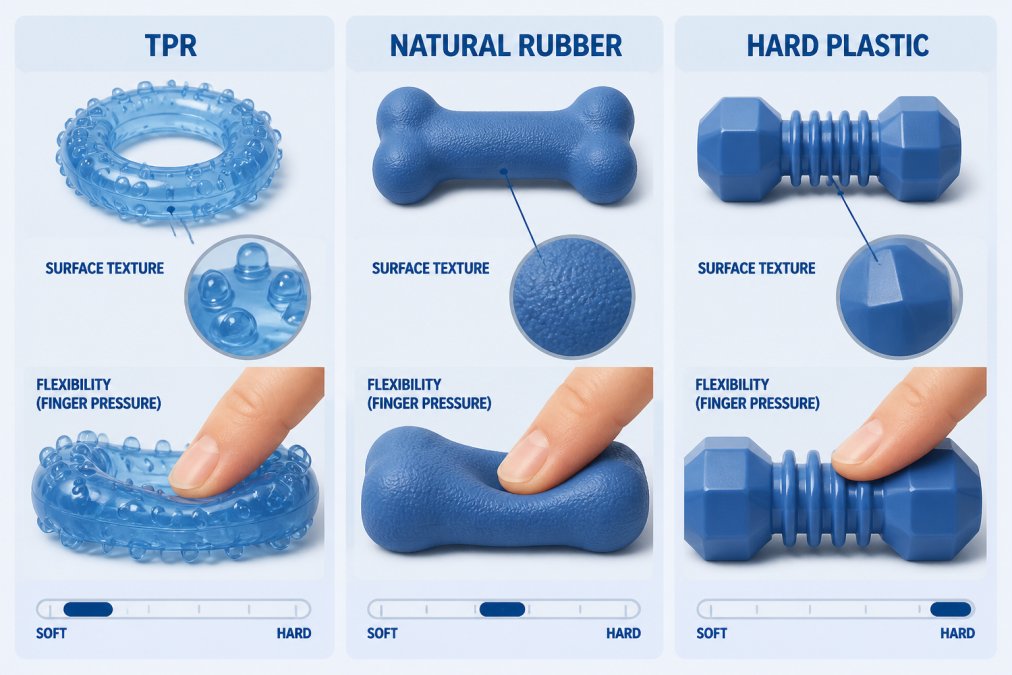
TPR (thermoplastic rubber) and silicone: These materials flex under pressure instead of shattering, preventing fractures.
Natural rubber: Rubber molar sticks develop small visible surface cracks over time, signaling replacement before danger. Rubber is also easier to clean and sanitize.
Hard plastics and nylon: These resist wear but pose fracture risk. A dog's tooth breaks before the toy does. Hard plastics splinter and cut gums.
Rope and woven toys: Safe for teeth but shed fibres that accumulate in the digestive tract. Reserve for supervised play only.
Testing toy hardness at home
Test hardness before giving any toy to your dog:
Thumbnail test: Press your nail into the surface. A permanent indent means it's safe; no indent means it's too hard.
Bend test: Flex the toy with both hands. If it bends without cracking, it's safe. If rigid, it's too hard.
Tooth test: Tap gently against your own tooth. A hollow sound means too hard; a dull sound means safe.
Matching hardness to your dog's chewing style
Hardness needs vary by chewing style.
Light to moderate chewers can use slightly firmer toys. Medium-hardness TPR toys work well.
Aggressive chewers need softer, flexible materials. A toy safe for moderate chewers may fracture under high-force pressure. If your dog tears pieces off, the toy is too soft and poses a choking risk.
Senior dogs and dogs with existing dental issues should use the softest options. Consult your veterinarian before introducing new toys if your dog has loose teeth, missing teeth, or a fracture history.
Dog Chew Toys That Clean Teeth: Design and Texture
Effective dental chew toys combine textured surfaces and appropriate size.
Textured surfaces and their role in cleaning
Ridges, bumps, and grooves create friction to scrape plaque away.
Look for toys with:
- Deep grooves that reach between teeth
- Bumpy or ridged surfaces across the entire toy
- Varied textures (some areas firmer, some softer)
The Molar Stick Dog Toothbrush and Chew Toy features multiple textured zones. At 238mm long and 96mm wide, it reaches back molars where plaque accumulates fastest.
Molar sticks and interactive designs
Molar sticks target back teeth where plaque buildup is most common. Their longer, narrower shape lets dogs grip and work the textured surface against molars.
Some molar sticks include treat-dispensing designs that increase engagement and chewing consistency.
The Dog Dental Stick - TPR Molar Chew Toy for Puppies weighs just 50 grams, making it ideal for smaller dogs and puppies. Its bone shape adds visual appeal while the textured surface delivers the cleaning benefits.
Tough Chew Toys for Aggressive Chewers: Choosing the Right Fit
Aggressive chewers need toys that won't shred, splinter, or break. Size and breed matter significantly.
Size and breed considerations
Match toy size to your dog to prevent choking hazards and ensure cleaning effectiveness:
Aggressive chewers need TPR and rubber materials that compress under pressure instead of cracking.
Recognizing when a toy needs replacement
Check toys weekly for visible tears, splinters, loss of texture, or discoloration. Replace immediately; worn toys lose cleaning effectiveness and become choking hazards.
Teeth Cleaning Dog Toothbrush and Molar Stick Toy →
Dog Tooth Brushing and Chew Toys: Complementary, Not Substitutes
Tough chew toys support dental health but don't replace active tooth care. Brushing 3-4 times weekly is the gold standard. Chew toys fill gaps between brushing. Chewing provides passive cleaning; brushing provides active cleaning. Both together are most effective.
Professional veterinary cleanings remain essential to remove tartar that brushing and chewing cannot. Schedule based on your vet's recommendation, typically every 1-3 years.
Avoiding Dental Damage: What to Watch For
The biggest risk is selecting toys that are too hard, leading to preventable dental injuries. Knowing what to look for prevents pain, infection, and tooth loss.
Signs of tooth fractures and gum injury
Tooth fractures range from minor surface cracks to breaks exposing the inner pulp. Severity determines urgency of care.
Visible tooth damage:
- Small surface cracks or chips: Schedule exam within 1-2 weeks.
- Large cracks through the tooth: Seek care within 24-48 hours.
- Broken tooth with visible pulp: Requires immediate care within 24 hours.
Behavioral signs after chewing:
- Reluctance to eat or chewing only on one side: This suggests pain and often indicates a fracture. Observe for 1-2 hours; if the behaviour persists, contact your veterinarian the same day.
- Excessive drooling or bleeding from the mouth: Bleeding can indicate gum injury or a fractured tooth with exposed pulp. If bleeding continues for more than a few minutes or is heavy, seek care within 24 hours.
- Swelling around the jaw or face: This suggests infection from a dental injury. This is a moderate-to-serious sign; contact your veterinarian within 24 hours.
- Pawing at the mouth repeatedly: This indicates pain or discomfort. Observe the tooth for visible damage; if you see a crack or chip, contact your veterinarian within 24-48 hours.
- Visible cracks or chips on teeth: See severity guidance above under "Visible tooth damage."
Gum injury signs:
- Red or swollen gums around one or more teeth: Minor inflammation may resolve on its own within 24-48 hours. If swelling worsens or spreads, contact your veterinarian.
- Bleeding when your dog chews: If bleeding stops quickly (within a minute), it's usually minor. If it continues or happens repeatedly, contact your veterinarian within 24 hours.
- Pus or discharge around the gum line: This indicates infection and requires veterinary care within 24 hours. Do not delay; infections can spread.
- Persistent bad breath or foul odour from the mouth: This can signal infection in a fractured tooth or gum disease. Schedule a veterinary exam within 1-2 weeks.
Immediate steps if you suspect injury
If your dog has visible tooth damage or is in obvious pain:
- Remove the chew toy immediately.
- Do not attempt to clean or examine the tooth yourself; you may cause further damage.
- Offer soft food and water; avoid hard kibble or treats.
- Contact your veterinarian or emergency clinic the same day, especially if bleeding, swelling, or severe pain is present.
If your dog shows mild signs (slight reluctance to chew, minor swelling):
- Remove the toy and switch to a softer option.
- Monitor for 24-48 hours. If signs improve, the injury was likely minor.
- If signs worsen or persist, contact your veterinarian within 1-2 days.
If you're unsure whether an injury is serious: Call your veterinarian's office and describe what you observed. They can advise whether your dog needs an exam today or if monitoring at home is appropriate. Most veterinary clinics have phone lines available during business hours for exactly this reason.
Why prevention is simpler than treatment
A fractured tooth may require extraction, root canal therapy, or other costly and invasive treatment. Extraction costs typically range from $200 to $1,000+ depending on the tooth's location and complexity. Root canal therapy can cost $1,500 to $3,000+. Beyond cost, your dog experiences pain and reduced quality of life during recovery.
Prevention is straightforward: stick with toys that pass the thumbnail test, avoid bones and antlers, and rotate toys to catch wear early. This costs far less than treating a fracture and spares your dog pain.
Materials and toys to avoid
Bones (raw and cooked): Both can splinter and fracture teeth. Cooked bones are especially brittle.
Antlers: Antler chews are extremely hard and cause fractures in a significant percentage of dogs who chew them.
Hard plastic toys: Toys marketed as "indestructible" or "for aggressive chewers" are often too hard.
Ice cubes and frozen toys: The hardness of frozen material can fracture teeth, especially in senior dogs or dogs with existing dental weakness.
Sticks and stones: Natural materials vary unpredictably in hardness and can splinter or break teeth.
Rawhide chews: These don't typically fracture teeth, but they can cause choking or intestinal blockage if swallowed in large pieces.
Building a Safe Chewing Routine
A safe routine combines the right toys with consistent supervision and strategic rotation.
Supervision and toy rotation
Always supervise your dog with new toys. Watch for signs of aggression or improper chewing that could damage teeth.
Rotate toys every few days. This prevents boredom and allows you to inspect each toy for wear before reintroducing it. A toy rotation schedule looks like this:
- Day 1-2: Toy A
- Day 3-4: Toy B
- Day 5-6: Toy C
- Day 7: Rest and inspection of all toys
This approach extends toy life and keeps your dog engaged. It also gives you regular opportunities to catch wear early.
Age and dental condition factors
Puppies have baby teeth that fall out naturally. Chew toys should be gentler for puppies to avoid damaging developing permanent teeth. Our Dog Dental Stick - TPR Molar Chew Toy for Puppies is specifically designed with puppies in mind.
Senior dogs with existing dental issues need softer options. If your older dog has loose teeth, missing teeth, or a history of dental problems, consult your vet before introducing new chew toys.
Dogs recovering from dental procedures should avoid chewing entirely until cleared by your veterinarian. This allows extraction sites or treatment areas to heal properly.
Tough chew toys play a real role in your dog's oral health routine. Start with our Teeth Cleaning Dog Toothbrush and Molar Stick Toy or Molar Stick Dog Toothbrush and Chew Toy, both are Bentley Approved for safety and effectiveness.
Frequently Asked Questions
Can tough chew toys really help clean a dog's teeth?
Tough chew toys can help reduce plaque and tartar buildup through the mechanical action of chewing and the textured surfaces that massage gums. However, they work best as part of a complete dental care routine that includes professional cleanings and regular brushing. Chewing alone cannot replace veterinary dental care, but it provides meaningful supplementary support for oral health.
What materials are safest for dog chew toys?
TPR silicone and high-quality rubber are among the safest materials for chew toys because they're durable yet flexible enough to resist tooth fractures. These materials can withstand aggressive chewing without splintering or breaking apart. Always choose toys specifically designed for dental care rather than hard plastic or bone-like materials that pose higher fracture risks.
How do I choose safe chew toys for dogs with aggressive chewing habits?
Select toys made from flexible, durable materials like TPR that won't splinter under heavy chewing. Test hardness using the thumbnail test: a safe toy should show an indent when pressed firmly with your thumbnail. Consider your dog's size and jaw strength, and supervise chewing sessions. Replace toys showing signs of wear immediately to prevent ingestion of small pieces.
Are dental chew toys a substitute for brushing a dog's teeth?
No, chew toys complement but do not replace dog tooth brushing and professional dental care. While tough chew toys help reduce plaque through mechanical action, brushing removes plaque more effectively and reaches areas toys cannot. A complete dental routine includes regular brushing, chew toys for supplementary cleaning, and veterinary dental exams to maintain your dog's oral health.