 how-to
How to Remove Pet Hair From Upholstery Effectively
Table of Contents
- Why Pet Hair Clings to Upholstery and Where It Hides
- The 6-Step Workflow to Remove Pet Hair From Upholstery
- Choosing the Best Pet Hair Remover for Upholstery
- How to Remove Dog Hair From Fabric Seats
- How to Remove Stubborn Cat Hair From Furniture
- How to Prevent Pet Hair on Furniture
- Fabric-Safe Cleaning: What to Avoid on Delicate Upholstery
- Frequently Asked Questions
Last Updated: October 8, 2026
Why Pet Hair Clings to Upholstery and Where It Hides
Pet hair sticks to upholstery because of static electricity, friction, and the way fabric fibers grip thin strands. When your dog or cat settles into a sofa cushion, loose hair works its way between the weave, and static locks it in place.
Hair hides in predictable spots. Check these first:
- Seams and stitched edges where cushions meet
- Crevices between the backrest and the seat
- Underneath removable cushion covers
Fabric texture matters too: tightly woven microfiber releases hair more easily than loose-knit linen or tweed, so the same method won't work on every couch. This guide walks through a fabric-safe workflow for most upholstery types.
The 6-Step Workflow to Remove Pet Hair From Upholstery
The most effective way to remove pet hair from upholstery is a fixed order of steps: vacuum first, loosen what's left, then lift the rest with a damp tool.
Here's the full sequence at a glance:
| Step | Action | Tool | Time |
|---|---|---|---|
| 1 | Vacuum the surface and seams | Brush attachment | 5-10 min |
| 2 | Loosen embedded hair | Rubber glove or damp glove | 3-5 min |
| 3 | Lift remaining strands | Damp sponge or microfiber cloth | 3-5 min |
| 4 | Roll the surface clean | Lint roller | 2-3 min |
| 5 | Work stubborn patches | Pumice stone (test first) | 2-5 min |
| 6 | Repeat passes as needed | Any of the above | As required |
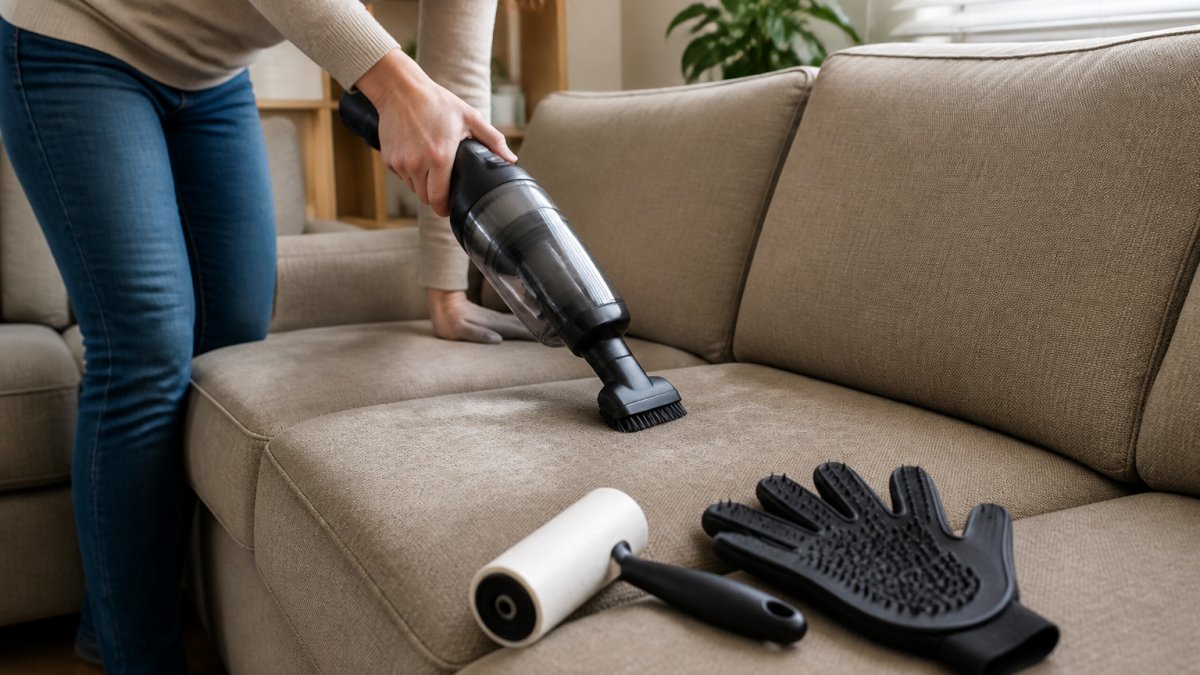
Step 1: Vacuum First With the Right Attachment
Start with a vacuum and a brush attachment, not the bare floor head. The brush lifts surface hair and pulls strands out of seams without grinding them deeper. Run it in one direction, then go over the same area in the opposite direction.
Use slow, overlapping passes. Fast strokes leave hair behind. Pay extra attention to crevices and the gap where cushions meet the frame.
Step 2: Loosen Embedded Hair With Friction
A rubber glove is the tool most people overlook. Put on a clean rubber glove and wipe the fabric in one direction; the friction gathers hair into clumps you can pick up by hand.
A damp glove works even better on stubborn hair. Lightly mist the glove, not the fabric, then wipe, the moisture grips fine cat hair that static keeps pinned to the weave.
Step 3: Lift Remaining Hair With a Damp Tool
For the last pass, use a damp sponge or microfiber cloth wrung out so it's barely wet. Wipe in one direction, rinse often, and let the fabric air dry.
Choosing the Best Pet Hair Remover for Upholstery
The best pet hair remover for upholstery depends on the fabric, how deep the hair sits, and how much effort you'll spend. No single tool wins everywhere, match the tool to the job.
| Tool | Best For | Watch Out For |
|---|---|---|
| Vacuum with brush attachment | Surface hair, seams, large areas | Can fray loose weaves |
| Rubber glove | Loosening embedded hair | Needs a firm, steady wipe |
| Damp sponge or microfiber cloth | Fine cat hair, final pass | Over-wetting delicate fabric |
| Lint roller | Quick touch-ups, pet bedding | Uses sheets fast on big jobs |
| Pumice stone | Stubborn, matted patches | Can snag delicate fabric |
Match the Tool to the Fabric
Fabric type decides which tools are safe before hair severity enters the picture. Use this as a starting filter:
- Tightly woven microfiber and synthetic blends: Almost every tool is fair game, vacuum, rubber glove, damp cloth, lint roller, and pumice stone. The dense, smooth weave releases hair easily.
- Cotton and cotton-blend canvas: Vacuum and rubber glove are safe, and a well-wrung damp cloth is fine. Skip the pumice stone, which can abrade the surface and leave a lighter patch.
- Linen and loose-knit tweed: Stick to a vacuum with a brush attachment on low suction, a rubber glove, and a lint roller. Loose weaves snag easily, so avoid pumice stones and stiff brushes.
Match the Tool to Hair Severity
Once the fabric is safe, pick the tool by buildup severity:
- Light, surface-level hair: A lint roller or a quick rubber-glove pass handles it in under a minute.
- Moderate hair woven into the surface: Vacuum with a brush attachment, then finish with a damp microfiber cloth. Two passes usually clear it.
- Heavy or matted hair: Loosen with a rubber or damp glove, vacuum, then work stubborn patches with a pumice stone only if the fabric allows. Expect two or three cycles.
Effort vs. Result
For the fastest, lowest-risk result, a vacuum with a brush attachment plus a damp microfiber cloth covers most situations.
A common mistake is reaching for a pumice stone on the wrong fabric. It works on sturdy, tightly woven upholstery.
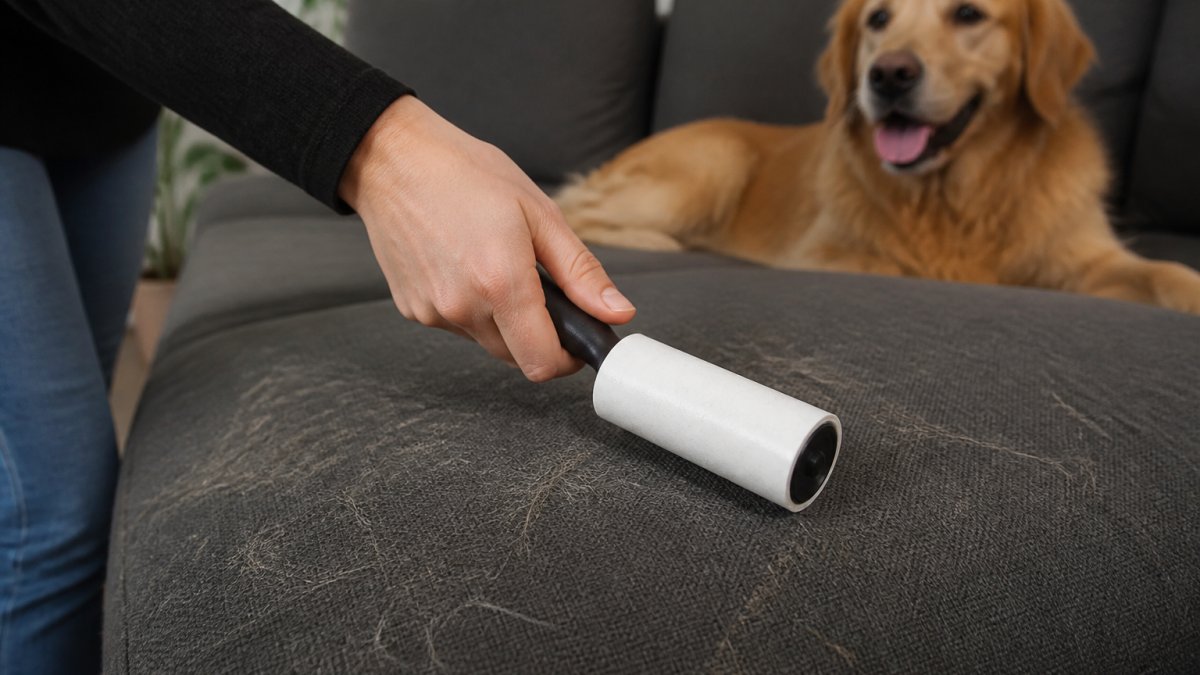
For everyday cleanup, a reusable roller is the fastest option. The Pet Fur Eliminating Roller from our shop lifts hair from sofas, bedding, and clothes without sticky sheets to replace.
How to Remove Dog Hair From Fabric Seats
Dog hair is coarser and shorter than cat hair, making it easier to lift but harder to see. To remove dog hair from fabric seats, vacuum in two directions, then finish with a damp cloth.
Short dog hair works into the weave fast. Start with a brush attachment, then follow with a rubber glove to pull out what the vacuum missed.
- Vacuum seats in both directions
- Wipe with a damp glove to gather remaining hair
- Roll the surface with a lint roller for a final pass
How to Remove Stubborn Cat Hair From Furniture
Cat hair is finer and lighter than dog hair, so static holds it against fabric long after vacuuming. To remove stubborn cat hair from furniture, use moisture and friction together.
A barely damp microfiber cloth is the most reliable tool. Wipe in one direction with light pressure, the moisture breaks the static bond and the cloth traps fine strands. Rinse often so you're not spreading hair around.
For set-in cat hair, loosen it first with a damp glove, then vacuum. Repeat passes usually beat one aggressive attempt.
How to Prevent Pet Hair on Furniture
Prevention saves more time than any cleaning method. To prevent pet hair on furniture, reduce the hair that reaches the fabric and set up a routine that keeps buildup from returning.
A Weekly Maintenance Routine
A short, repeatable routine beats occasional deep cleans. Here's a schedule for most households with one or two shedding pets:
- Daily (30 seconds): Run a lint roller or rubber glove over your pet's favorite cushion before you sit down, stopping hair from working into the weave.
- Every two to three days: Brush your pet outdoors to cut shedding at the source. Short coats need a rubber curry brush; long coats need a slicker brush or undercoat rake.
- Weekly: Vacuum high-traffic furniture with a brush attachment, focusing on seams, crevices, and the gap between cushions and frame, where hair accumulates fastest.
Fabric-Aware Prevention
How you protect furniture depends on what it's made of:
- Delicate fabrics (velvet, silk blends, loose knits): Use a washable throw or slipcover on your pet's favorite seat. It keeps hair off the fabric and can be laundered weekly.
- Sturdy fabrics (microfiber, canvas, synthetic blends): A weekly vacuum pass is usually enough, since these fabrics release hair easily.
- Leather and faux leather: Hair sits on the surface, so a damp-cloth wipe every few days keeps it clear. Watch for claw scratches that trap hair in the grooves.
Grooming That Actually Reduces Shedding
Grooming is the highest-leverage prevention step: it removes loose hair before it lands on the couch.
- Brush outdoors or in a bathroom, not over the furniture.
- Match the tool to the coat: rubber curry brushes for short coats, slicker brushes for medium coats, undercoat rakes for double-coated breeds.
- Bathe your pet every four to six weeks during heavy shedding seasons; a clean coat sheds less.
Set Up a Pet Zone
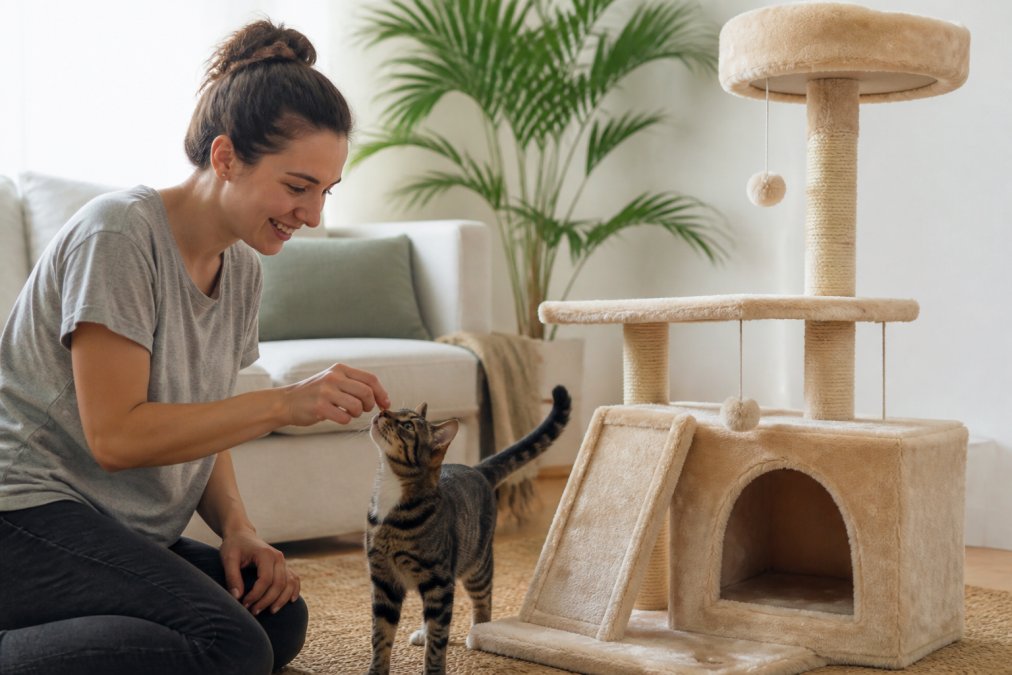
A dedicated pet bed is the simplest fix: it gives your dog or cat a spot that's theirs, keeping more hair off your sofa. Place it near the furniture your pet prefers, not in a separate room, or they'll ignore it. Wash the cover weekly with your other pet laundry.
Our curated pet furniture and beds are chosen to fit modern homes without looking like pet gear.
Keep Quick-Clean Tools Within Reach
Prevention works best when tools are already where the hair is. Keep a lint roller or reusable roller in a drawer next to the couch, and a rubber glove and spray bottle under the sink. When cleanup takes ten seconds, you'll do it daily instead of waiting for a deep clean.
Fabric-Safe Cleaning: What to Avoid on Delicate Upholstery
Delicate upholstery needs a gentler approach. Before using any tool, check the fabric care code: "W" means water-based cleaning is safe, "S" means solvent only, and "X" means vacuum only.
What to avoid:
- Soaking the fabric with a wet sponge
- Scrubbing delicate weaves with a stiff brush
- Using a pumice stone on velvet, silk, or loose knits
For specialty fabric, stick to a dry sponge, soft brush, and lint roller. Test every method on a hidden area first; if the fabric pills or spots, stop and switch tools.
Frequently Asked Questions
What is the best tool for removing pet hair from upholstery?
No single tool wins every situation. A vacuum with a brush attachment handles the bulk of loose hair on most fabrics. A reusable roller like the Pet Fur Eliminating Roller ($19.95) works well for quick touch-ups on bedding and sofas between deeper cleans. For embedded hair, a damp rubber glove or microfiber cloth lifts strands that suction misses. Match the tool to the fabric: stiff brushes can snag delicate weaves, so test an inconspicuous area first.
How do you get stubborn pet hair off a couch?
Start by vacuuming the entire surface in one direction with a brush attachment. Then put on a damp rubber glove and wipe in short strokes to create friction that loosens embedded hair. Follow with a damp sponge or microfiber cloth to collect what's left. Work in sections and repeat passes over seams and crevices, where hair packs down tightest. For very stubborn patches on durable fabric, a pumice stone used lightly can pull hair from the weave.
How can you remove pet hair from delicate upholstery?
Skip stiff brushes and pumice stones on delicate fabrics like velvet, silk blends, or loose weaves. Use the lowest suction setting on your vacuum with a soft brush attachment, or simply press a lint roller or damp microfiber cloth onto the surface. Always test an inconspicuous area first, and brush in one direction to avoid pulling threads. A fine mist of water on the cloth increases static and helps hair cling to the cloth instead of the fabric.
How do you prevent pet hair from sticking to furniture?
Washable throws and covers are the simplest defense: toss them in the laundry instead of deep-cleaning the sofa. Brush your dog or cat outdoors a few times a week to cut shedding at the source, and keep a reusable roller near your usual seating spot for daily touch-ups. Running a dryer sheet lightly over fabric can reduce static electricity, which is a big reason hair clings in the first place. Vacuuming weekly stops buildup before it becomes embedded.
Pet hair on your furniture is a constant battle, but the right tools make it quick. Bentley's Bark curates gear that solves real pet-parent problems, from the reusable Pet Fur Eliminating Roller to smart feeders that keep your home cleaner. Every order ships free, and our Bentley Approved picks are chosen for clean design and honest materials. Get started with Bentley's Bark and keep your home fresh without the daily hassle.