 how-to
How to Introduce New Pet Furniture to Cats
Table of Contents
- Understanding Why Cats Resist New Furniture
- Cat Furniture Placement Tips for Success
- Preparing Your Cat: The First 3 Days
- Using Familiar Scents to Build Comfort
- How to Train a Cat to Use a Cat Tree
- Reducing Cat Stress With New Furniture
- Troubleshooting Furniture Rejection
- Multi-Cat Households: Managing Territory
- Frequently Asked Questions
Last Updated: September 21, 2026
Understanding Why Cats Resist New Furniture
Cats are creatures of habit. New furniture disrupts their familiar environment, this resistance stems from a survival instinct rooted in how cats perceive territory.
New furniture lacks the scent markers your cat has deposited around your home. Those markers signal "This is safe. This is mine." A brand new cat tree or bed has none of that reassurance.
Cats need time to assess whether something is a threat. How to introduce new pet furniture to cats requires patience and a strategic approach that respects this instinct.
Cat Furniture Placement Tips for Success
Placement is as important as the furniture itself. Poor placement is a top reason cats reject new pieces.
Place new cat furniture where your cat already spends time, near a favorite windowsill or corner. This makes the transition feel natural.
Avoid high-traffic areas. A cat tree in the middle of your living room will be ignored. Quieter zones work better.
Position furniture where your cat can observe the room from above but doesn't feel exposed. A perch near a wall is better than one in the center.
Preparing Your Cat: The First 3 Days
The first three days set the tone for acceptance. This is where you establish whether your cat will investigate or ignore it.
Day 1: Placement and observation Set up the furniture in its final location. Let it exist in their space without forcing interaction. Most cats will investigate within a few hours; some ignore it on day one, that's normal.
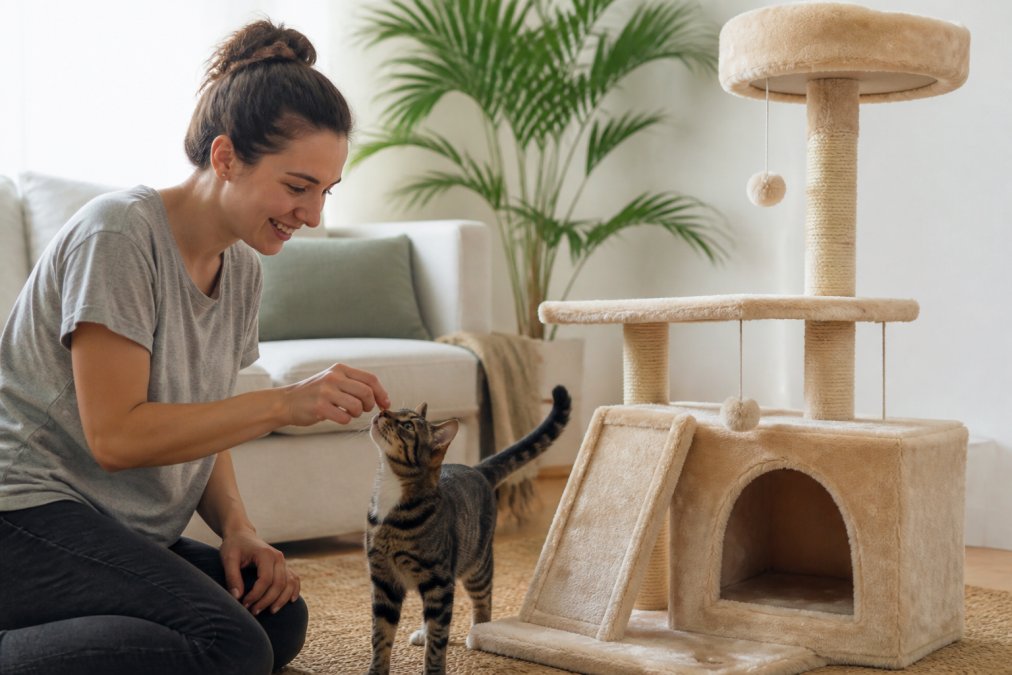
Day 2: Introduce positive associations Place treats near the furniture, favorite toys on lower levels, and consider moving their food bowl nearby. These positive associations help your cat connect the furniture with good things.
Day 3: Patience and encouragement Continue with treats and toys if your cat hasn't explored yet. Never force interaction, it creates negative associations that are hard to overcome.
Most cats show at least mild interest by day three. Some will already be using it for naps or play. If your cat is still avoiding it, move to the scent-building strategies in the next section.
Using Familiar Scents to Build Comfort
Scent is your most powerful tool when introducing new pet furniture to cats. A familiar-smelling piece is automatically more trustworthy.
Layering your cat's own scent
Place a blanket or clothing your cat has slept on directly on the new furniture. Your cat's own scent signals safety and ownership. Use an item from their sleeping area for at least 3-5 days to carry a strong scent deposit.
If you lack a pre-scented item, rub a soft cloth over your cat's face and cheeks, then rub it on the furniture. Reapply every 2-3 days during the first two weeks.
Catnip and silver vine application
About 70% of cats respond strongly to catnip; others are indifferent or averse. Test your cat's reaction before applying it to furniture.
If your cat responds to catnip, sprinkle about 1/4 teaspoon on lower levels and hiding spots. Light application attracts; heavy application deters.
Silver vine is an alternative for cats that don't respond to catnip or experience habituation. Alternate between catnip and silver vine every 5-7 days to prevent scent fatigue.
Pheromone sprays and diffusers
Synthetic pheromone products like Feliway can reduce anxiety and accelerate acceptance, especially for cats showing stress signals rather than simple disinterest.
Apply pheromone spray once daily and allow it to dry before your cat interacts with it. Do not spray directly on your cat. Diffusers provide continuous release for multiple pieces.
Scent-masking for multi-cat households
For multiple cats, layer each cat's individual scent onto the furniture. Place a blanket from Cat A's area on one side and Cat B's on another to signal shared territory.
What NOT to use
Never apply human perfume, essential oils, or scented sprays to cat furniture, they repel cats and create negative associations. Use only cat-safe sources: your cat's scent, catnip, silver vine, and veterinarian-approved pheromone products.
If your cat rejected furniture due to artificial scent, wash it with unscented, cat-safe detergent and air dry completely before reintroducing.
How to Train a Cat to Use a Cat Tree
Training a cat to use a cat tree requires understanding what motivates them. Cats respond to incentives and environmental design, not commands.
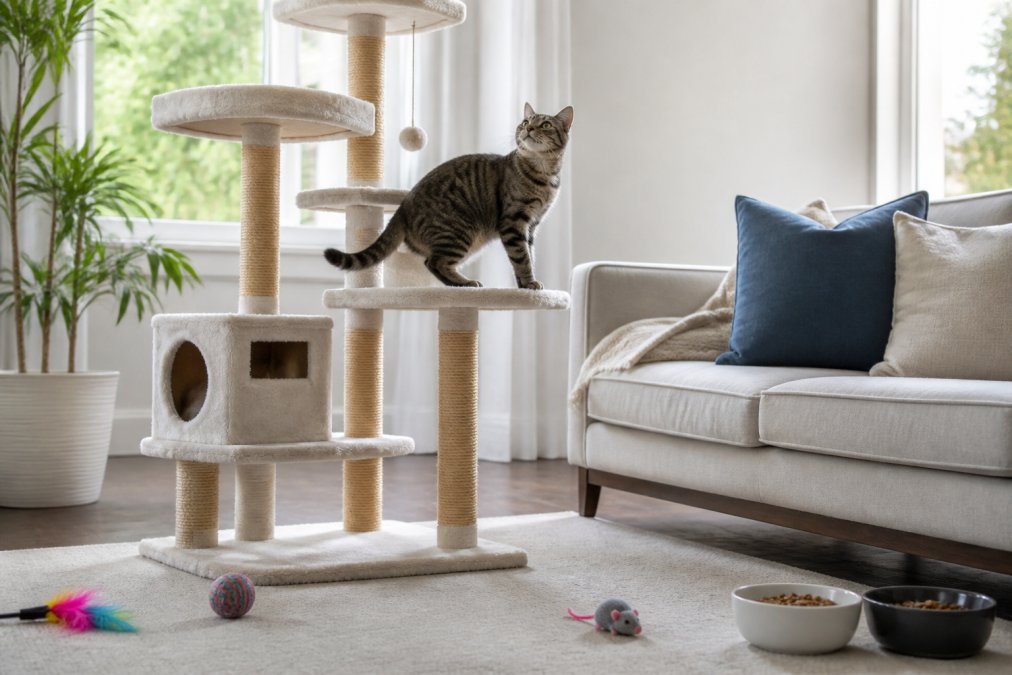
Use treats strategically Place high-value treats on different levels, starting with the lowest. Move treats up as your cat explores, creating natural progression.
Make climbing rewarding Use interactive play near the cat tree to build positive associations. When your cat uses the tree during play, they learn it's fun.
Provide hiding spots Cat trees with enclosed boxes or covered perches are more appealing than open designs. Add a blanket or box if your furniture lacks hiding spots.
Respect your cat's personality Some cats are climbers; others prefer ground-level furniture.
Reducing Cat Stress With New Furniture
Stress prevents acceptance. Minimize stress during introduction by maintaining consistency and routine.
Troubleshooting Furniture Rejection
If cats refuse furniture for weeks, one or more factors need adjustment. Use this diagnostic checklist to isolate the root cause.
- Is the furniture in a high-traffic area? Move it to a quieter zone and observe for 3-4 days. If your cat shows interest, placement was the issue.
- Is it near a litter box, food bowl, or water dish? Relocate it at least 2 metres away.
- Does it block escape routes? Reposition to ensure multiple approach angles and clear pathways to hide spots.
- Is the room temperature comfortable? Move furniture away from drafts and direct sunlight if needed.
Step 2: Assess furniture type and design (Days 7-14)
- Does your cat prefer ground-level resting? If they naturally nap on low spots, a ground-level bed will be more appealing than a climbing structure.
- Does the furniture have hiding spots? Add a blanket or box to create enclosed areas if needed.
- Is the furniture stable? Tighten all bolts and connections. A wobbly tree creates anxiety.
- Is the fabric texture appealing? Match texture to your cat's preferences, soft surfaces or rough sisal rope.
Step 3: Evaluate stress and anxiety (Days 14-21)
- Did a negative event occur near the furniture? Move it to a different room and restart over 10-14 days.
- Is your home unusually chaotic? Delay introduction or set up furniture in a quiet room away from disruption.
- Does your cat show general anxiety? Use pheromone sprays and extend the timeline to 3-4 weeks, pairing introduction with extra play and treats.
Step 4: Address multi-cat dynamics (Days 7-21)
- Is one cat blocking access? Place furniture in separate rooms or provide multiple pieces so each cat has options.
- Is your shy cat intimidated? Provide multiple pieces or set up furniture in rooms where your shy cat spends time away from dominant cats.
- Are you providing enough furniture? Provide one piece per cat, plus one extra. Two cats sharing one tree creates conflict.
Step 5: Consider medical or age-related factors (Ongoing)
- Can your cat physically access the furniture? Senior cats and those with arthritis, hip dysplasia, or other mobility issues may avoid tall furniture because jumping is painful. For these cats, choose low-profile beds, ramps, or furniture with multiple entry points at different heights. Consult your veterinarian if your cat shows signs of pain or difficulty moving.
- Has your cat's behavior changed recently? A sudden loss of interest in activities they once enjoyed can signal illness or pain. If your cat previously used furniture but has stopped, or if they show other behavioral changes, schedule a veterinary check-up to rule out underlying health issues.
The two-week reset
Multi-Cat Households: Managing Territory
Introducing new pet furniture to cats becomes more complex when you have multiple cats. Territorial behavior and resource competition create additional challenges.
Frequently Asked Questions
How long does it typically take for a cat to accept new furniture?
Most cats need 3-7 days to adjust to new furniture, though some take longer depending on temperament and prior experiences. Senior cats or those with anxiety may require 2-3 weeks. The adjustment period follows a pattern: initial avoidance, cautious investigation, and finally acceptance. Patience during this acclimation period is critical. Rushing the process or forcing interaction often extends the timeline and increases stress.
What's the best way to make new pet furniture smell familiar to my cat?
Rub the furniture with a cloth that smells like your cat's bedding, your own clothing, or their favorite blanket. You can also place the furniture near their existing items for 24-48 hours before full introduction. Some cats respond well to catnip or silver vine applied to the piece. Avoid heavy perfumes or cleaning products that mask your cat's own scent markers, as these can increase anxiety rather than reduce it.
Can new furniture cause anxiety in cats?
Yes, new furniture can trigger stress and anxiety, particularly in cats with territorial behavior or past trauma. Signs include hiding, reduced appetite, excessive grooming, or aggression. This is why gradual introduction and environmental enrichment are essential. Providing safe spaces, maintaining routine, and allowing your cat to set the pace reduces anxiety significantly. High-quality furniture with stability and secure hiding spots helps cats feel more confident.
Should I use catnip or treats to encourage my cat to use new furniture?
Yes, positive reinforcement with treats, catnip, or silver vine can accelerate adoption of new furniture. Reward any interaction, even sniffing or approaching the piece. Some cats prefer interactive play near the furniture using wand toys. Avoid forcing your cat onto the furniture, as this creates negative associations. Consistency with treat motivation over several days typically shows results, though individual preferences vary.