 how-to
Calming Aids for Anxious Cats: How to Choose
Table of Contents
- Step 1: Identify Your Cat's Anxiety Triggers
- Step 2: Choose the Right Calming Aid Format
- Step 3: Evaluate Natural Calming Supplements for Cats
- Step 4: Know When to See a Vet for Cat Anxiety
- Step 5: Learn How to Create a Stress-Free Environment for Cats
- Step 6: Compare Calming Aids: Cost, Safety, and Long-Term Use
- Step 7: Common Mistakes to Avoid When Choosing Calming Aids
- Frequently Asked Questions
Last Updated: October 1, 2026
Step 1: Identify Your Cat's Anxiety Triggers
Before you buy anything, figure out what's actually setting your cat off. Calming aids work best when they match the source of the stress, and the wrong pick wastes money while the anxiety continues.
Common Stress Triggers in Cats
Anxiety in cats is a stress response to a perceived threat, and it usually shows up as hiding, over-grooming, or avoiding the litter box. The trigger determines which calming aid makes sense.
The most common triggers pet parents describe:
- Separation anxiety: pacing, meowing, or destructive behavior when you leave
- Thunderstorm phobia: hiding under beds during storms or fireworks
- Multi-cat household stress: resource guarding, hissing, or one cat avoiding shared spaces
- Travel and vet visits: drooling, vocalizing, or freezing in the carrier
- Environmental change: a move, new baby, or rearranged furniture
Step 2: Choose the Right Calming Aid Format
Match the format to the trigger, the cat's age, and how long the stress lasts. A diffuser handles constant background stress, while a treat or spray works better for a one-off event like a vet trip. Getting this match wrong is the most common reason a calming aid appears to "not work."
Pheromone Diffusers, Sprays, and Collars
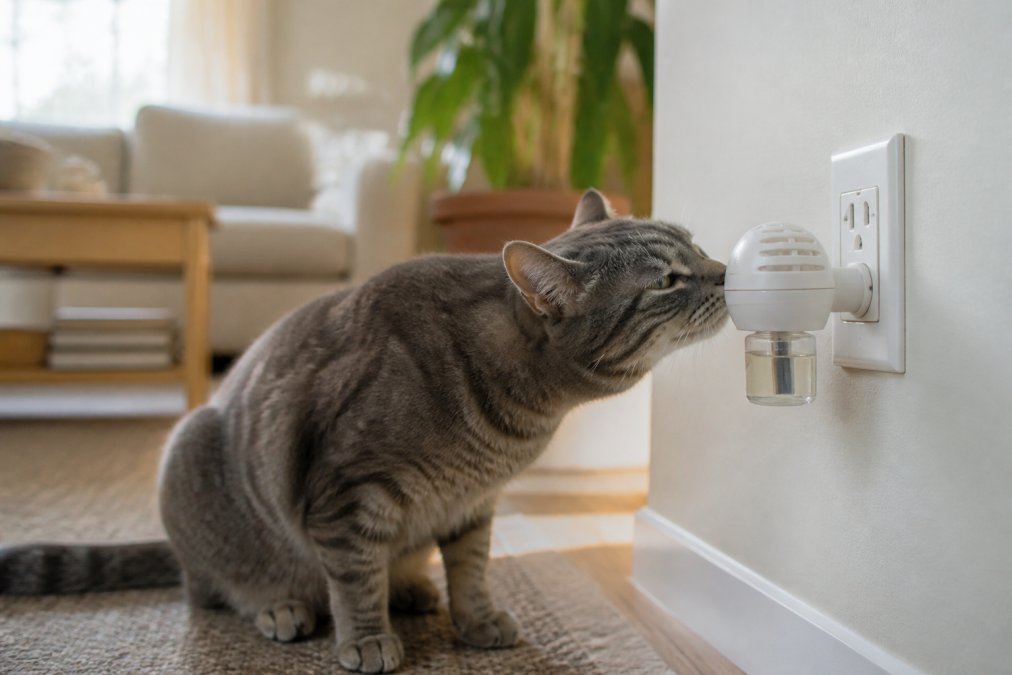
Pheromone diffusers release synthetic analogs of the facial pheromones cats deposit when they rub their cheeks on familiar objects. Plug one into the room your cat spends the most time in, and give it a few days to cover the space. Diffusers suit ongoing household stress: a new baby, a recent move, or tension between resident cats.
Calming Treats and Chews
Calming treats are the easiest format to give, and most cats accept them without a fight. They work well for predictable events, like a groomer appointment or a move. Onset is typically 30 to 60 minutes, so time the dose to the event, not after it starts.
Matching Format to Age
Most guides skip this, but age changes the answer:
- Kittens (under 1 year): Avoid oral supplements unless a veterinarian prescribes them. Focus on environmental enrichment, predictable routines, and short, positive carrier sessions. Pheromone diffusers are generally the safest product option.
- Adults (1-10 years): All formats are on the table. Match to trigger duration: diffuser for chronic stress, treats or spray for events, oral supplements for daily background anxiety.
- Seniors (10+ years): New anxiety in an older cat is a veterinary issue until proven otherwise. Pain, thyroid disease, and cognitive dysfunction can all present as anxiety. Get a vet check before buying any product.
Pairing Format With Behavioral Training
A calming aid lowers arousal; it does not teach your cat that the trigger is safe. The higher-value approach is to pair the product with desensitization and counter-conditioning:
- Start the calming aid several days before training so it is at steady state.
- Expose your cat to the trigger at a low intensity (a recording of the doorbell at low volume, or the carrier sitting open in the room).
- Pair the trigger with something good, high-value food, play, or catnip.
- Increase intensity only when your cat stays relaxed.
Step 3: Evaluate Natural Calming Supplements for Cats
Natural calming supplements for cats are oral products built around ingredients like L-theanine, chamomile, valerian root, and L-tryptophan. They aim to take the edge off without heavy sedation.
Here's what each one does, in plain terms:
- L-theanine: an amino acid found in tea that promotes a relaxation response
- Chamomile: a gentle herb with mild anxiolytic properties
- Valerian root: used for its sedative effects, though cats often dislike the smell
- L-tryptophan: an amino acid the body converts into serotonin
- Melatonin: supports rest, useful for nighttime restlessness
Step 4: Know When to See a Vet for Cat Anxiety
Book a veterinary consultation when anxiety changes your cat's daily life. If your cat stops eating, hides for days, or grooms until the skin is raw, that's a medical issue, not a training one.
Red flags to act on:
Noba Mist Catnip Spray - 100% Natural →
- Anxiety-induced grooming that leaves bald patches or sores
- House soiling in a previously reliable cat
- Weight loss or refusing food for more than a day
- Aggression toward people or other pets
- Sudden onset in an older cat with no clear trigger
Step 5: Learn How to Create a Stress-Free Environment for Cats
You can't supplement your way out of a stressful home. How to create a stress-free environment for cats comes down to control, escape routes, and enrichment.
Start with the basics:
- Give each cat its own food, water, and litter area, away from other cats
- Add vertical space like cat trees or shelves so cats can retreat upward
- Provide environmental enrichment through puzzle feeders, window perches, and daily play
- Keep a predictable routine for feeding and playtimes
- Use a covered carrier left out as a normal piece of furniture, not a scary box that appears only for vet trips
Step 6: Compare Calming Aids: Cost, Safety, and Long-Term Use
Here's the quick comparison to help you decide. Match the format to the trigger and the duration of the stress.
| Format | Best For | Onset | Typical Use |
|---|---|---|---|
| Pheromone diffuser | Ongoing household stress | Days | Continuous, monthly refills |
| Pheromone spray | Travel, vet visits | Minutes | Event-based |
| Calming collar | Whole-house roaming | Hours to days | Continuous, replace monthly |
| Calming treats | Predictable events | 30-60 minutes | As needed |
| Catnip | General relaxation, enrichment | Minutes | As needed |
| Oral supplements | Daily background anxiety | Days to weeks | Daily, long-term |
Cost-Benefit for Long-Term Use
Most guides list prices; few help you think about the recurring cost over a year. The pattern is consistent:
- Diffusers and collars carry the highest recurring cost because refills and replacements are mandatory. Budget for a refill roughly every 30 days per diffuser, and a new collar monthly. If you run two diffusers in a multi-cat home, that cost doubles.
- Treats and catnip are cheap per use but add up fast if given daily. For a cat with daily background anxiety, a treat-only strategy is usually the most expensive long-term option.
- Oral supplements sit in the middle. They only pay off if you are consistent, skipping days resets the benefit and wastes the bottle.
Contraindications and Medication Interactions
This is the section most product pages skip, and it matters most. If your cat is on any prescription, clear every new product with your veterinarian first. Specific interactions to flag:
- L-theanine and L-tryptophan can amplify the effects of sedatives, anti-anxiety medications, and anesthesia. Tell your vet before any procedure.
- Valerian root may interact with sedatives and can cause paradoxical excitement in some cats.
- Melatonin can interact with other sedatives and is not appropriate for all cats, particularly those with certain endocrine conditions.
- Chamomile belongs to the same plant family as ragweed and may trigger reactions in sensitive cats.
- Catnip is generally safe but can cause vomiting or diarrhea if overused, and some cats become hyper rather than calm.
Age-Specific Safety Notes
- Kittens: Avoid oral supplements and essential oils entirely unless prescribed. Their livers metabolize compounds differently and the margin for error is small.
- Adults: All formats are generally appropriate with vet guidance.
- Seniors: Anxiety often masks pain or illness. A vet check comes before any product. Some supplements also interact with medications commonly prescribed for older cats, such as thyroid treatment.
Step 7: Common Mistakes to Avoid When Choosing Calming Aids
The biggest mistake is buying a product before you know the trigger. A diffuser won't fix thunderstorm phobia, and a treat won't fix a litter box dispute between two cats.
Other traps to skip:
- Skipping the test run. Buy small, test palatability, then stock up.
- Ignoring behavioral modification. Calming aids work best alongside training, not instead of it. Pair them with counter-conditioning so your cat learns the trigger is safe.
- Expecting overnight results. Pheromones and supplements take days to weeks. Give them time before you judge.
- Forgetting age. Kittens and senior cats respond differently. Older cats need a vet check first, since anxiety often masks pain.
Frequently Asked Questions
What is the most effective calming aid for cats?
The most effective calming aid depends on your cat's specific anxiety trigger. Pheromone diffusers work well for environmental stress, while natural supplements like L-theanine or chamomile can help with mild anxiety. For travel or vet visits, calming treats or sprays may be more practical. Always consult your vet before trying new aids, especially if your cat has health issues.
Are pheromone diffusers safe for long-term use in cats?
Yes, pheromone diffusers are generally safe for long-term use. They contain synthetic analogs of natural feline pheromones and are non-toxic. However, some cats may develop skin irritation or respiratory sensitivity. Monitor your cat for adverse reactions like sneezing or scratching. Rotate diffusers every 4-6 weeks and clean the area regularly to prevent buildup.
How do I know if my cat needs calming supplements or medication?
If your cat shows signs like excessive grooming, hiding, or aggression that don't improve with environmental changes, consider calming supplements. Natural options like L-tryptophan or valerian root may help mild cases. If symptoms persist or worsen, consult a vet. They can assess for stress-related illness and recommend medication if needed.
Can environmental changes help an anxious cat?
Yes, environmental enrichment is key for anxious cats. Provide vertical spaces, scratching posts, and hiding spots. Use pheromone diffusers in high-traffic areas. Establish a routine for feeding and play. Combine these with calming aids for best results. For multi-cat households, ensure separate resources to reduce stress.
Cat anxiety rarely resolves on its own, and guessing at products can cost you weeks of stress for both you and your cat. At Bentley's Bark, we curate calming aids we'd give our own pets, from natural catnip options to enrichment tools that address the root of the stress. Every order ships free, and each item is hand-picked to solve a real problem. Get started with Bentley's Bark and build a calmer home for your cat.