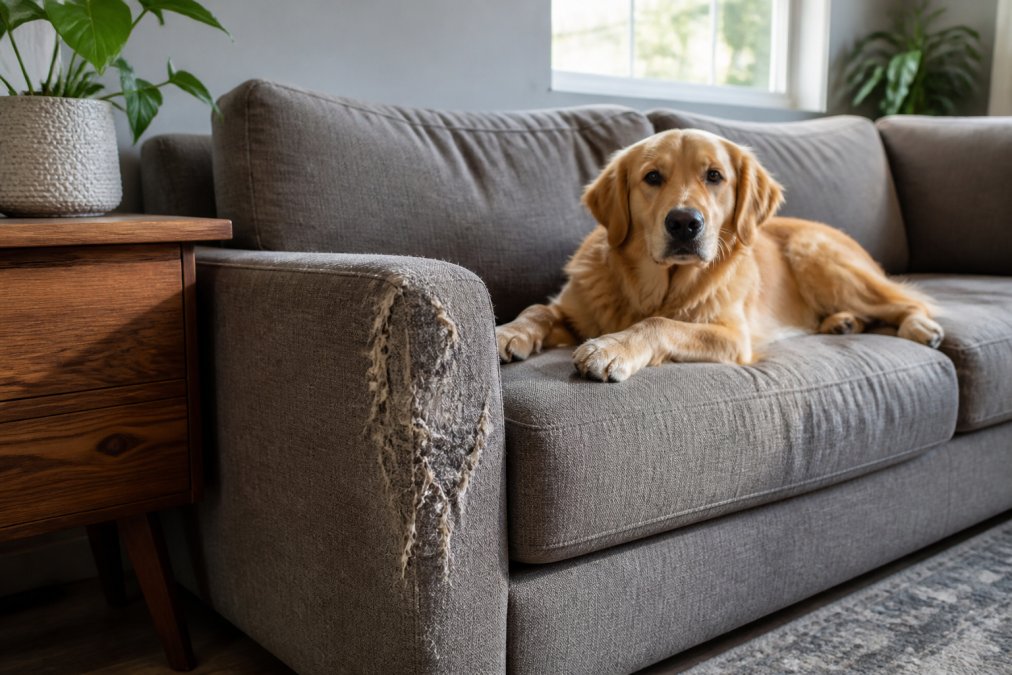
 how-to
Pet-Friendly Furniture Lifespan: How Long It Really Lasts
Table of Contents
- How Long Pet-Friendly Furniture Actually Lasts
- Factors That Affect Pet-Friendly Furniture Durability
- Best Fabrics for Pet Owners: Performance Materials That Endure
- How to Protect Furniture From Cat Scratches and Pet Damage
- Maintenance Routines That Extend Furniture Life
- Is Luxury Dog Furniture Worth It for Small Pets?
- Repair Versus Replace: When to Invest in New Furniture
- Frequently Asked Questions
Last Updated: September 17, 2026
How Long Pet-Friendly Furniture Actually Lasts
Pet-friendly furniture lifespan depends on several factors, but most quality pieces last 5-10 years with proper care. The timeline varies based on materials, maintenance, and pet behavior, not just price.
The difference between furniture that fails in two years and furniture that lasts a decade comes down to three things: frame construction, upholstery material, and maintenance routine.
Factors That Affect Pet-Friendly Furniture Durability
Frame construction and materials
The frame is everything. Hardwood frames (like kiln-dried oak or maple) resist warping and support constant jumping and scratching. Softwood frames deteriorate faster and won't support weight distribution over time.
Look for eight-way hand-tied springs, solid wood corner blocks, dowels and mortise-and-tenon construction, and webbing underneath. A solid frame lasts 15-20 years; budget frames held together with staples fail in 3-4 years.
Upholstery type and weave density
Weave density matters enormously. A tight weave resists snagging better than loose weaves. Performance fabrics engineered for high-traffic areas typically have 100,000+ double rubs.
Synthetic fibers outperform natural ones: microfiber resists stains and cleans easily, polyester blends handle moisture, solution-dyed synthetics resist fading, and tight-weave fabrics resist cat scratches.
Real leather develops a patina over time; faux leather is easier to clean but can crack with heavy use.
Pet behavior and household traffic
High-traffic households accelerate wear. Pets that spend most of their time on one piece of furniture wear it out faster than those that rotate between multiple spots.
Scratching intensity, shedding volume, accident frequency, and pet size all affect wear. A small cat might not noticeably damage a sectional for 8-10 years; two large dogs might show significant wear in 3-4 years.
Best Fabrics for Pet Owners: Performance Materials That Endure
Microfiber and synthetic fibers
Microfiber uses ultra-fine threads that create a tight weave, resisting stains and snagging. Liquids bead up on the surface and pet hair clings less aggressively. The downside: microfiber can pill with heavy friction. These fabrics typically last 7-10 years in active pet households.
Leather and faux leather
Real leather resists staining and won't snag, but pet claws leave visible marks. Leather requires regular conditioning to prevent cracking. Faux leather is cheaper but can crack and peel with extended use. Both last 8-12 years with proper care.
Tight-weave and performance fabrics
Performance fabrics use solution-dyed fibers so stains don't penetrate as deeply. Tight-weave construction prevents cat claws from catching threads. These fabrics cost more upfront but deliver 10-15 years of durability.
How to Protect Furniture From Cat Scratches and Pet Damage
Furniture protection isn't just about barriers; it's about addressing the root behaviors that damage furniture in the first place. Cats scratch, dogs jump and shed, and both create wear patterns that can be redirected or minimized through behavioral management combined with physical protection.
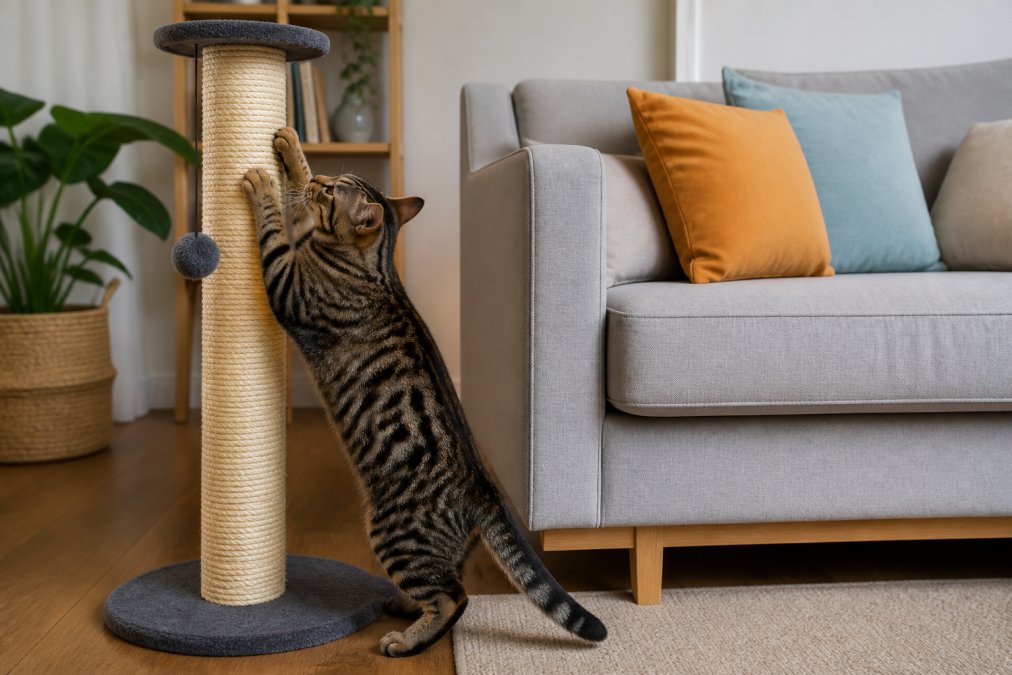
Understanding pet damage patterns by species
Cats scratch to mark territory, stretch muscles, and maintain claw health. Scratching typically targets vertical surfaces (sofa arms, chair backs) or horizontal surfaces (cushions, ottomans). Tight-weave fabrics resist this better than loose weaves, but the solution is behavioral redirection combined with protective barriers.
Dogs compress cushions through jumping, shed heavily, and cause damage through accidents that penetrate cushion fill. A 30 kg dog jumping on a sofa 10 times daily stresses the frame far more than a 5 kg cat. Frame construction matters more for dog owners.
Redirect scratching behavior with appropriate outlets
Place tall vertical scratching posts (at least 75 cm high) directly beside furniture your cat targets. Sisal rope is the gold standard, cats instinctively prefer it over carpet or cardboard. A weighted base that doesn't wobble is essential.
Reward your cat for using scratching posts with treats or play. Interrupt scratching on furniture and redirect to the post. Over 2-4 weeks, most cats shift their scratching behavior to posts if they're convenient and rewarding.
Double-sided tape, citrus sprays, and motion-activated deterrents make furniture less appealing. Use them in combination with scratching posts, then remove after 4-6 weeks once your cat has established a scratching post habit.
Vertical Cat Scratching Post - Durable →
Manage dog jumping and compression damage
Train your dog to use a dedicated dog bed instead of the sofa using consistent commands and rewards. This takes 2-4 weeks but dramatically reduces cushion compression. Place the dog bed in the same room so your dog can be near you without damaging furniture.
Use washable furniture covers or slipcovers to protect against shedding and drool. For dogs prone to accidents, use waterproof mattress protectors under cushion covers to prevent urine from soaking into cushion fill.
Use slipcovers and removable covers
Quality slipcovers fit snugly and protect underlying furniture while remaining easy to remove and wash. Removable, washable covers solve the stain and odor problem entirely. When a cover wears out, you replace the cover, not the entire sofa.
Look for washable, durable fabric (100,000+ double rubs), fitted construction, full coverage, easy on-and-off design, and reinforced seams. A quality slipcover adds 3-5 years to furniture lifespan.
Maintenance Routines That Extend Furniture Life
Regular vacuuming and spot cleaning
Vacuum weekly to remove pet hair before it embeds. Spot clean spills immediately by blotting with a damp cloth. Use a reusable pet hair roller like the Pet Fur Eliminating Roller from Bentley's Bark 2-3 times weekly. Flip cushions monthly.
Deep cleaning and professional care
Deep clean every 12-18 months to remove embedded dirt and odors. Professional cleaning costs $200-400 and extends furniture life significantly. For leather, condition every 6 months. For fabric, use enzyme-based cleaners.
Is Luxury Dog Furniture Worth It for Small Pets?
For small pets, a quality orthopedic dog bed ($150-300) lasts 5-7 years and costs far less than replacing a damaged sofa. If your pet shares human furniture, invest in durable human furniture. If they have their own space, luxury pet furniture offers genuine value.
Repair Versus Replace: When to Invest in New Furniture
Deciding whether to repair or replace depends on frame condition, fabric damage extent, remaining lifespan, and the true cost of each path. Most articles skip this entirely, but it's where pet owners actually lose money, either by replacing furniture too early or repairing pieces beyond recovery.
The repair-versus-replace decision matrix
Assess frame integrity first. If the frame is solid, repair almost always wins. If compromised, replacement is your only option.
Frame is solid: Single cushion sagging ($100-300), isolated stains or tears ($50-200), zipper failure ($50-150) are all worth repairing.
Reupholstering as a middle path
Full reupholstery costs $1,200-3,000 and makes sense when the frame is solid, you're emotionally attached to the piece, the original sofa cost $2,000+, and you can upgrade to a performance fabric. It doesn't make sense if the frame is weak, you're reupholstering a budget sofa, or you want to change the style significantly.
The true cost calculation
Compare cost per year: repair cost divided by remaining years versus new sofa cost divided by expected lifespan. If repair cost per year is significantly lower, repair wins. If the sofa is 8-10 years old, replacement often costs less per year.
When to replace, not repair
Replace immediately if the frame is damaged, cushions sag across the entire surface, pet odor persists after professional cleaning, multiple damage types appear simultaneously, the sofa is 10+ years old, or repair costs exceed 50% of a new sofa's price. Also replace if upgrading to a modern pet-specific design with performance fabrics and reinforced frames.
Frequently Asked Questions
How long do couches last with kids and dogs?
A quality pet-friendly sofa typically lasts 7-10 years with active pets when properly maintained. Furniture with high-performance fabrics, solid hardwood frames, and tight-weave upholstery extends this lifespan significantly. Leather and microfiber options often outlast natural fabrics. Regular vacuuming, prompt spot cleaning, and using protective slipcovers can add years to your furniture's life. Cheaper construction fails faster, expect 3-5 years from budget pieces in high-traffic pet homes.
What materials make furniture truly pet-friendly?
The best fabrics for pet owners include microfiber, performance synthetics, and tight-weave fabrics rated for high rub counts (above 100,000 double rubs). Leather and faux leather resist scratching and staining, though they require different maintenance than fabric. Avoid delicate natural fibers like linen or silk that snag easily. Look for moisture-wicking properties to manage pet dander and accidents. Frame construction matters equally, solid hardwood or kiln-dried wood outlasts particleboard. Removable, washable covers add years of protection.
How can I extend the lifespan of my sofa with dogs?
Protect furniture from cat scratches and pet damage by redirecting behavior first: provide scratching posts or pads near furniture to satisfy natural instincts. Use slipcovers and removable covers for easy washing. Vacuum weekly to prevent dander buildup and fiber degradation. Spot-clean spills immediately with appropriate cleaners for your fabric type. Trim your dog's nails regularly to minimize snagging. Rotate cushions monthly to distribute wear evenly. Professional deep cleaning annually removes embedded dirt that weakens fibers. These steps routinely add 3-5 years to furniture lifespan.
Is luxury dog furniture worth it for small pets?
Luxury furniture is worth the investment if you plan to keep it 10+ years and want durability across multiple pets. High-end pieces use superior frame construction, performance fabrics with higher tensile strength, and better upholstery density, all critical for withstanding pet wear. Small pets are gentler on furniture than large ones, but quality construction still pays off through longevity and easier maintenance. Budget pieces fail faster and cost more to replace. If you view furniture as a long-term investment rather than disposable, premium options deliver better value over time.