 how-to
How to Clean Washable Pet Bed Covers: Step-by-Step
Table of Contents
- Preparation and Inspection Before You Wash
- How to Remove Pet Hair From Fabric Before Washing
- Pre-Treating Stains and Odors on Washable Pet Bed Covers
- Choosing the Best Laundry Detergent for Pet Odors
- Machine vs. Hand Washing: Which Is Right for Your Pet Bed Covers?
- Drying Methods for Washable Pet Bed Covers
- How Often to Wash a Dog Bed
- Cleaning Non-Removable Covers and Deep Cleaning for Heavy Odors
- Frequently Asked Questions
Last Updated: September 15, 2026
Preparation and Inspection Before You Wash
Washable pet bed covers last longer when you inspect them before washing. Skipping this step is the most common reason a cover comes out misshapen, faded, or with a broken zipper.
Read the care label first: it lists fiber content, maximum water temperature, and whether tumble drying is safe. Machine washable does not mean dryer safe.
Then work through this pre-wash checklist:
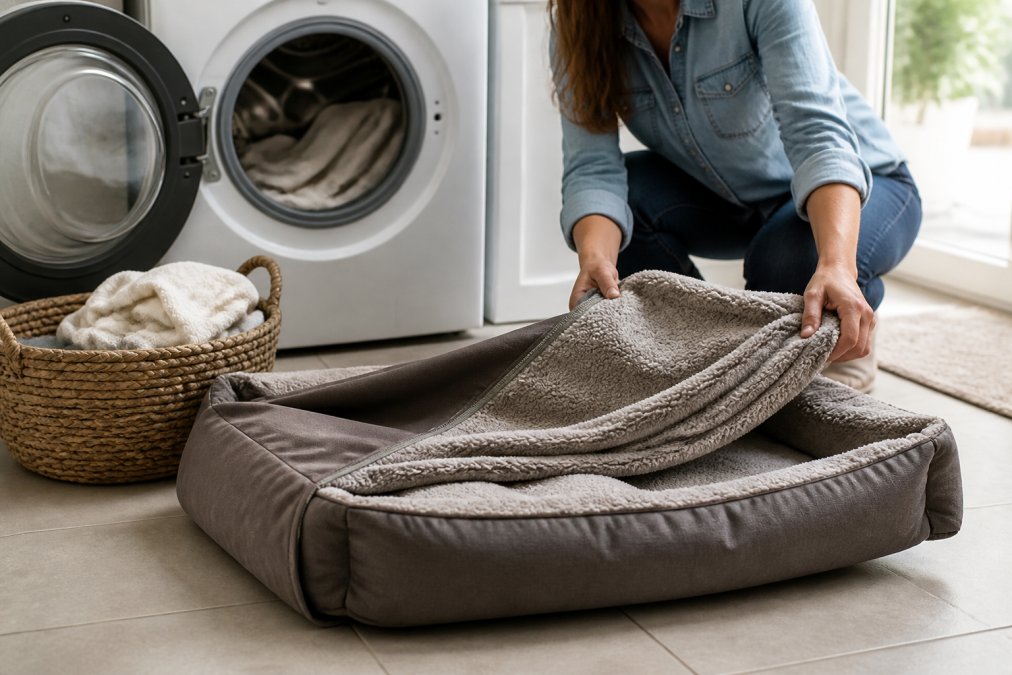
- Unzip the cover fully and remove the foam padding or bolster insert
- Check every seam and corner for split stitching or small tears
- Close the zipper before washing to stop it snagging other fabric
- Shake the cover outdoors to dislodge loose hair, kibble, and grit
- Empty pockets, crannies, and any hidden toy stash
A common mistake is washing a cover with the insert inside. The foam soaks up water, dries unevenly, and can grow hidden mildew. We design our beds around removable covers because the insert should never enter the machine.
How to Remove Pet Hair From Fabric Before Washing
Removing pet hair from fabric before washing separates a truly clean cover from one that smells fresh but still sheds. Water alone mats the fibers and pushes embedded hair deeper.
Work in this order for the best result:
- Vacuum first. Run an upholstery attachment over the cover with slow, overlapping passes. This pulls up the bulk of loose hair, dander, and dust.
- Use a rubber brush or squeegee. Short, firm strokes gather hair into clumps that lift right off. Rubber grips the strands in a way bristles cannot.
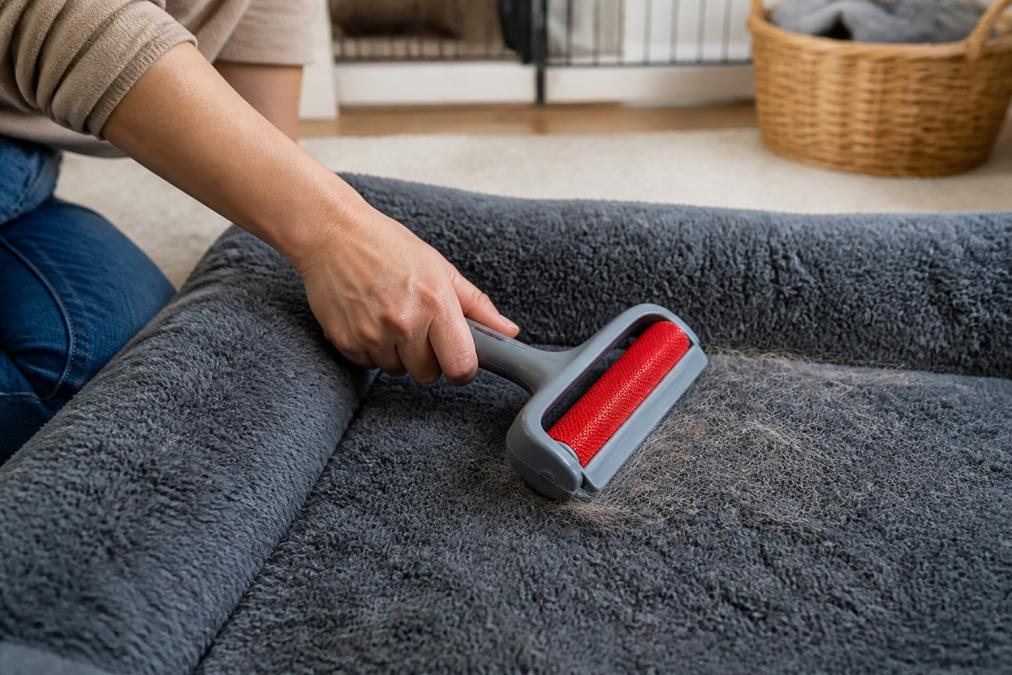
- Finish with a lint roller. A reusable roller catches the fine hair the vacuum and brush leave behind. The Pet Fur Eliminating Roller is built for exactly this job and works on bedding, sofas, and clothing.
Hair removal is not just cosmetic: loose hair holds odor and clogs your washing machine's filter over time.
Pre-Treating Stains and Odors on Washable Pet Bed Covers
Pre-treating neutralizes the two things washing alone struggles with: set-in stains and lingering odor.
For stains, blot (never rub) the area with a clean cloth, then apply a small amount of enzyme-based detergent directly to the spot. Let it sit for 10 to 15 minutes so the enzymes break down the organic matter.
For odor, the problem is often deeper than the surface. Try this:
- Sprinkle baking soda over the dry cover and let it sit for 15 minutes
- Vacuum it off along with any remaining hair
- Add half a cup of white vinegar to the rinse cycle when you wash
Skip fabric softener entirely: it coats fibers, traps odor, and reduces moisture wicking (cleaninginstitute.org). For stubborn odor, see the deep-cleaning section below.
Choosing the Best Laundry Detergent for Pet Odors
The best laundry detergent for pet odors is enzyme-based and unscented: enzymes break down the proteins in urine, saliva, and dander, while no fragrance means nothing to irritate a pet's sensitive nose. The right detergent also depends on the cover's fabric, the wrong formula can strip a waterproof liner or mat down sherpa pile even when it cleans well.
What to look for in any formula:
- Enzyme-based: targets the biological source of odor, not just the surface
- Unscented or fragrance-free: pets have a far stronger sense of smell than people
- Bleach-free: chlorine damages fabric fibers and dulls color
- Hypoallergenic where possible: kinder to pets with sensitive skin
Use the label's recommended amount, more detergent leaves residue that attracts dirt and holds odor. For pets with allergies, choose fragrance-free, dye-free detergent.
Matching Detergent to Cover Fabric
Fabric content changes which detergent is safe. Check the care label, then match it to the guidance below.
- Sherpa and plush fleece: These pile fabrics trap detergent in the base of the fibers. Use a liquid enzyme detergent (not powder, which can leave grit behind) at half the recommended dose, and always run an extra rinse. Skip anything with optical brighteners, which yellow the cream tones sherpa usually comes in.
- Canvas and heavy cotton duck: Durable and tolerant of a full dose of enzyme detergent. These weaves hold odor in the fiber core, so a pre-soak of 15 to 30 minutes in cool water with enzyme detergent does more than a longer wash cycle.
- Memory foam covers (the removable outer shell): The shell is usually a knit or mesh. Use a gentle, enzyme-based liquid and cold water only, heat and harsh surfactants break down the elastic that keeps the cover snug over the foam.
- Waterproof liners and coated fabrics: This is where detergent choice matters most. Avoid detergents with fabric softener built in, and avoid anything labeled "with bleach" or "oxy boost" unless the care label allows it. Surfactants and heat degrade the polyurethane or TPU coating that makes the liner waterproof. A mild enzyme detergent and cold water preserve the coating; a hot wash with a strong detergent can leave you with a liner that leaks.
Ingredients to Avoid on Pet Bedding
- Chlorine bleach: weakens fibers and can leave a residue that irritates paws and skin
- Fabric softener and dryer sheets: coat fibers, trap odor, and reduce moisture wicking
- Optical brighteners: build up on fabric over repeated washes and dull natural tones
- Enzyme formulas with added fragrance: the enzymes do the work; the perfume just adds a scent your pet may react to
Machine vs. Hand Washing: Which Is Right for Your Pet Bed Covers?
Machine washing suits most removable, machine-washable covers; hand washing is safer for delicate fabrics, non-standard materials, or embellishments. Match the method to the care label, not convenience.
If the label says machine washable, the machine is fine. If it says hand wash, spot clean, or dry clean only, respect that, the wrong method shrinks, pills, or distorts covers.
Machine Washing Settings and Water Temperature
Use a gentle cycle with cold water for most washable pet bed covers. Cold water protects fabric and color, and cleans well with a good enzyme detergent.
Set your machine like this:
- Cycle: gentle or delicate
- Temperature: cold water wash
- Extra rinse: yes, to flush out detergent and dander
- Load: wash alone or with similar pet items, never with human clothing
Hot water can shrink fibers and set stains, so use it only when the care label allows it and the cover is heavily soiled.
Hand Washing Delicate or Non-Standard Fabrics
Fill a basin with cool water and a little enzyme detergent. Submerge the cover and gently knead it for a few minutes; avoid wringing or twisting, which distorts fabric.
Rinse with cool water until clear, then press the water out by rolling the cover in a clean towel. Hand washing is the only safe route for delicate weaves, embroidery, and hand-wash-only covers.
Drying Methods for Washable Pet Bed Covers
Air drying is the safest default for washable pet bed covers: it protects fabric, prevents shrinkage, and avoids heat damage. But different fabrics fail in different ways in a dryer, so match the method to the material.
To air dry:
- Lay the cover flat or hang it in a well-ventilated spot, away from direct sun
- Reshape it while damp so it dries in its proper form
- Turn it inside out halfway through to speed drying
If you must use a machine, tumble dry low only and pull the cover out slightly damp.
Drying by Fabric Type
Speeding Up Air Drying Without Heat
When to Replace Rather Than Rewash
How Often to Wash a Dog Bed
Increase the frequency when:
Cleaning Non-Removable Covers and Deep Cleaning for Heavy Odors
For spot cleaning:
Frequently Asked Questions
Is it sanitary to put dog bed covers in my washer?
Yes, using a pet-safe detergent and following care instructions can help keep covers clean. Adding a cup of white vinegar to the rinse cycle can help neutralize odors. Avoid mixing pet bedding with human laundry to prevent cross-contamination. After washing, dry thoroughly.
What is the best way to wash a dog bed cover?
First, remove loose hair with a rubber brush or lint roller. Check the care label, then pre-treat stains with an enzyme cleaner. Machine wash on a gentle cycle with cold or warm water and a bleach-free, unscented detergent. If the cover is delicate, hand wash instead. Air dry or tumble dry low. This process preserves fabric integrity and removes odors without harsh chemicals.
How do I clean a dog bed that doesn't have a removable cover?
For non-removable covers, vacuum both sides with an upholstery attachment to remove hair and dander. Spot clean stains with a mixture of mild soap and water, then blot dry. For deep cleaning, sprinkle baking soda over the surface, let it sit for 15 minutes, and vacuum again. For heavy odors, use a pet-safe enzyme spray and allow it to air dry completely.
How often should I wash my pet bed cover to prevent odors?
Wash your pet bed cover every one to two weeks if your pet sheds heavily or has allergies. For pets with normal shedding, every three to four weeks is sufficient. If your pet is sick, has accidents, or has been outdoors in mud, wash immediately. Regular washing helps prevent bacterial growth and keeps dander levels down.
Keeping a pet bed genuinely clean comes down to one thing: a cover you can actually remove, wash, and dry without damage. Bentley's Bark builds its beds around that idea, with removable, machine-washable covers, quality-tested materials, and a curated selection designed to keep your home clean and your pet comfortable. Every order ships free, so upgrading to a bed that is easier to care for costs you nothing extra. Explore the Bentley's Bark collection and give your pet a bed that stays fresh.