 how-to
How to Choose Pet Friendly Sofa Fabric That Lasts
Table of Contents
- Understanding Pet-Friendly Sofa Fabric
- Best Couch Materials for Dogs: Top Fabrics for Pet Owners
- Fabrics to Avoid: What Not to Choose
- The Importance of Tight Weaves and Rub Counts
- How to Remove Pet Hair from Sofa: Cleaning and Maintenance Tips
- Is Luxury Dog Furniture Worth It for Small Pets?
- Frequently Asked Questions
Last Updated: September 12, 2026
Understanding Pet-Friendly Sofa Fabric
Choosing the right pet friendly sofa fabric starts with one honest admission: no textile survives claws, fur, and the occasional accident without help. The best you can do is pick a material that hides damage well, cleans up fast, and still looks like furniture rather than a dog bed. This guide from Bentley's Bark breaks down the fabrics that hold up, the ones that fail, and the specifications that actually predict performance.
Three factors decide whether a fabric earns its place in a pet household.
Durability means abrasion resistance, measured in double rubs, plus resistance to snagging and claw punctures. Cleanability covers stain resistance, liquid repellency, and how easily pet hair releases from the surface. Comfort matters too, for both of you: breathability and texture affect how often your pet chooses the sofa over their own bed.
Key Factors: Durability, Cleanability, and Comfort
Get the order right and the rest follows. Durability comes first because a fabric that shreds in a year cannot be cleaned into a good decision. Cleanability is second because messes are inevitable. Comfort is the tiebreaker between two fabrics that both pass the first two tests.
Pet Behavior and Fabric Choices
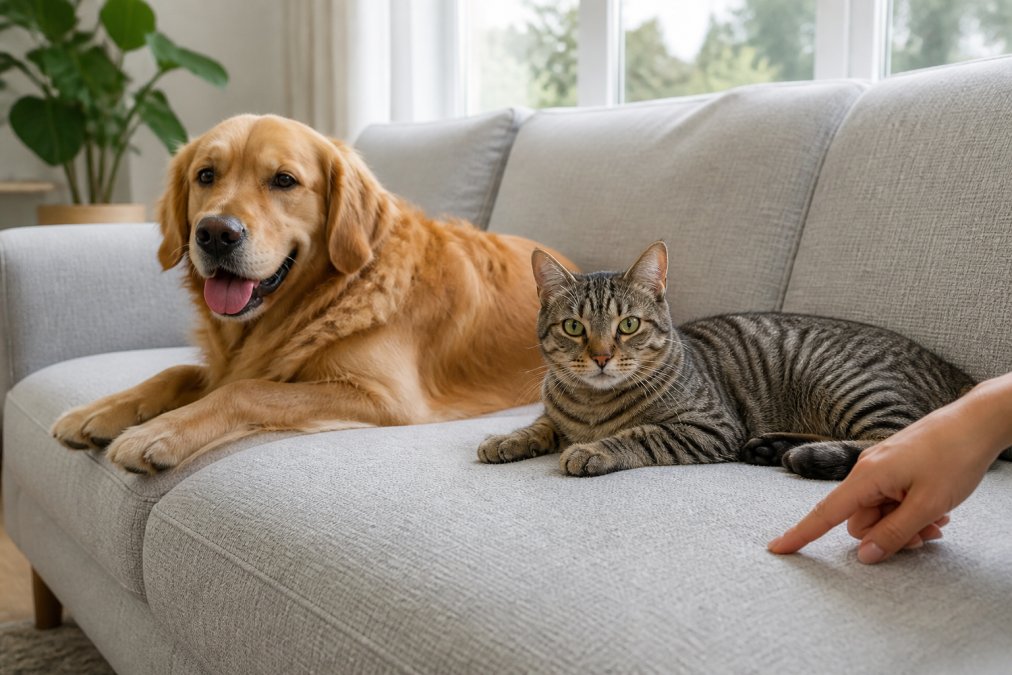
Most guides treat "pet-friendly" as one category. In practice, cats and dogs fail upholstery in completely different ways, and a fabric that excels for one can be the worst possible choice for the other. Separating the two needs is the single most useful thing you can do before you shop.
Cat-friendly means claw-resistant first. Cats scratch vertically to stretch and mark, and their claws catch on any surface with loops, loose yarns, or open weaves. A single session can pull threads across a cushion. The fabrics that survive cats are tight, flat, and hard-surfaced: tightly woven microfiber, canvas, denim, and finished leather. Velvet, bouclé, tweed, and loose linen are the classic failures. Cats also knead before settling, which tests snag resistance on every surface they touch, not just the arms.
Dog-friendly means stain- and odor-resistant first. Dogs bring in mud, drool, shed hair, and oils, and they grind all of it into the fabric when they circle before lying down. The fabrics that survive dogs are the ones that release hair easily and resist liquid absorption: tightly woven synthetics, performance weaves, and leather. Pile fabrics and untreated cotton absorb oils and hold odor, which is why a dog's favorite spot on a linen sofa starts to smell long before it looks worn.
A practical behavioral audit takes a week. Note where your cat scratches (vertical post, sofa arm, cushion corner), whether your dog drools or digs at cushions, and how much each sheds. That audit matters more than any marketing claim on a swatch card. For households with dedicated scratchers, redirecting the behavior is part of the solution, and a Vertical Cat Scratching Post - Durable Sofa Protector gives cats the sisal texture they want while your upholstery stays intact.
If you live with both a cat and a dog, you are optimizing for two different failure modes at once. The safest compromise is a tight-weave performance fabric or a top-grain leather with a matte finish: flat enough that claws do not catch, tight enough that hair and liquids stay on the surface. There is no fabric that is perfect for both, so decide which pet does more damage in your home and weight the choice accordingly.
Best Couch Materials for Dogs: Top Fabrics for Pet Owners
The best couch materials for dogs balance tight construction with surfaces that repel hair and liquids. Four categories consistently outperform the rest: microfiber, canvas and denim, leather, and engineered performance fabrics. Each has a distinct trade-off between feel, cost, and upkeep.
Microfiber
Microfiber wins on price and hair release. Its dense synthetic fibers keep spills near the surface long enough to blot, and most pet hair vacuums off without embedding. The drawback is texture: cheaper microfiber can feel slick, and it holds static that attracts loose fur between cleanings. Look for a tight-weave microfiber with a matte finish rather than a brushed one. If a claw does snag a microfiber weave, the fix is usually a fine needle worked from the back of the fabric to push the pulled yarn through, then a light steam to settle the fibers.
Canvas and Denim
Canvas and denim are the workhorses of pet-friendly upholstery. Both are woven cotton or cotton blends with a flat, tight structure that resists snagging and hides the scuffs that come with daily use. Denim's indigo dye masks dirt better than lighter fabrics, and canvas softens with age instead of wearing thin. The catch is liquid: untreated cotton absorbs spills quickly, so a stain-repellent finish or slipcover is worth the extra cost. Canvas and denim are also the most repairable upholstery fabrics in a pet home: a pulled thread can be worked back with a tapestry needle, and a worn cushion cover can be replaced without reupholstering the whole piece.
Leather
Leather is the easiest surface to live with in a shedding household. Hair sits on top rather than weaving in, and a damp cloth handles most accidents. Full-grain and top-grain hides resist claws better than bonded leather, which peels once the surface layer wears. Leather also shows scratches, though many fade into the patina with time. It is the strongest choice for dogs that shed heavily and the weakest for cats that treat furniture as a scratching post. Surface scratches on finished leather can often be buffed out with a leather conditioner and a soft cloth, which is why leather is the most repairable option for dog households specifically.
Performance Fabrics
Performance fabric is upholstery engineered for stain resistance and liquid repellency, usually through a tight synthetic weave or a factory-applied finish. These fabrics handle red wine, muddy paws, and repeated cleaning without fading. The trade-off is chemical: many performance finishes have historically relied on per- and polyfluoroalkyl substances (PFAS), a class of chemicals that persists in the environment and has raised health questions for households with pets and children (canada.ca). Some performance fabric brands now market themselves as PFAS-free. If you are choosing a performance fabric, ask the retailer directly whether the finish is PFAS-free, and prefer fabrics whose stain resistance comes from the weave structure (tight, solution-dyed synthetic yarns) rather than a topical chemical treatment. Solution-dyed fibers hold color and resist stains without a coating, which also means the protection does not wear off with cleaning.
Repairability: The Spec Nobody Lists
Most guides stop at prevention. In a pet home, the more useful question is what happens after damage occurs, because it will. Tight weaves and high rub counts reduce the frequency of damage; repairability determines whether a single snag means a spot fix or a full reupholstery bill.
- Snagged velvet or bouclé: a pulled loop can sometimes be pushed back through with a fine needle from the reverse side, but looped yarns rarely sit flat again. This is why these fabrics are a poor bet in clawed households.
- Scratched leather: light surface scratches on finished or top-grain leather often buff out with conditioner. Deep cuts into the hide do not, and bonded leather cannot be repaired at all once it peels.
- Pulled thread in canvas, denim, or tight microfiber: usually workable back into the weave with a tapestry needle, then steamed flat.
- Modular sofas: the highest-utility choice for pet owners. If one seat cushion or cover is destroyed, you replace that module rather than the whole sofa. Look for sofas with removable, individually replaceable covers and cushions.
A modular sofa with washable, replaceable covers is the most practical long-term answer for a pet household, because it turns an unavoidable accident into a small, bounded cost instead of a furniture replacement.
Fabrics to Avoid: What Not to Choose
Some fabrics are simply the wrong call in a pet household. Loose weaves, looped textures, and delicate naturals fail quickly under claws and daily contact, and replacing them costs more than choosing well the first time.
- Velvet and velvet blends: pile traps hair and shows every paw print and scratch.
- Bouclé and tweed: looped yarns snag and pull, and cats find them irresistible.
- Silk and rayon: delicate fibers stain permanently and tear under claws.
- Loose linen weaves: open structure lets claws and liquids straight through.
- Bonded leather: the surface layer peels once it wears, and it cannot be repaired.
The Importance of Tight Weaves and Rub Counts
Weave density and rub count are the two specifications that predict how a fabric will survive your pets. A tight-weave fabric has closely packed yarns with minimal gaps, which stops claws from catching and keeps liquids on the surface. Rub count, measured in double rubs, tells you how much abrasion the fabric withstands before it shows wear.
Double rubs is the standard abrasion test result for upholstery fabric, measuring how many back-and-forth cycles the material endures before visible wear. Higher numbers mean longer life under daily use.
| Double Rub Range | Typical Use | Pet Household Fit |
|---|---|---|
| Under 15,000 | Decorative, light use | Not recommended |
| 15,000-25,000 | Residential standard | Light shedding only |
| 25,000-50,000 | Heavy residential | Good for most pets |
| 50,000+ | Commercial grade | Best for claws and digging |
For a home with dogs that jump and cats that scratch, aim for 30,000 double rubs or higher. Pair that with a tight weave and you have covered both abrasion resistance and snag resistance, the two failure modes that end most upholstery's life early.
How to Remove Pet Hair from Sofa: Cleaning and Maintenance Tips
Removing pet hair from a sofa comes down to friction and routine. Dry methods beat wet ones for hair, because water pushes fur deeper into the weave. Work in one direction, and clean before the layer builds up rather than after.
- Vacuum weekly with an upholstery attachment, using short overlapping strokes.
- Run a rubber glove or squeegee across the surface to gather embedded hair into clumps.
- Use a reusable roller for quick touch-ups between deep cleans.
- Blot liquid spills immediately with a clean cloth; never rub, which spreads the stain.
- Match your cleaner to the fabric's cleaning code, and test on a hidden area first.
- Rotate and flip cushions monthly so wear and hair build-up stay even.
A Pet Fur Eliminating Roller handles the daily pass in seconds, which matters because consistency beats intensity with pet hair. For odor control, sprinkle baking soda on the surface, let it sit for fifteen minutes, then vacuum it away. Wash removable covers according to the care label, and keep a spare set so one can be in the wash without leaving the cushions bare.
Is Luxury Dog Furniture Worth It for Small Pets?
Luxury dog furniture is worth it for small pets when the piece solves a real problem rather than just looking good. A dedicated bed or sofa built for a small dog keeps them off your main upholstery, which extends the life of the furniture you already own. For a pet that spends hours on the couch, a washable, appropriately sized piece often costs less than a single reupholstery job.
The calculation shifts with size. Small pets put less weight and abrasion on a surface than large dogs, so a well-made pet piece lasts years rather than months. Look for removable, machine-washable covers, a firm structure that holds its shape, and materials that match your existing decor so the piece earns its place in the room. Bentley's Bark curates pet furniture and supplies with exactly that in mind: clean design, honest materials, and products chosen to solve real problems rather than fill a catalog.
Choosing pet friendly sofa fabric is a decision you live with for years, and the wrong pick means constant cleaning or an early reupholstery bill. Bentley's Bark helps you get it right the first time with a curated selection of pet supplies built around clean design and honest materials, plus complimentary shipping on every order. Redirect scratching with a durable sisal post, keep fur off the cushions with a reusable roller, and build a home that works for you and your pets. Get started with Bentley's Bark and make your next furniture decision one you won't have to redo.
Frequently Asked Questions
What is the best fabric for a couch with pets?
The best fabric for a couch with pets is one that balances durability, cleanability, and comfort. Microfiber, canvas, denim, and leather are top choices because they resist scratches and are easy to clean. Performance fabrics, such as those with tight weaves and high rub counts, also work well. Avoid delicate fabrics like silk or velvet, which can snag and show stains. When choosing pet friendly sofa fabric, consider your pet's behavior and your cleaning routine.
How do I remove pet hair from upholstery effectively?
To remove pet hair from upholstery, start by using a vacuum with a pet hair attachment or a rubber glove to loosen hair. A reusable pet fur eliminating roller, like the one from Bentley's Bark, can quickly pick up embedded hair. For stubborn hair, try a damp sponge or a lint roller. Regular maintenance, such as weekly vacuuming, prevents buildup. If you have a pet friendly sofa fabric, such as microfiber, hair tends to sit on the surface and is easier to remove.
Is luxury dog furniture worth it for small pets?
Luxury dog furniture can be worth it for small pets if it offers durability, comfort, and style that matches your home. High-quality materials, like solid wood and premium fabrics, often last longer and resist wear from claws and accidents. However, if your pet is destructive or you prefer budget options, mid-range furniture may suffice. Consider your pet's habits and your budget. Bentley's Bark offers curated luxury pet furniture that balances quality and design.
What type of couch is best for a pet-friendly household?
A couch with tight-weave upholstery, such as microfiber or leather, is best for a pet-friendly household. These materials resist scratches and are easy to clean. Look for removable cushion covers and high rub counts (over 15,000 double rubs) for durability. Avoid loose weaves like tweed or chenille, which can snag. Also, consider a couch with a stain-resistant finish, but ensure it's non-toxic for pets. Regular cleaning and a pet hair roller can help maintain the couch.