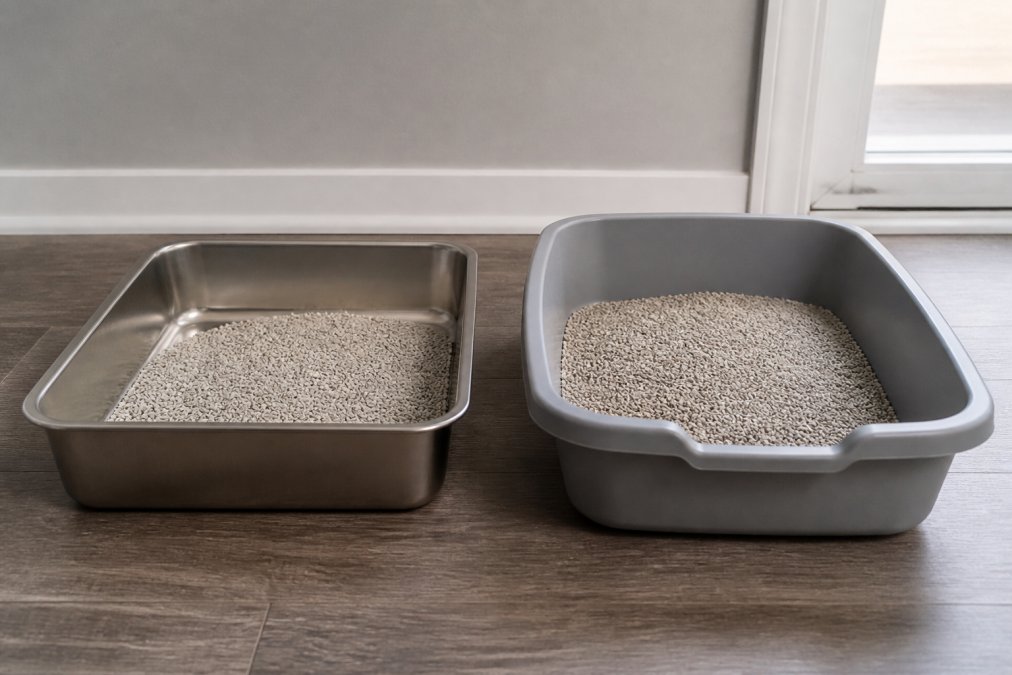
 comparison
Stainless Steel vs Plastic Cat Litter Box: 2026 Guide
Table of Contents
- Quick Comparison: Stainless Steel vs Plastic Cat Litter Box
- Odor Control and Urine Absorption: Why Stainless Steel Wins
- Durability, Lifespan, and Scratch Resistance
- Hygiene and Bacterial Growth: Porous vs Non-Porous Surfaces
- How to Clean a Stainless Steel Litter Box (and Plastic Ones Too)
- Cost, Long-Term Value, and Eco-Friendliness
- Best Cat Litter Box Material for Your Cat's Needs
- Cat Litter Box Odor Control Tips for Any Material
- Frequently Asked Questions
Last Updated: September 13, 2026
Quick Comparison: Stainless Steel vs Plastic Cat Litter Box
Stainless steel litter boxes cost more upfront but resist odor, scratching, and bacterial buildup far better than plastic. This guide breaks down the stainless steel vs plastic cat litter box decision across odor control, durability, hygiene, cost, and cat preferences.
Stainless steel wins on longevity, odor retention, and cleaning ease; plastic wins on upfront cost and variety.
| Factor | Stainless Steel | Plastic |
|---|---|---|
| Upfront cost | Higher (roughly $40-$150) | Lower (roughly $15-$60) |
| Lifespan | 10+ years typical | 1-3 years typical |
| Odor retention | Minimal (non-porous) | High (porous surface) |
| Scratch resistance | Excellent | Poor |
| Cleaning | Easy, non-porous surface | Harder, scratches trap waste |
| Weight | Heavier | Lightweight |
| Best for | Long-term value, multi-cat homes | Budget buyers, kittens |
Odor Control and Urine Absorption: Why Stainless Steel Wins
Stainless steel wins on odor control because it is non-porous. Plastic absorbs urine over time, which is why ammonia smell lingers in older plastic boxes no matter how often you scrub them.
This is the biggest reason cat owners switch. A plastic tray develops microscopic scratches within months; urine and bacteria settle in, and the ammonia smell becomes permanent because the contamination is inside the material.
Stainless steel has no pores for urine absorption. Waste sits on top and rinses away completely, the difference between a box that smells clean after washing and one that smells clean for an hour.
Durability, Lifespan, and Scratch Resistance
A stainless steel litter box typically lasts 10 years or more, while plastic boxes need replacing every 1 to 3 years, depending on how each surface handles scouring, scooping, and claws.
Plastic degrades in three predictable ways:
- Scratching: Cats dig and cover, and claws carve grooves into soft plastic. Each groove becomes a bacteria trap.
- Cracking: UV exposure and temperature swings make plastic brittle. A cracked base leaks urine onto your floor.
- Surface degradation: Even without visible damage, plastic dulls and stains, holding onto odor compounds.
Stainless steel resists all three: it's scratch-resistant under normal scooping, doesn't crack from temperature changes, and holds its finish for years. The trade-off is weight, a stainless box is noticeably heavier to move.
For cats that dig aggressively, steel is the clear winner. For a kitten still learning to use a litter tray, a cheap plastic box makes more sense until the behavior settles.
Hygiene and Bacterial Growth: Porous vs Non-Porous Surfaces
Non-porous surfaces resist bacterial accumulation because there's nowhere for bacteria to hide; porous plastic invites it.
Bacterial accumulation isn't just a smell problem, a box that never gets fully clean can irritate paws and contribute to litter box avoidance, a common complaint cat owners bring to their vet.
Deep cleaning helps, but you can only sanitize a plastic box's surface; bacteria inside scratches survive most household disinfectants. Stainless steel disinfects completely with routine cleaning.
How to Clean a Stainless Steel Litter Box (and Plastic Ones Too)
Cleaning a stainless steel litter box takes about five minutes: scoop daily, wash weekly with warm water and mild unscented soap, then dry fully before refilling. Plastic boxes need the same routine plus a vinegar soak.
Here's the full protocol that works for both materials:
- Scoop daily. Remove clumps and solids every day, the highest-impact habit for odor control. In a multi-cat home, scoop twice daily; ammonia climbs fast after 12 hours.
- Dump and wash weekly. Empty the litter completely. Wash with warm water and mild soap. Skip anything heavily scented, since cats have sensitive noses. A soft cloth or sponge is enough on stainless; on plastic, use a non-abrasive pad and light pressure only.
- Deep clean monthly. For stainless steel, a pet-safe disinfectant wipe is enough. For plastic, soak in diluted white vinegar (one part vinegar to three parts warm water) for 20 to 30 minutes, then rinse.
- Dry completely. Residual moisture encourages bacterial growth and clumping. Air dry or towel off before adding fresh litter. Stainless dries faster; plastic holds moisture in scratches.
- Replace litter fully. Don't top off old litter with new. Every few weeks, start fresh. Old litter carries ammonia-loaded dust that recontaminates a washed box within a day.
Avoid scouring pads on plastic, since they deepen scratches. Stainless steel tolerates gentle scouring, but a soft cloth is usually enough. Never use abrasive powders on either surface, they dull stainless and shred plastic.
Multi-Cat Cleaning Protocol
Most cleaning advice assumes one cat. With three or more, shared boxes get hit multiple times daily and bacteria have less recovery time between uses.
A workable multi-cat routine looks like this:
- Scoop twice daily, minimum. Morning and evening. If you have four or more cats, add a midday pass.
- Full wash every three to four days, not weekly. Rotate boxes so one is always clean and dry while another is being washed.
- Deep clean every two weeks with the vinegar soak (plastic) or disinfectant wipe (stainless).
- Replace plastic boxes every 12 to 18 months in a multi-cat home, versus the 1-to-3-year range for single-cat use. The scratch-and-absorb cycle accelerates with traffic.
- One box per cat, plus one extra. This is the standard guidance from feline behavior practitioners, and it matters more for hygiene than for territory alone, it spreads the waste load so no single box becomes a bacterial reservoir.
Stainless steel has a real advantage here: because the surface doesn't scratch, the deep-clean step actually works. On plastic, the vinegar soak only reaches the surface, and bacteria inside scratches repopulate within days.
Cost, Long-Term Value, and Eco-Friendliness
Stainless steel costs more upfront but usually less over time. A plastic box at roughly $15 to $60 replaced every 1 to 3 years adds up fast, while a $40 to $150 steel box can outlast four or five plastic ones.
Run the cost-benefit analysis over a decade for a single-cat home:
- Plastic: $20 box x 5 replacements = about $100, plus the hidden cost of odor and hygiene problems.
- Stainless steel: $60 box x 1 purchase = about $60, with no replacement cycle.
Now run it for a three-cat home, where plastic boxes need replacing every 12 to 18 months instead of every 1 to 3 years:
- Plastic: $20 box x 7 to 10 replacements = $140 to $200, plus three boxes in rotation at any given time.
- Stainless steel: $60 box x 3 boxes = $180 once, with no replacement cycle for a decade or more.
The math favors steel for anyone keeping a cat long-term, and even more sharply in multi-cat homes. Plastic still wins at the entry point: fostering, buying for a kitten, or testing a covered box. The mistake is treating that box as permanent.
The Manufacturing Footprint Nobody Talks About
On sustainability, steel has the edge: one durable box replaces five disposable ones, cutting waste and manufacturing demand. That said, stainless production is energy-intensive, and recycled stainless still requires significant energy to re-melt and re-form. The impact is front-loaded.
The eco-friendly argument only holds if you keep the box for years. A stainless box discarded after two years has a worse footprint than five plastic boxes used to failure, because its embodied energy never gets amortized.
Plastic's footprint is different but not automatically better. Most litter boxes are polypropylene or similar fossil-fuel thermoplastics. Recycling rates for bulky household plastics are low in most Canadian municipalities, and a scratched, urine-contaminated box is almost never accepted curbside, it goes to landfill every 1 to 3 years (canada.ca).
The honest framing: neither material is clean. Steel front-loads its impact and pays it back over a decade of use. Plastic spreads a smaller impact across a replacement cycle that never ends as long as you own a cat.
The Sensory Cost Competitors Ignore
There's a cost that doesn't show up in any spreadsheet: the sensory experience for the cat. Stainless steel feels cooler and stays odor-neutral, which some cats prefer. Plastic holds residual odor even when it looks clean, and a cat's nose is far sharper than yours, a cat avoiding a plastic box may be reacting to compounds you can't detect.
That behavioral cost has a real price tag. Litter box avoidance is one of the most common reasons cats are surrendered to shelters, often traced to a box the cat finds unpleasant. A $60 stainless box the cat uses reliably is cheaper than a $20 plastic box that triggers a $200 veterinary behavior consult, or worse.
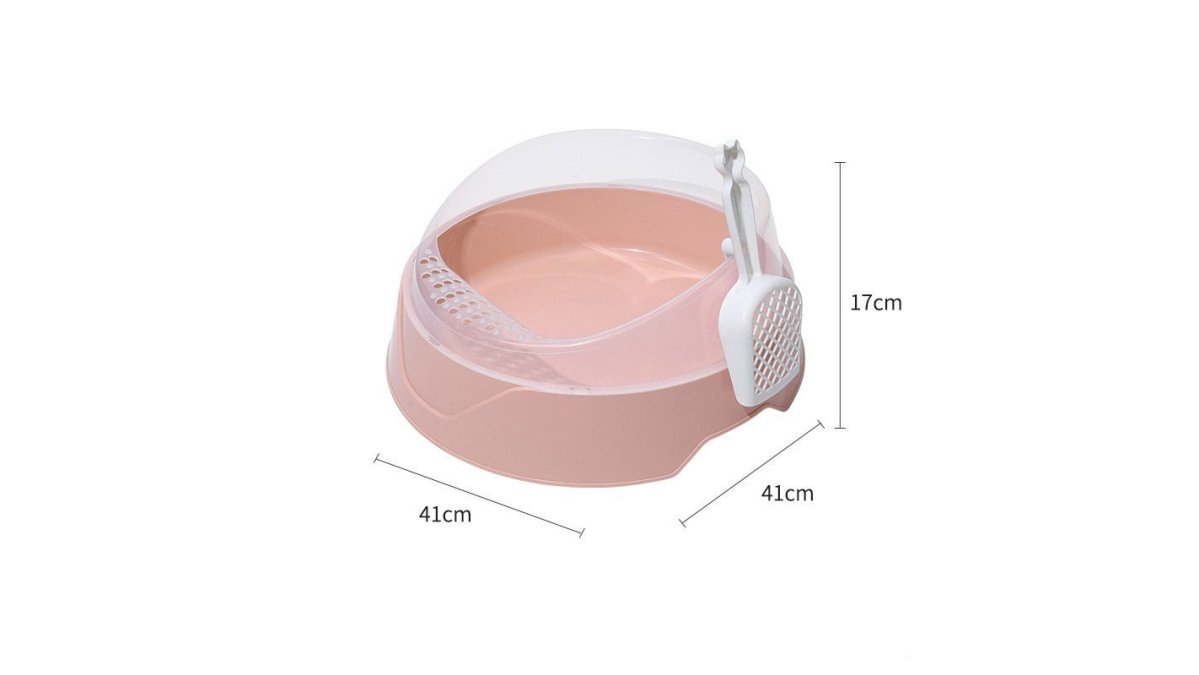
For a semi-enclosed option that balances privacy with easy access, Bentley's Bark carries a Large Semi-Enclosed Cat Litter Box with Shovel at $19.95, available in multiple sizes and colors.
Best Cat Litter Box Material for Your Cat's Needs
The best cat litter box material depends on your cat, not your budget. Steel suits most adult cats and multi-cat homes; plastic suits kittens, fosters, and anyone testing a new box style.
Match the material to the situation:
- Adult cats, long-term: Stainless steel. Odor control, durability, and hygiene all favor it.
- Multi-cat households: Stainless steel, and one box per cat plus one extra. Odor retention compounds fast when several cats share a box.
- Kittens and fosters: Plastic. Cheap, lightweight, and easy to replace as the cat grows.
- Senior cats or cats with mobility issues: A low-entry box matters more than material. Choose whichever material offers the easiest access.
- Automatic litter box users: Check compatibility first. Many automatic units require specific tray dimensions, and a stainless box won't fit every model.
What most guides miss: the sensory experience. Stainless steel feels cooler and stays odor-neutral, which some cats prefer. Plastic holds residual odor even when it looks clean. If your cat avoids the box, the material may be the reason.
Ergonomics matter too. A box too small or too tall creates stress, and stressed cats eliminate outside the box. Size it at roughly one and a half times your cat's body length.
For multi-cat cleaning, the rule is simple: scoop twice daily, full wash every three to four days, and replace plastic boxes more often than in a single-cat home.
If you want to hide the box without sacrificing function, Bentley's Bark offers a BestPet Hidden Cat Litter Box Enclosure at $229.95 that fits extra-large automatic litter boxes and includes a removable divider for storing a scoop and supplies. For a lighter footprint, the Semi-Enclosed Cat Litter Basin with Durable Shovel at $19.95 contains litter and prevents spills.
Cat Litter Box Odor Control Tips for Any Material
Odor control comes down to four habits: daily scooping, weekly washing, full litter replacement, and the right litter. Material helps, but routine does most of the work.
Try these:
- Scoop twice a day in multi-cat homes. Ammonia builds fast.
- Choose unscented, clumping litter. Scented litters mask odor for humans but often repel cats.
- Add a litter mat. Litter tracking spreads waste particles across your floor, and tracking mats cut it substantially.
- Keep the box in a ventilated spot. Good airflow reduces ammonia concentration without trapping smells in a closed cabinet.
- Replace the box on schedule. Plastic every 1 to 3 years, stainless steel when the surface or welds show damage.
- Deep clean monthly, not weekly. Over-scrubbing plastic accelerates surface degradation.
The stainless steel vs plastic cat litter box decision comes down to how long you plan to keep the box and how much odor you'll tolerate. Steel costs more once and solves the problem for a decade; plastic costs less now and asks you to replace it, and live with the smell, until you switch.
Choosing the right litter box affects your cat's health, your home's smell, and your long-term spending all at once. Bentley's Bark curates litter boxes and enclosures built from honest materials, from semi-enclosed basins to furniture-grade cabinets that hide the box without trapping odor. Every order ships free, and each item is Bentley Approved, meaning it solves a real problem rather than adding clutter. Browse the collection at Bentley's Bark and find the setup that fits your cat and your space.
Frequently Asked Questions
Do cats prefer stainless steel litter boxes?
Many cats seem to prefer stainless steel because it does not hold onto odors the way plastic can. Plastic is porous and can absorb urine over time, leading to a lingering ammonia smell that may deter cats. Stainless steel is non-porous, so it stays odor-free after cleaning. However, individual preferences vary, and some cats may be sensitive to the cooler surface or the sound of paws on metal. If your cat avoids the box, try a stainless steel option with low sides and a smooth finish.
What are the downsides of using a stainless steel litter box?
Stainless steel litter boxes typically cost more upfront than plastic ones, though they last much longer. They can feel cold to the touch, which may bother some cats, and they are heavier than plastic, making them harder to move for cleaning. Some cats dislike the noise of litter scraping against metal. Additionally, stainless steel shows scratches and water spots more visibly than plastic, so you may need to wipe it dry for a polished look. Despite these drawbacks, many pet parents find the durability and odor control worth the trade-off.
How do you clean and maintain a stainless steel litter box?
Scoop waste daily and wash the box weekly with warm water and a mild dish soap or a pet-safe disinfectant. Avoid abrasive scrubbers that can scratch the surface. For deep cleaning, fill the box with warm water and a little vinegar, let it sit for 10 minutes, then rinse thoroughly and dry with a soft cloth. Stainless steel does not absorb odors, so you can skip harsh chemicals. If you have multiple cats, clean more frequently to prevent bacterial buildup. Always dry the box completely before adding fresh litter.
Is stainless steel more hygienic for cat litter boxes?
Yes, stainless steel is generally more hygienic because it is non-porous. Plastic develops micro-scratches over time that harbor bacteria and biofilm, which can be difficult to remove even with thorough cleaning. Stainless steel resists scratching and does not absorb liquids, so bacteria have fewer places to hide. This makes it easier to sanitize and reduces the risk of odor retention. For households with immunocompromised cats or multiple cats, stainless steel can help maintain a cleaner litter box environment.
Does plastic absorb cat urine odors over time?
Yes, plastic is porous at a microscopic level, and over time urine can seep into these tiny scratches and pores. Even with regular cleaning, the odor can linger and become more noticeable, especially the ammonia smell. This is why many plastic litter boxes need to be replaced every 12 to 18 months. Stainless steel does not absorb urine, so it stays odor-free for years. If you notice a persistent smell in your plastic box after cleaning, it is likely time to replace it with a stainless steel model.