 Comparison
Are Raw Pet Food Benefits Worth the Risks?
Last Updated: November 1, 2026
Quick Summary
Raw pet food is an uncooked diet of muscle meat, organs and bone, and owners report shinier coats and better digestion. However, those benefits lack scientific support, while raw meat is a significant risk factor for Salmonella shedding in dogs. Weigh the risks against the claims before switching.
- Owners report shinier coats, firmer stools and more energy, but these claims lack scientific support.
- Raw meat consumption is a significant risk factor for Salmonella shedding in dogs.
- Shedding pets can infect people in the home even when the pet looks healthy.
- Thaw raw food in the refrigerator and clean bowls and surfaces after every meal.
- Confirm a complete raw food is labeled complete and balanced for your pet's life stage, not a topper.
Table of Contents
- What Raw Pet Food Is and What It Contains
- The Claimed Benefits of Raw Feeding and What the Evidence Shows
- Raw Pet Food Risks You Should Weigh Before Switching
- Raw Food Compared With Kibble and Fresh-Cooked Diets
- Best Raw Dog Food Brands and Raw Cat Food Brands to Consider
- How to Choose Raw Pet Food Safely and Store It Properly
- Should You Start Your Pet on Raw Food?
- Frequently Asked Questions
Raw pet food has moved from a fringe idea to a fast-growing shelf category, and Canadian pet owners are paying attention. Sales reportedly rose by at least 15% a year in recent years, according to a 2025 review of raw meat diets in pets published in 2025. At Bentley's Bark, we want you to weigh the claimed benefits against the documented risks before you change what goes in your pet's bowl. This guide covers both, along with the brands and storage habits that matter most.
What Raw Pet Food Is and What It Contains
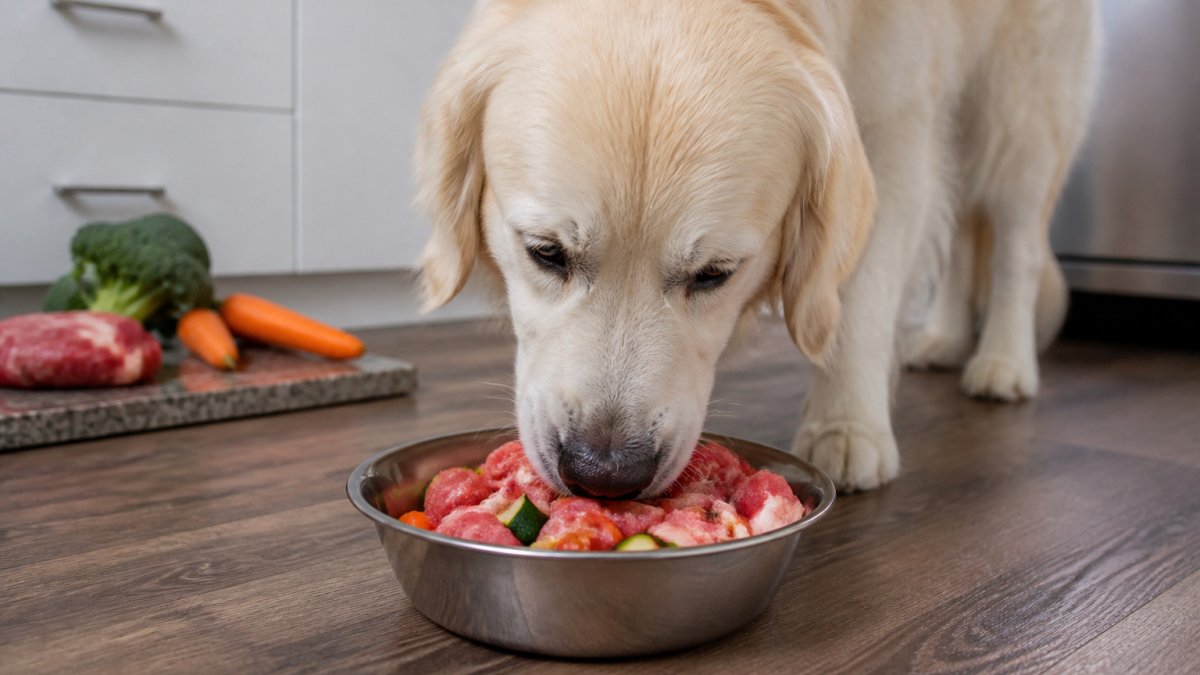
Raw pet food is an uncooked diet built from muscle meat, organs, bone and sometimes eggs or vegetables. Feeding styles vary: some owners use ground mixes, others use whole-prey or raw meaty bones. The diet is usually frozen, freeze-dried or high-pressure processed rather than shelf-stable.
Because raw food is not cooked, its nutritional completeness depends heavily on the formulation. Look for a statement that the food is complete and balanced for your pet's life stage, and check whether it was formulated to a recognized standard.
The Claimed Benefits of Raw Feeding and What the Evidence Shows
Owners often report shinier coats, smaller and firmer stools, cleaner teeth and more energy. A 2025 review notes that owners describe health improvements, but it also states that these reports lack scientific support. That gap matters. Anecdotes are a reason to explore raw feeding, not proof that it works better than a balanced conventional diet.
Some claims are more specific. The raw diet is said to improve digestibility and nutrient absorption, yet controlled comparisons are limited. Treat any brand that promises a specific health outcome with caution, and ask what evidence supports it.
Raw Pet Food Risks You Should Weigh Before Switching
The most serious concern is microbiological. A Cornell University Riney Canine Health Center summary of raw food research reports an epidemiologic study that identified raw meat consumption as a significant risk factor for Salmonella shedding in dogs.
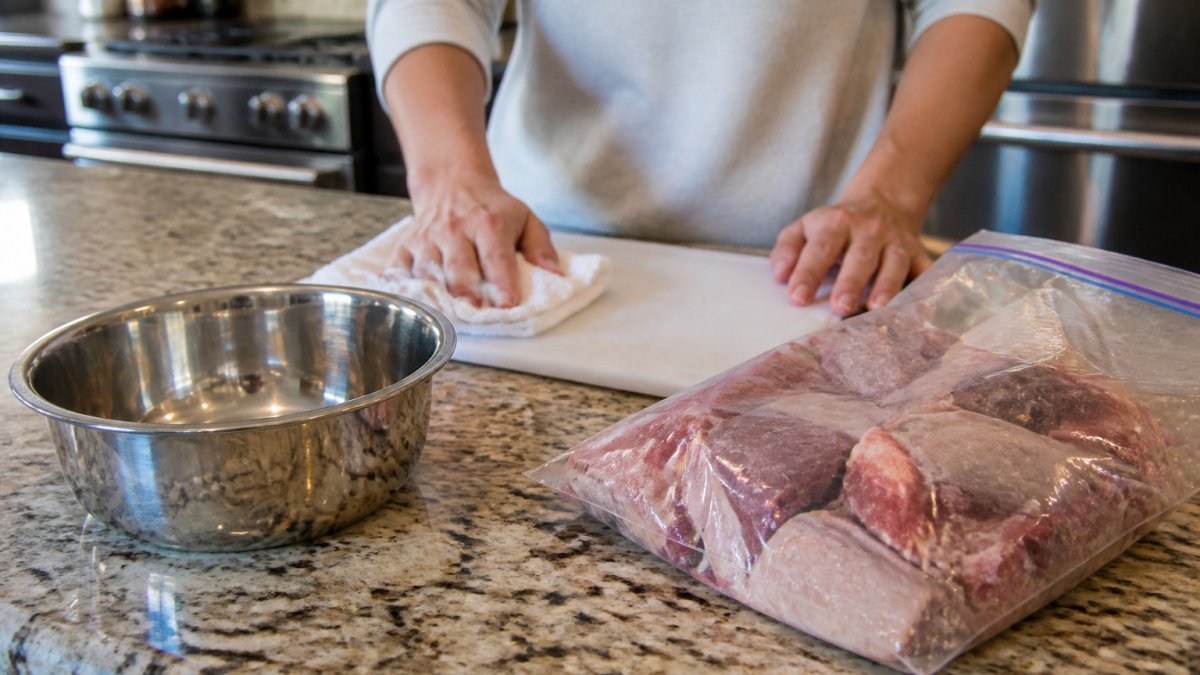
Careful handling can reduce risk. Thaw food in the fridge, clean bowls and surfaces after every meal, and keep raw food separate from human food prep areas. Households with young children, older adults or immune-compromised members should weigh these risks carefully.
Watch out: a pet that sheds Salmonella can infect people in the home even when the pet looks healthy.
The main concerns are microbiological and tied to household risk, as the article outlines:
| Risk | Source in article | Mitigation |
|---|---|---|
| Salmonella shedding | Raw meat consumption is a significant risk factor in dogs | Careful handling and cleaning |
| Human infection | Shedding pets can infect people even when healthy | Weigh risk with children, older adults, immune-compromised members |
| Handling contamination | Raw food is uncooked and needs separation | Thaw in fridge; clean bowls and surfaces after each meal |
| Unverified health gains | Owner reports lack scientific support | Treat as exploration, not proof |
Raw Food Compared With Kibble and Fresh-Cooked Diets
Kibble is convenient, shelf-stable and widely tested, though it is heavily processed. For a concrete kibble alternative to raw, browse a grain-free dry food. You can compare a conventional option such as Hills Prescription Diet K D Kidney Care Dry Cat Food alongside raw diets. Fresh-cooked diets sit between raw and kibble: they avoid raw pathogen risk while offering whole-food ingredients. Raw diets sit at the far end of the spectrum, offering minimal processing alongside the highest microbial risk.
Best Raw Dog Food Brands and Raw Cat Food Brands to Consider
Our range focuses on single-ingredient freeze-dried and air-dried treats. Before ordering, you can compare local pickup with shipping costs.
Air Dried Pumpkin Treats ($12.99). A single-ingredient pumpkin treat that is lightly chewy and easy to crumble over food.
Air-Dried Duck Liver 50g ($21.99). Made from 100% duck liver, with no fillers or preservatives.
Kangaroo Jerky 50g ($21.99). A single-ingredient kangaroo treat with no fillers, preservatives or additives.
Freeze-Dried Salmon Pet Treats ($6.99). Made from one ingredient with no additives. Available in 25g, 50g and 150g sizes.
Freeze-Dried Beef Liver Pet Treats ($6.49). Made from a single freeze-dried ingredient with no additives.
Treats are not a complete diet.
How to Compare Complete Raw Brands Without Relying on Rankings
Most "best raw food" lists rank products by popularity or affiliate payout.
**1.
**2.
3. Pathogen controls and testing. Ask whether the producer publishes batch-level testing results for Salmonella, Listeria and E. coli, and whether it follows a recognized food-safety program.
4. Feeding format and convenience. Frozen raw requires freezer space and fridge thawing; freeze-dried and air-dried products are shelf-stable but often cost more per calorie.
5. Life-stage suitability. Puppies, pregnant or nursing animals, and seniors have different nutrient needs.
**6.
Complete Meals vs. Toppers: A Distinction That Changes the Decision
Many products sold as "raw" are toppers or treats, not complete diets. A complete raw meal supplies all essential nutrients in the correct proportions; a topper supplies some nutrients and is meant to be added to a balanced base diet. Feeding a topper as a meal can create deficiencies over time. Before you buy, read the adequacy statement and the feeding guide, and confirm the product is intended as a complete diet for your pet's species and life stage.
When a Raw Brand May Not Be the Right Fit
Raw diets are not appropriate for every pet. Puppies, seniors, pregnant or nursing animals, and pets with medical conditions such as kidney disease, pancreatitis or immune compromise should be fed under veterinary supervision, and some may do better on a cooked or therapeutic diet. Households with young children, older adults or immunocompromised members should also weigh the pathogen risk carefully before introducing raw food. If any of these apply, a freeze-dried or air-dried topper used alongside a complete conventional diet can deliver some of the variety owners want with less handling risk.
How to Choose Raw Pet Food Safely and Store It Properly
Start by reading the complete-and-balanced statement and confirming it matches your pet's life stage. Check whether the producer publishes pathogen testing results, and whether the product was made under a recognized food-safety program.
Manufacturing Controls and Batch Testing
Raw pet food is not cooked, so pathogen control depends on the producer's process rather than on a kill step. Ask whether the manufacturer tests every batch or only finished product occasionally, and whether it publishes results for Salmonella, Listeria monocytogenes and E. coli. A producer that follows a recognized food-safety program and posts batch-level results gives you more to work with than one that only states "tested for safety." High-pressure processing can reduce pathogen loads but does not sterilize food, so it is not a substitute for careful handling at home.
Thawing and Handling at Home
Thaw frozen raw food in the refrigerator, never on the counter. Keep it in a container on the bottom shelf so drips cannot contaminate other food. Once thawed, use the portion within the time the producer specifies, and discard anything left uneaten after a meal. Do not refreeze thawed raw food unless the producer says it is safe to do so.
Cleaning and Cross-Contamination
Wash bowls, utensils, cutting boards and counters with hot soapy water after every meal, and keep a dedicated board and knife for raw food if you can. Clean the fridge shelf and any surfaces that contacted the package. Wash your hands after handling raw food, and avoid preparing raw pet food in the same area where you prepare human food. A non-slip feeding mat makes cleanup simpler and keeps floors cleaner after meals. You can find a non-slip feeding mat designed for this purpose.
Storage That Protects Quality and Safety
Keep frozen raw food frozen until you need it, and store freeze-dried and air-dried products in a cool, dry place away from direct light. Store food in a sealed container to keep it fresh and away from other pantry items. An airtight storage box for dog and cat food is one way to do this. Label containers with the date you opened them, and follow the producer's use-by guidance. If a product looks or smells off after thawing, discard it rather than feeding it.
A Practical Safety Checklist
- Confirm the product is complete and balanced for your pet's species and life stage, or labeled as a topper.
- Check whether the producer publishes batch-level pathogen testing results.
- Thaw in the refrigerator, not on the counter.
- Use a dedicated cutting board and utensils for raw food.
- Clean bowls, surfaces and the fridge shelf after every meal.
- Wash hands after handling raw food and before touching human food.
- Discard thawed portions that are not eaten within the producer's recommended window.
- Consult your veterinarian before feeding raw food to puppies, seniors, pregnant or nursing animals, or pets with medical conditions.
Should You Start Your Pet on Raw Food?
Raw feeding can suit some households, especially owners who will handle food carefully and monitor their pet's health with a veterinarian. It is a poor fit for homes with vulnerable people or pets with compromised immunity, and it should not replace veterinary guidance for a pet with a medical condition.
If you decide to try it, change the diet gradually over several days and watch stool quality, appetite and energy. Browse our curated treats at Bentley's Bark to add a single-ingredient reward to your routine, and talk to your vet before making a full diet change.
Frequently Asked Questions
What are the potential benefits of raw food for pets?
Owners often report better stool quality, a shinier coat and improved energy, and a 2025 review notes that these reports are common among owners. However, that review also states that these owner-reported improvements lack robust scientific support. Raw feeding is best understood as a diet choice that owners sometimes prefer for these reasons, not as a proven health treatment. If you want to test it, track your pet's stools, coat and energy for several weeks and compare them with your pet's baseline, then review the changes with your veterinarian.
Is raw pet food safe for dogs and cats?
Raw pet food carries food-safety risks. Cornell's Riney Canine Health Center cites a study that identified raw meat consumption as a significant risk factor for Salmonella shedding in dogs. Raw diets can also expose people in the household to pathogens through handling, so hygiene matters as much as the diet itself. Safety depends on the product, how it is handled and the health of the pets and people in the home, so ask your veterinarian whether raw feeding suits your household.
Should I talk to a veterinarian before switching my pet to raw food?
Yes. A veterinarian can review your pet's age, health status and any existing conditions before you change the diet. Puppies, kittens, senior pets and animals with immune problems usually need closer oversight. A vet can also help confirm that a complete and balanced product meets your pet's needs and suggest a gradual feeding transition. Bring the exact product label with you so the discussion focuses on what you plan to feed.
How should raw pet food be stored and handled?
Store raw food frozen until you need it, and thaw it in the refrigerator rather than on the counter. Clean bowls, utensils and surfaces with hot soapy water after every meal, and wash your hands after handling. Do not leave uneaten raw food out at room temperature. Keep raw food away from human food preparation areas, and avoid letting pets lick faces or eat from shared plates. These steps reduce the chance of cross-contamination.