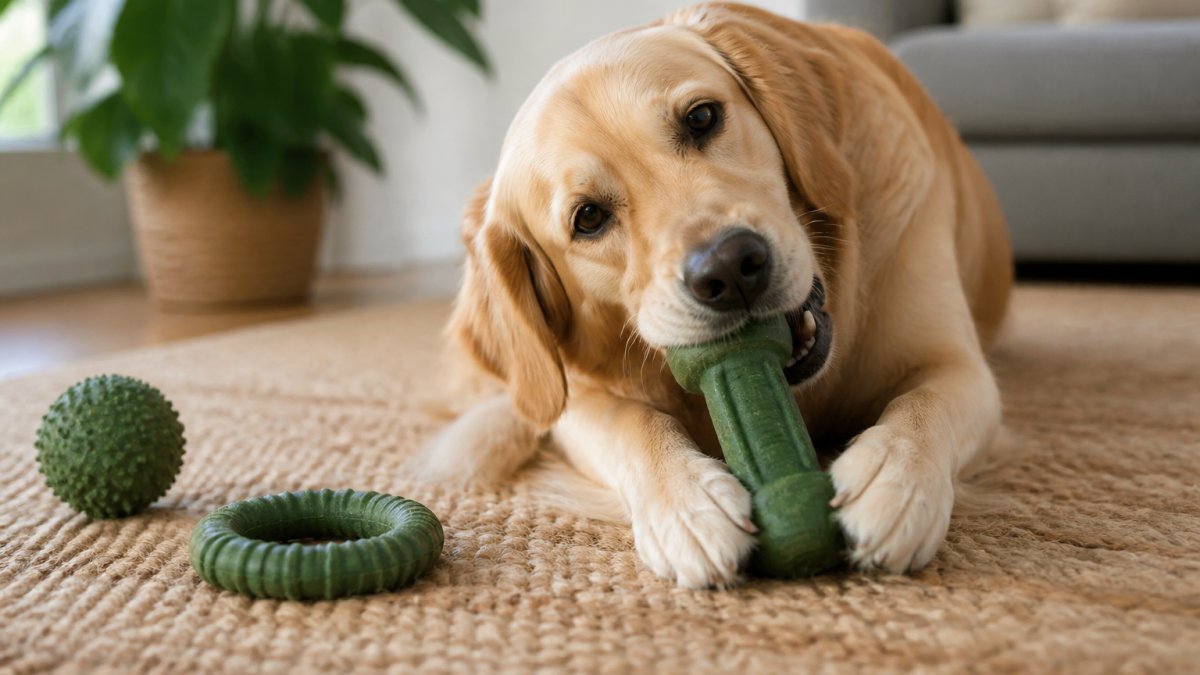
 comparison
Natural Rubber Dog Toys: Alternatives to Plastic
Table of Contents
- Why Natural Rubber Dog Toys Matter
- Natural Rubber vs. TPR Dog Toys: Material Comparison
- Safe Dog Toy Materials: What to Look For
- Durable Dog Toys for Aggressive Chewers
- Plastic-Free Toy Options Beyond Natural Rubber
- Toy Care, Inspection, and Replacement
- Bentley's Bark Natural Rubber Toy Selection
- Conclusion
- Frequently Asked Questions
Last Updated: October 4, 2026
Why Natural Rubber Dog Toys Matter
Natural rubber dog toys have become a go-to choice for pet parents who want durable, safer alternatives to plastic.
The shift toward natural rubber dog toys reflects a broader awareness among dog owners. Many pet parents are discovering that what their dog chews on matters just as much as what they eat. When a dog gnaws on a toy for hours, small particles inevitably break off.
At Bentley's Bark, we've curated a selection of toys specifically designed to prioritize your dog's safety while delivering the durability aggressive chewers demand. The toys we source are built from materials that stand up to serious chewing without compromising your dog's health.
Natural Rubber vs. TPR Dog Toys: Material Comparison
Natural Rubber: Sourcing and Properties
Natural rubber comes from the rubber tree, a renewable resource harvested in tropical regions. The latex is tapped from the tree, processed, and vulcanized to create a stable, durable material. This process gives natural rubber its distinctive properties: flexibility, resilience, and resistance to tearing.
Natural rubber dog toys flex without breaking easily. When your dog bites down, the material compresses and rebounds rather than cracking. This makes natural rubber particularly effective for dogs that chew with serious force.
One important distinction: natural rubber and latex are not identical. Food-grade latex rubber, like the material used in the Rubber Sounding Rugby Dog Ball, is processed to remove allergens and is specifically formulated for safety in products that contact mouths. This differs from raw latex, which can trigger allergies in sensitive dogs.
TPR and Synthetic Rubber: How They Differ
TPR stands for thermoplastic rubber, a synthetic material engineered to mimic rubber's properties. TPR is cheaper to produce than natural rubber, which is why it appears in many mass-market toys. However, TPR has a critical weakness: it degrades faster under sustained chewing.
When a dog works on a TPR toy for weeks, the material begins to break down. Small pieces flake off. Over time, TPR toys develop a worn, grainy surface that can irritate gums. Synthetic rubber, another petroleum-derived alternative, has similar limitations.
The trade-off is price. TPR toys cost less upfront. But if your dog destroys a TPR toy in three weeks and you're replacing it monthly, the long-term cost exceeds that of a natural rubber toy that lasts six months or longer.
Safe Dog Toy Materials: What to Look For
Chemical Safety and Non-Toxic Standards
The material itself matters less than what's in it. Even natural rubber can contain additives, colorants, stabilizers, and processing chemicals, that pose a risk if ingested. The safest toys are made from materials that have been tested and certified to exclude harmful substances.
Look for toys that use food-grade materials. This designation means the toy has been processed to meet safety standards for products that contact mouths. Food-grade latex rubber, for example, is processed to remove latex proteins that trigger allergies.
When evaluating any dog toy, check the manufacturer's documentation. Reputable brands disclose their material sourcing and any third-party testing. If a toy listing doesn't mention safety testing or material sourcing, that's a red flag. Your dog's safety shouldn't depend on guesswork.
Avoiding Harmful Plastics and PVC
PVC (polyvinyl chloride) is a plastic that releases phthalates, chemicals used to make plastic flexible (Phthalates). Phthalates are endocrine disruptors linked to developmental and reproductive issues (pubmed.ncbi.nlm.nih.gov).
Dog toys fall into a regulatory gray zone in most markets. Unlike children's toys, dog toys aren't subject to the same strict testing requirements. This means a toy can legally contain PVC and phthalates even if those same chemicals would be banned in a children's toy.
Avoid toys with a strong chemical smell, that's often a sign of off-gassing from plasticizers and other additives. Natural rubber toys, when made properly, have a mild, earthy smell. A toy that smells acrid or plastic-like is likely leaching chemicals.
Durable Dog Toys for Aggressive Chewers
Firmness and Chew Strength Ratings
Not all rubber toys are created equal. Firmness varies significantly depending on the rubber blend and manufacturing process. A toy that's too soft will compress under your dog's bite and offer little resistance, it becomes boring quickly. A toy that's too hard risks damaging teeth.
The sweet spot for aggressive chewers is a toy with medium-to-firm density. It should compress slightly under pressure but snap back quickly. When you squeeze it with your hand, it should feel solid, not squishy. This firmness encourages healthy chewing behavior without punishing your dog's teeth.
The Durable Dog Chew Ball at $19.95 is engineered with this firmness profile. Its solid rubber construction provides the resistance aggressive chewers need while remaining safe for sustained chewing.
Sizing and Toy Selection by Chewing Behavior
Size matters more than many pet parents realize. A toy that's too small poses a choking hazard. A toy that's too large becomes difficult for your dog to manipulate, which reduces play engagement and satisfaction.
The general rule: choose a toy larger than your dog's mouth. Your dog should be able to hold it comfortably without being able to swallow it.
Chewing behavior also dictates toy selection. Power chewers who exert maximum force need toys with superior firmness and durability. Casual chewers who mouth toys gently can handle softer options.
The Gourd-Shaped Chew Toy for Dogs at $39.95 comes in sizes from XS to XXL, allowing you to match the toy precisely to your dog's size and chewing intensity.
Durable Dog Chew Ball - Solid Rubber Bouncing Toy →
Plastic-Free Toy Options Beyond Natural Rubber
Wool, Hemp, and Organic Cotton Toys
Natural fiber toys offer a completely different chewing experience than rubber. Wool toys are dense, long-lasting, and naturally antimicrobial. They don't shed fibers like lower-quality rope toys, and they're biodegradable at end-of-life. Hemp toys are similarly durable and have a coarser texture that many dogs find satisfying.
Organic cotton rope toys are lighter and work well for dogs that prefer to toss and carry rather than power-chew. They're also machine-washable, which makes hygiene management simpler than with rubber toys.
The advantage of natural fiber toys is their sustainability. Unlike rubber, which requires harvesting and processing, wool and hemp are agricultural byproducts. At end-of-life, they compost rather than persisting in landfills for decades. For environmentally conscious pet parents, natural fiber toys offer a genuine plastic-free alternative.
Silicone and Food-Grade Latex Alternatives
Silicone is a synthetic polymer that's inert and doesn't leach chemicals the way some plastics do. Food-grade silicone toys are safe for chewing and are often easier to clean than rubber, they can go in the dishwasher. Silicone is also less likely to stain or retain odors.
The downside of silicone is durability. It's softer than natural rubber, which means aggressive chewers can damage it faster. Silicone works best for moderate chewers or as an accessory toy rather than a primary chew toy.
Food-grade latex, as mentioned earlier, is natural rubber processed for safety. The Rubber Sounding Rugby Dog Ball uses this material and includes a squeaker that adds auditory engagement. At $29.95, it's priced between basic rubber toys and premium options, reflecting the added durability and safety testing involved.
Toy Care, Inspection, and Replacement
A toy's lifespan depends on use intensity and maintenance. Inspect your dog's toys weekly for signs of damage. Look for tears, missing chunks, or surface degradation. A toy with visible damage should be removed immediately, the risk of ingestion outweighs the cost of replacement.
Clean rubber toys regularly. Most can be wiped with warm soapy water and air-dried. Some can be boiled to sanitize them. Check the manufacturer's instructions before submerging, some toys have internal squeakers that can be damaged by water.
Replace toys when they show consistent wear. A toy that's lost its shape, developed tears, or is shedding material has reached end-of-life. The cost of a replacement toy is minor compared to the risk of intestinal blockage from ingested fragments.
| Toy Material | Durability (Aggressive Chewers) | Best For | Maintenance |
|---|---|---|---|
| Natural Rubber | 4-8 months | Power chewers | Warm water cleaning |
| TPR/Synthetic Rubber | 6-12 weeks | Moderate chewers | Warm water cleaning |
| Food-Grade Latex | 3-6 months | Interactive play | Warm water, air dry |
| Silicone | 2-4 months | Moderate chewers | Dishwasher safe |
| Wool/Hemp | 6-12 months | Casual chewers | Hand wash, air dry |
Bentley's Bark Natural Rubber Toy Selection
We've selected natural rubber toys that prioritize durability and safety.
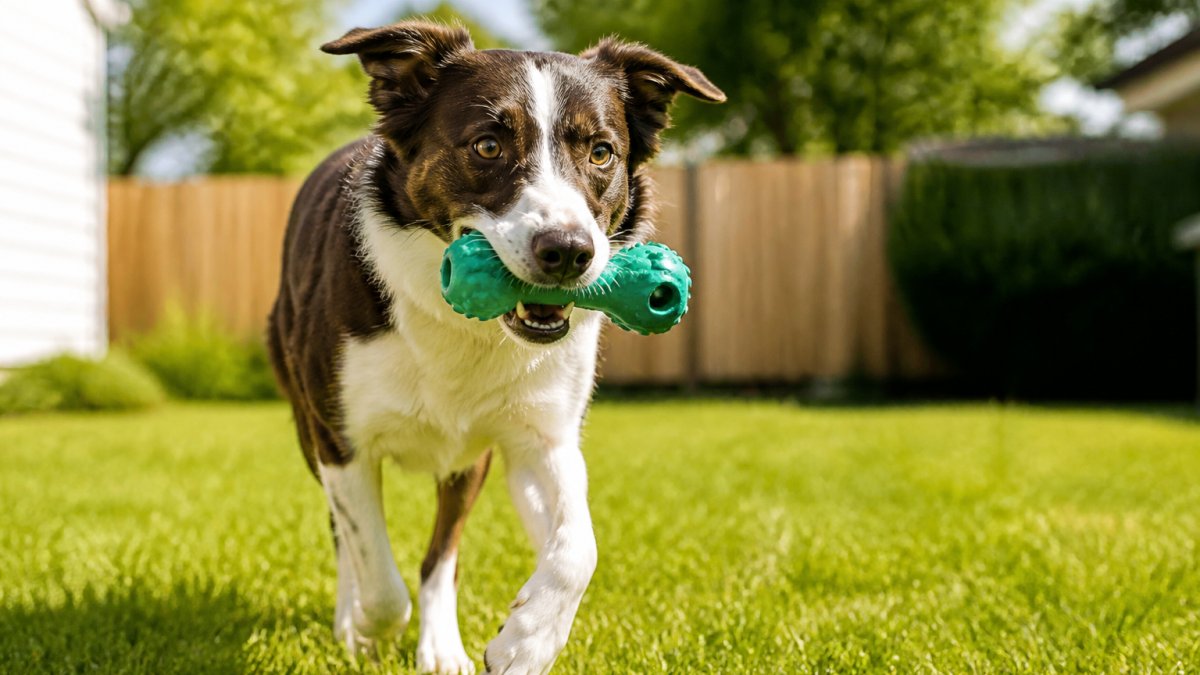
The Rubber Sounding Rugby Dog Ball ($29.95) combines natural food-grade latex rubber with a squeaker mechanism.
For aggressive chewers seeking maximum durability, the Rubber Molar Stick Chew Toy ($19.95) is engineered with a dense, firm rubber construction.
The Gourd-Shaped Chew Toy for Dogs ($39.95) offers treat-dispensing functionality alongside durable rubber construction. Available in XS to XXL sizes, it accommodates dogs of any size.
For dogs that enjoy bouncy, interactive play, the Durable Dog Chew Ball ($19.95) delivers solid rubber construction in multiple sizes.
All of our natural rubber toys come with complimentary shipping on every order, and we've sourced each one based on durability testing and safety standards that exceed typical market offerings.
Conclusion
Choosing natural rubber dog toys over plastic isn't just about trend-following, it's a practical decision that protects your dog's health while delivering superior durability. Natural rubber resists degradation, minimizes chemical exposure, and lasts longer than TPR or synthetic alternatives, which means fewer replacements and less waste over time.
At Bentley's Bark, we've built our toy selection around this principle. Every toy we carry has been evaluated for material safety, durability under aggressive chewing, and genuine value. Start with the Durable Dog Chew Ball or Rubber Sounding Rugby Dog Ball, and discover why natural rubber dog toys have become the choice of pet parents who refuse to settle.
Frequently Asked Questions
Are natural rubber dog toys safe for dogs to chew?
Yes, natural rubber dog toys are generally safe when they are food-grade, non-toxic, and free from harmful chemicals like PVC and phthalates. Natural rubber is derived from rubber trees and breaks down more readily than synthetic plastics if ingested in small amounts. Always choose toys from reputable brands that verify non-toxic materials, and inspect toys regularly for damage or pieces that could be swallowed. Remove any toy that shows significant wear.
What's the difference between natural rubber and TPR dog toys?
Natural rubber is sourced from rubber tree sap and is biodegradable and eco-friendly, making it a plastic-free alternative. TPR (thermoplastic rubber) is a synthetic rubber blend that combines plastic and rubber properties, offering durability but with less environmental benefit. Both can be non-toxic, but natural rubber aligns better with sustainability goals.
How do I choose a durable dog toy for an aggressive chewer?
For aggressive chewers, prioritize toys made from firm, high-quality rubber that resists puncturing and tearing. Look for toys specifically rated for tough chewers, with a density that won't compress easily under strong jaw pressure. Size matters: choose a toy large enough that your dog cannot fit it entirely in their mouth. The Rubber Molar Stick Chew Toy ($19.95) is designed for aggressive chewers and features a molar shape that encourages healthy chewing. Always supervise play and inspect the toy weekly for damage.
What are the best plastic-free dog toy materials besides natural rubber?
Plastic-free alternatives include wool, hemp, and organic cotton for rope toys and plush toys, as well as food-grade silicone and latex rubber. Wool and hemp are biodegradable and eco-friendly. Silicone is durable, non-toxic, and easy to clean. Natural food-grade latex rubber (as found in the Rubber Sounding Rugby Dog Ball, $29.95) offers a softer texture while remaining durable. Choose based on your dog's chewing intensity and play style.
How often should I replace my dog's natural rubber toys?
Inspect toys weekly for signs of damage, including cracks, punctures, loose pieces, or significant wear. Replace toys immediately if pieces can be torn off, as ingestion poses a choking or blockage risk. With proper care and regular inspection, high-quality natural rubber toys can last a long time, depending on chewing intensity. Aggressive chewers may need replacements more frequently than gentle chewers. Rotate toys to extend their lifespan and maintain your dog's interest.