 ultimate-guide
What Are the Benefits of Smart Pet Cameras?
Table of Contents
- What Are the Benefits of Smart Pet Cameras?
- Real-Time Monitoring and Live Streaming for Pet Safety
- Pet Camera With Treat Dispenser Benefits: More Than Just a Snack
- How to Choose a Pet Camera for Separation Anxiety
- Smart Pet Camera Privacy and Security Tips
- Tracking Eating, Drinking, and Activity Habits
- Troubleshooting Common Wi-Fi and Connectivity Issues
- Conclusion: Is a Smart Pet Camera Right for Your Home?
- Frequently Asked Questions
Last Updated: September 10, 2026
What Are the Benefits of Smart Pet Cameras?
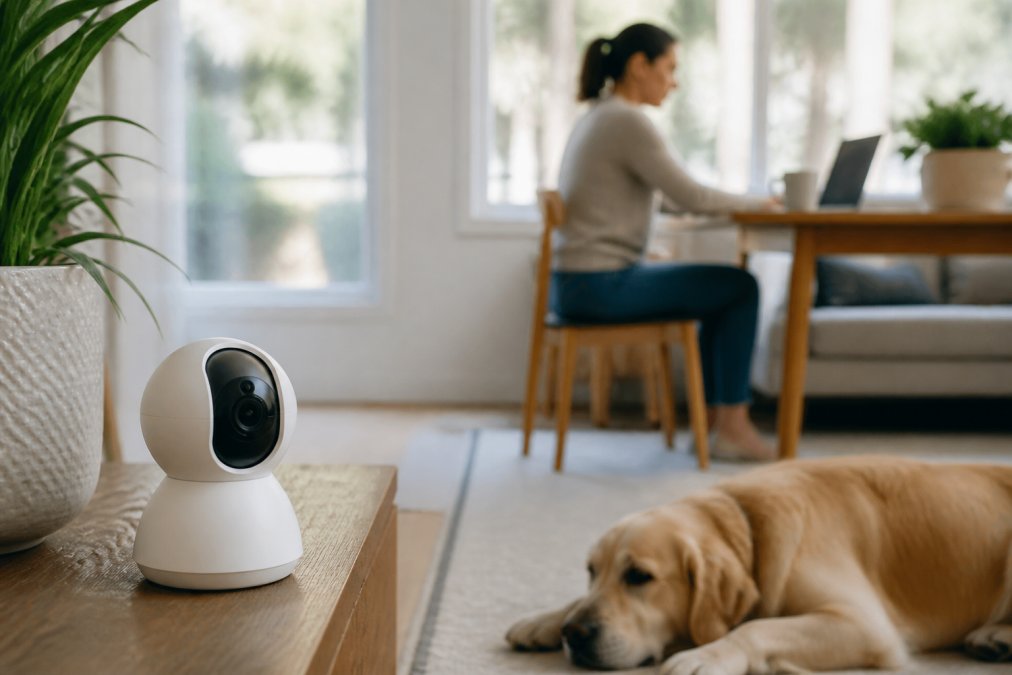
Smart pet cameras are internet-connected devices that let you watch, talk to, and sometimes feed your pet from anywhere using a phone app. For pet parents who work long hours, travel, or simply worry about a pet home alone, they turn guesswork into visibility.
That visibility matters more than most people expect. According to the American Pet Products Association's pet ownership research, pet owners consistently rank worry about their animals while away from home among their top day-to-day concerns. This guide from Bentley's Bark walks through the practical benefits, the trade-offs, and what to check before you buy. Below, we'll show you exactly how to match a camera to your pet's real needs.
Real-Time Monitoring and Live Streaming for Pet Safety
Live streaming is the core feature, and it is the one you'll use every day. A camera with app integration streams video to your phone in real time, so you can confirm your dog is sleeping rather than chewing the couch.
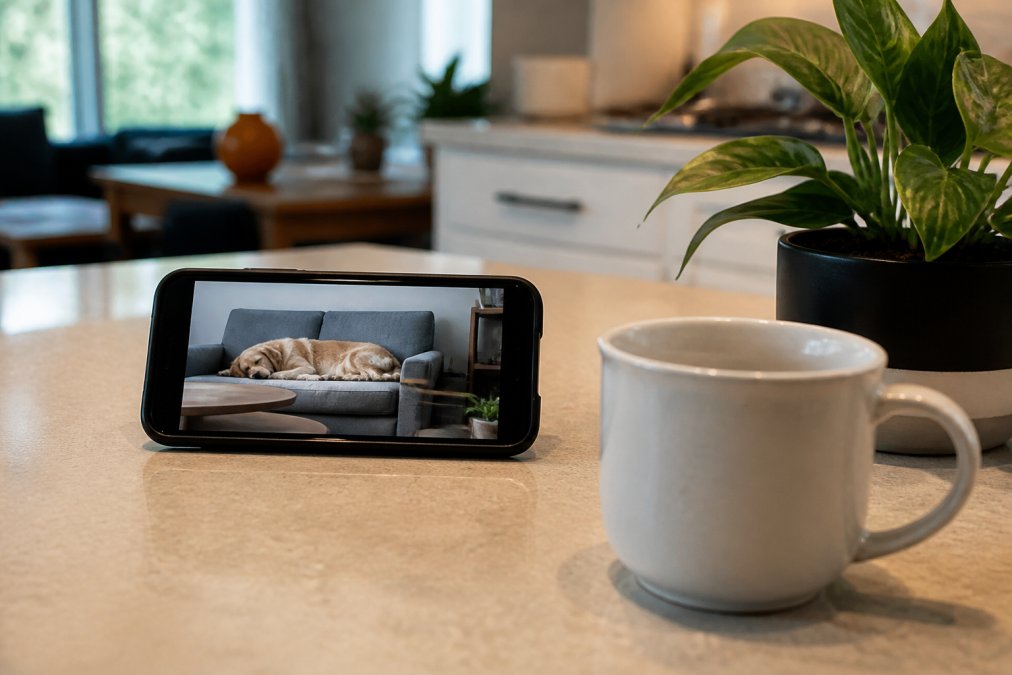
Look for these capabilities when comparing models:
- Night vision for checking on pets after dark
- Motion detection that triggers recording when something moves
- Two-way audio so you can speak to your pet or hear barking
- Push notifications that alert you to unusual activity
- Cloud storage or a local memory card for reviewing clips later
Pet Camera With Treat Dispenser Benefits: More Than Just a Snack
A treat dispenser turns a passive camera into a remote interaction tool. The pet camera with treat dispenser benefits go beyond entertainment: tossing a treat while you're away creates a positive association with your absence, which helps with behavioral reinforcement.
The catch is mechanics. Kibble-sized treats work reliably; large biscuits jam the dispenser. Check the maximum treat size before ordering, and confirm the hopper is removable for cleaning. A dispenser that's awkward to wash becomes a mould problem within weeks.
For scheduled feeding rather than occasional treats, a dedicated smart feeder does the job better. The 6L Smart Automatic Pet Feeder with WiFi & Camera combines scheduled meals with a built-in camera, so feeding and check-ins happen through one app.
How to Choose a Pet Camera for Separation Anxiety
Choosing a pet camera for separation anxiety comes down to interaction quality and timing, not video resolution. A 4K image is useless if your dog can't hear your voice clearly or if the treat reward arrives too late to connect with the behavior. This is also where most generic buying guides stop, they list features without explaining which ones actually change an anxious animal's experience, or why dogs and cats need different setups.
Why the mechanism matters more than the spec sheet
Separation anxiety is maintained by an anticipation-and-panic cycle: your departure cues (keys, shoes, door) trigger distress before you've even left, and the distress is reinforced by the relief of your return. A camera can interrupt that cycle in two ways, by providing a familiar voice cue during the anxious window, and by delivering a reward that competes with the panic response. Neither works if the latency is high. If your voice reaches your dog three seconds after you speak, it no longer functions as a live presence cue; it becomes an unexplained noise. Test two-way audio during the return window and time it. Under roughly one second of lag is the practical target most owners find tolerable.
Dogs versus cats: different needs, different setups
For dogs, the priority is audio presence and predictable reward timing. A dog with true separation anxiety often benefits more from hearing your voice at a scheduled interval than from a random treat drop, because predictability reduces the uncertainty that drives the panic. Look for app scheduling that lets you set recurring check-in times, and a dispenser with adjustable portion size so a reward doesn't become a meal.
For cats, the priority shifts to activity monitoring and low-stress observation. Cats are more likely to be disturbed by a camera that moves, lights up, or emits a sudden sound than by one that simply watches. A fixed wide-angle camera near a favorite perch or window gives you a reliable activity baseline without adding a stressor. Motion-triggered recording is more useful here than live streaming, because you're reviewing patterns rather than watching in real time.
A practical selection checklist
- Two-way audio with minimal lag (test it during the return window)
- Treat dispenser with adjustable portion size and a removable, washable hopper
- Wide field of view covering your pet's main resting spot, not just the room's center
- Reliable Wi-Fi connectivity at your home's actual signal strength, test from the camera's mounting spot, not next to the router
- App scheduling so you can set recurring check-in reminders rather than relying on impulse
- For cats: a fixed, quiet model with motion-triggered recording rather than a pan-and-tilt unit
Smart Pet Camera Privacy and Security Tips
Security is the benefit nobody advertises, and it's where most buyers get caught out. An unsecured camera is a live window into your home, and cheap models sometimes ship with weak default passwords and unencrypted streams.
Basic protections that take ten minutes to set up:
- Change the default password immediately after setup
- Enable two-factor authentication on the companion app
- Update firmware whenever the manufacturer pushes a release
- Put the camera on a separate guest Wi-Fi network
- Turn off remote access when you don't need it
Canada's privacy regulator has published guidance on smart home device privacy and connected toy safety, covering exactly the kind of data these devices collect. Worth reading before you mount a camera over your pet's bed.
Tracking Eating, Drinking, and Activity Habits
Pet health monitoring is the sleeper benefit, and it's the one most buying guides under-develop. Cameras positioned near food and water bowls show you patterns you'd otherwise miss: a cat drinking more than usual, a dog leaving meals untouched, a senior pet pacing at 3 a.m. The value isn't the single observation, it's the trend line you can hand to your veterinarian.
What the patterns actually suggest
- Increased drinking in cats is one of the earliest observable signs of several common conditions, including kidney disease and diabetes. Because cats are masters at hiding illness, a camera that records bowl visits can surface a change weeks before behavior at home looks different.
- Reduced activity in dogs often shows up as more time on the bed and less greeting at the door. A camera gives you a rough activity baseline, how many times your dog moved, how long they slept, that makes 'he seems slower lately' a measurable statement rather than a feeling.
- Repeated pacing, circling, or staring at walls warrants a vet call. These are not normal settling behaviors, and video evidence helps your vet distinguish them from ordinary restlessness.
- Meal skipping that lasts more than a day in a cat is more urgent than in most dogs, because cats can develop serious liver complications quickly when they stop eating.
Building a useful baseline
The trick is to record normal before you need abnormal. For the first two weeks after setup, review clips at the same time each day and note roughly how often your pet visits the bowl and how active they are. That baseline is what makes a change visible. Without it, you're comparing today to a memory.
What a camera can't do
A camera won't diagnose anything, and it shouldn't be used to delay a vet visit. It gives you the timeline your veterinarian needs, when the behavior started, how often it happens, whether it's tied to a time of day, which is often the difference between catching a problem early and catching it late. Bring clips, not just descriptions. Most practitioners find video far more useful than an owner's recollection, especially for episodic behaviors like limping or head-tilting that may not appear in the exam room.
Troubleshooting Common Wi-Fi and Connectivity Issues
Most connectivity complaints trace back to signal strength, not faulty hardware. Before returning a camera, try these fixes in order:
| Problem | Likely Cause | Fix |
|---|---|---|
| Camera won't connect | Wrong Wi-Fi band | Switch to 2.4 GHz network |
| Constant disconnects | Weak signal | Move router or add a mesh node |
| Laggy live video | Bandwidth congestion | Lower stream quality in app |
| Treat dispenser offline | Firmware mismatch | Update app and device firmware |
| No notifications | Battery or sleep mode | Check power and alert settings |
Conclusion: Is a Smart Pet Camera Right for Your Home?
A smart pet camera earns its place if you're away regularly and want real visibility into your pet's day. It won't replace a midday walk or a vet visit, but it closes the gap between wondering and knowing.
At Bentley's Bark, we stock smart gadgets chosen for exactly this purpose. Our 6L Smart Automatic Pet Feeder with WiFi & Camera handles scheduled feeding with camera monitoring, and our Smart Automatic Cat and Dog Laser Toy keeps pets active while you're away. Every order ships free.
Frequently Asked Questions
Are pet cameras always recording?
Most smart pet cameras offer continuous recording, motion-triggered recording, or both. Continuous recording uses more bandwidth and often requires cloud storage, which may come with a subscription. Motion-triggered recording saves clips only when your pet moves, using less data. You can typically adjust recording settings in the companion app to match your preferences and privacy comfort level.
What are the benefits of using a dog camera?
A dog camera lets you check in on your dog during the day, speak to them through two-way audio, and watch for signs of distress or illness. Many models include treat dispensers for remote interaction and positive reinforcement. Features like night vision and motion detection keep you informed even when you are away. For dogs with separation anxiety, the ability to hear your voice can provide comfort and reduce stress.
Can smart pet cameras help with separation anxiety?
Smart pet cameras can support pets with separation anxiety by providing remote interaction through two-way audio and treat dispensing. However, they are not a cure. A camera helps you monitor your pet and offer reassurance, but lasting improvement usually requires behavioral training. If your pet shows severe distress, consult your veterinarian or a certified animal behaviorist for a tailored plan.
Do you need Wi-Fi for a pet camera?
Yes, most smart pet cameras require a Wi-Fi connection to stream live video, send push notifications, and enable remote features like treat dispensing. Some models include a local storage option, such as a microSD card, so recording continues if Wi-Fi drops. A stable 2.4 GHz network is often recommended for the most reliable connection.
Leaving a pet home alone is hard, and no gadget removes that entirely. What a good camera does is replace anxiety with information. Browse the Bentley's Bark smart pet collection to find a setup that fits your routine, your Wi-Fi, and your pet, with complimentary shipping on every order.