 ultimate-guide
Slow Feeder Bowls for Fast Eaters: A Complete Guide
Table of Contents
- Why Fast Eating Is a Problem for Dogs
- How Slow Feeder Bowls Work
- The Dangers of Canine Bloat and How Slow Feeders Help
- Mental Stimulation for Dogs Through Interactive Feeding
- How to Stop a Dog From Eating Too Fast
- Choosing the Right Slow Feeder Bowl for Your Dog
- Slow Feeder Bowls Worth Your Investment
- Frequently Asked Questions
Last Updated: September 22, 2026
Why Fast Eating Is a Problem for Dogs
Dogs that eat too quickly face serious health risks. When a dog gulps food without chewing, they swallow large amounts of air along with kibble, a condition called aerophagia. This air gets trapped in the stomach, stretching the organ and creating discomfort that can escalate into life-threatening emergencies.
The real danger lies in what happens next. Fast eating combined with aerophagia creates the perfect conditions for gastric dilatation-volvulus, commonly known as bloat or gastric torsion. In this condition, the stomach fills with gas and may twist on itself, cutting off blood supply to the organ. Without emergency veterinary intervention, bloat is often fatal. Large and deep-chested breeds like Great Danes, German Shepherds, and Greyhounds face particularly high risk, though any dog can develop the condition.
Rapid eating also causes regurgitation, vomiting, and chronic indigestion. Dogs don't give their digestive system time to process food properly, leading to nutrient absorption problems and inconsistent bowel movements. Some dogs develop food aggression or anxiety around mealtimes because eating has become frantic rather than calm.
Slow feeder bowls address these problems directly by forcing dogs to eat at a measured pace. Instead of inhaling an entire meal in seconds, dogs work through obstacles and compartments that require them to slow down, chew properly, and eat in a way that mimics natural foraging behavior.
How Slow Feeder Bowls Work
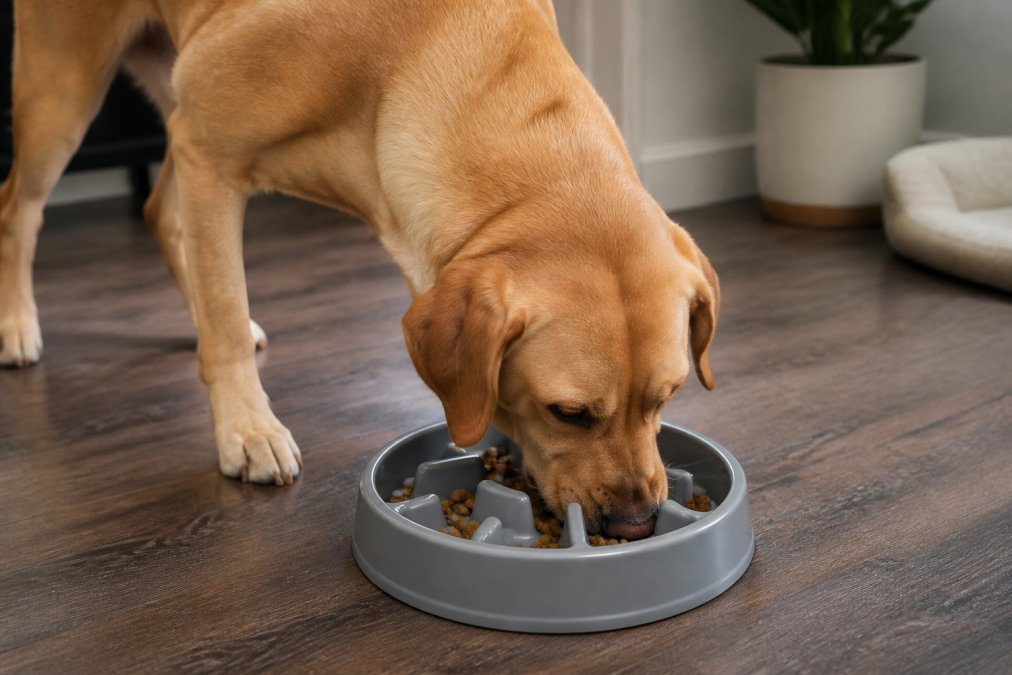
Slow feeder bowls use physical design to create barriers between the dog and their food. Instead of a flat surface, they feature raised ridges, maze-like patterns, or compartments that require dogs to navigate obstacles to access each mouthful.
As your dog eats, raised sections or dividers force them to slow their pace. Instead of one big gulp, they take smaller bites across a longer timeframe, giving their digestive system time to register fullness and preventing rapid air intake that causes bloat.
Different designs vary: some feature a central post with grooves, others use honeycomb or maze patterns, and puzzle-style feeders require dogs to flip or manipulate compartments. Each slows eating through different mechanisms.
Quality slow feeder bowls are made from food-grade silicone or durable plastic.
The Dangers of Canine Bloat and How Slow Feeders Help
Gastric dilatation-volvulus is a serious veterinary emergency that develops rapidly and requires immediate surgery. Signs include a hard, distended abdomen, excessive drooling, unsuccessful vomiting attempts, and rapid breathing. Without surgery, the twisted stomach cuts off blood supply, leading to tissue death and organ failure.
Fast eating and bloat are directly connected. When dogs gulp food, they swallow air that accumulates in the stomach, causing expansion. A stomach filled with gas and food becomes heavier and prone to rotation, which twists and pinches blood vessels, cutting off circulation.
Slow feeder bowls reduce bloat risk by eliminating rapid air intake. By forcing slow, deliberate eating, each bite is properly chewed with minimal air, matching the natural foraging speed of wild canines.
For high-risk breeds with deep chests and large frames, Dobermans, Boxers, Saint Bernards, slow feeder bowls are essential. The investment is minimal compared to emergency bloat surgery.
Mental Stimulation for Dogs Through Interactive Feeding
Feeding time offers mental enrichment beyond nutrition. Dogs eating from standard bowls finish in seconds, missing cognitive engagement. Puzzle feeders transform mealtime into problem-solving that keeps dogs mentally engaged.
Working to extract food from a puzzle feeder mimics natural foraging behavior. This mental stimulation reduces boredom and destructive behaviors like furniture chewing or excessive barking.
Interactive feeders help with food-related behavioral issues. The puzzle element shifts focus from competition to problem-solving, reducing stress and tension around mealtimes and desensitizing dogs to food anxiety.
Dogs receiving regular mental stimulation through puzzle feeders show improved focus, reduced anxiety, and better behavior.
How to Stop a Dog From Eating Too Fast
Transitioning a fast eater requires patience. Dogs won't immediately understand the new bowl's design. Start during a low-stress moment with a small amount of food so your dog can explore it without frustration.
Slow Feed Dog Bowl with Color Box →
Let your dog investigate the empty bowl first. Some understand immediately; others need time to navigate obstacles. Once comfortable, add a small food portion. If your dog becomes frustrated, try again later with an easier design.
Gradually increase the amount of food in the bowl as your dog becomes more comfortable. Most dogs adapt within a few days to a week. If your dog is particularly stubborn or has always eaten extremely fast, you might need to start with a less complex design, perhaps a bowl with simple ridges rather than a full maze pattern, and work up to more challenging designs.
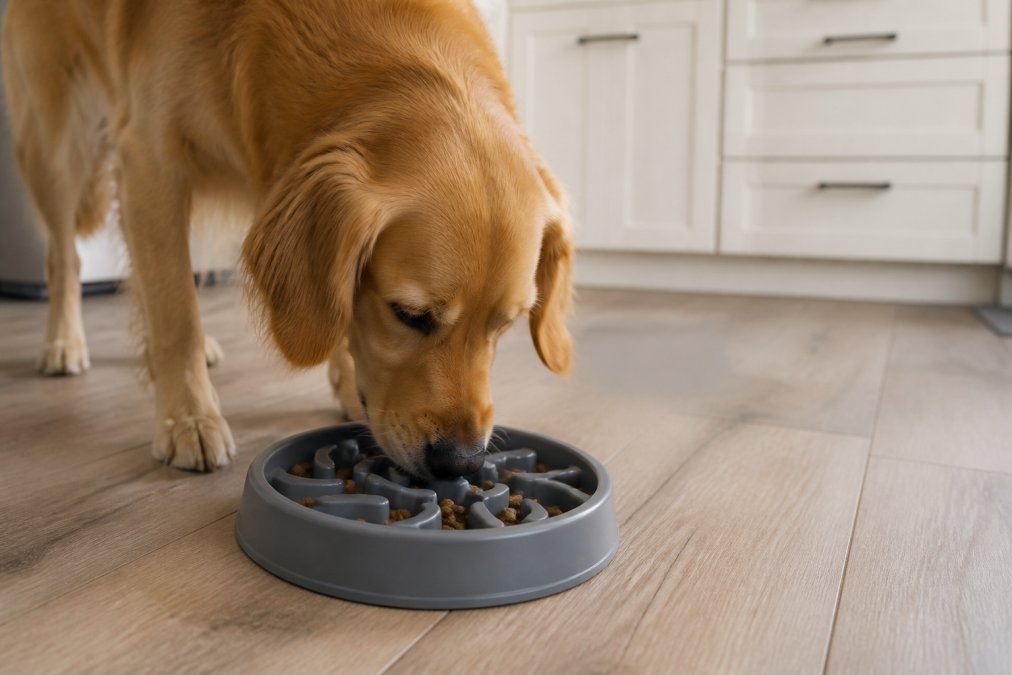
Some dogs benefit from hand-feeding during the transition period. Place a few pieces of kibble in your hand and let your dog eat from your palm, which naturally slows their eating pace. Once they're comfortable with this slower speed, transition to the slow feeder bowl. This creates a positive association between slower eating and your presence, which can help anxious dogs feel more secure during mealtimes.
Be consistent with the transition. Use the slow feeder for every meal, not just occasionally. This helps your dog understand that mealtime now works differently. After a few weeks of consistent use, most dogs will have adapted completely and will eat calmly from their slow feeder without any resistance.
Choosing the Right Slow Feeder Bowl for Your Dog
Not all slow feeder bowls are created equal. The right choice depends on your dog's size, eating style, and specific needs. A bowl that works perfectly for a small terrier may be completely inappropriate for a large breed dog.
Size matters most. Your dog's bowl should be large enough to hold their typical meal portion without overflowing, but not so large that they can still eat too quickly by working around the obstacles. Small dogs typically need bowls in the 20-25 cm range, while large dogs need bowls in the 33+ cm range. Measure your dog's meal portion and compare it to the bowl's capacity before purchasing.
Complexity should match your dog's experience. Beginners benefit from simple ridge-pattern bowls that slow eating without requiring problem-solving skills. More experienced puzzle eaters can handle compartmentalized designs that require them to work harder for their food. If your dog is completely new to slow feeders, start simple and upgrade later if needed.
Material safety and toxicity concerns matter significantly. Food-grade silicone is the safest material for daily use because it's flexible, non-toxic, and dishwasher-safe. Look for bowls labeled as BPA-free and made from materials that won't leach chemicals into food. Stainless steel is another safe option, though it doesn't provide the same grip benefits as silicone.
Check that any slow feeder bowl has a non-slip base. Dogs eating from bowls that slide across the floor experience frustration and may eat faster trying to stabilize the bowl. Quality bowls feature rubberized or textured bottoms that keep them firmly in place during meals.
Breed-Specific Recommendations
Different breeds have different feeding needs and risk profiles. Large and giant breeds face the highest bloat risk and should prioritize slow feeders as a non-negotiable part of their feeding routine. Breeds like Great Danes, German Shepherds, Greyhounds, Dobermans, and Saint Bernards benefit from the most strong slow feeder designs, typically puzzle-style feeders that provide maximum obstacle coverage.
Small breeds and toy dogs can use simpler ridge-pattern slow feeders since their bloat risk is lower, though they still benefit from slower eating for digestive health. Brachycephalic breeds (flat-faced dogs like Bulldogs and Pugs) have unique feeding challenges. Their facial structure means they already struggle with eating and breathing simultaneously, so choose a slow feeder with a shallow design that doesn't require excessive jaw manipulation. Avoid deep maze-style bowls that force their already-compromised breathing to work harder.
Active, high-energy breeds often benefit from puzzle-style slow feeders that provide mental stimulation alongside the physical benefit of slower eating.
Slow Feeder Bowls Worth Your Investment
At Bentley's Bark, we've curated a selection of slow feeder bowls that prioritize both safety and effectiveness. Our commitment to sourcing products with clean design and honest materials means every bowl we recommend has been evaluated for material quality, durability, and actual performance.
| Bowl Type | Size Range | Best For | Price |
|---|---|---|---|
| Ridge-Pattern Slow Feeder | 20-33 cm | Beginners, all breeds | $19.95-$29.95 |
| Puzzle Feeder Bowl | 24-33 cm | Mental stimulation, active dogs | $29.95 |
| Interactive Puzzle Toy | 24 cm | High-energy dogs, cognitive challenge | $49.95 |
| Portable Silicone Plate | 20-25 cm | Travel, small breeds | $19.95 |
Frequently Asked Questions
Can slow feeder bowls actually prevent bloat in dogs?
Slow feeder bowls significantly reduce the risk of gastric dilatation-volvulus (bloat) by limiting the amount of air a dog ingests while eating. By slowing consumption and encouraging smaller bites, these bowls reduce aerophagia (air swallowing) and promote steady digestion, which are key factors in preventing this life-threatening condition. While no bowl guarantees complete prevention, slowing eating pace is one of the most effective preventive measures available.
How do I know if a slow feeder bowl is safe and free from harmful materials?
Look for bowls made from food-grade silicone, stainless steel, or ceramic, materials that don't leach toxins into food. Check product listings for BPA-free certification and ensure the bowl is dishwasher safe, which indicates it can withstand heat and cleaning without degrading. Bentley's Bark offers slow feeder bowls crafted from premium silicone, designed with clean materials and honest construction to keep your pet safe during every meal.
What's the difference between a slow feeder bowl and a puzzle feeder toy?
A slow feeder bowl is designed primarily to control eating pace through physical barriers or compartments in the dish itself. A puzzle feeder toy combines mental stimulation with feeding, requiring your dog to work for their food by solving interactive challenges. Both slow eating and mental engagement, but puzzle feeders add a cognitive enrichment component that regular slow bowls don't provide, making them ideal for high-energy or bored dogs.
How long should it take my dog to finish a meal with a slow feeder bowl?
A healthy eating pace typically takes 10-15 minutes for a standard meal. With a slow feeder bowl, your dog should take noticeably longer than their usual gulping pace, but not so long that the food becomes unappetizing or they lose interest. If mealtime stretches beyond 20-25 minutes, the bowl may be too restrictive for your dog's size or feeding style. Adjust based on your dog's comfort and behavior.