 ultimate-guide
How to Choose the Right Pet Harness: Guide
Table of Contents
- Why the Right Pet Harness Matters for Your Dog
- How to Measure a Dog for a Harness
- Front-Clip vs Back-Clip Harness: Which Is Better?
- Durable Dog Harness Materials and Construction
- Matching the Harness to Your Dog's Body and Behavior
- Signs of an Ill-Fitting Harness and When to Replace It
- Introducing a New Harness to Your Dog
- Conclusion
- Frequently Asked Questions
Last Updated: September 11, 2026
Why the Right Pet Harness Matters for Your Dog
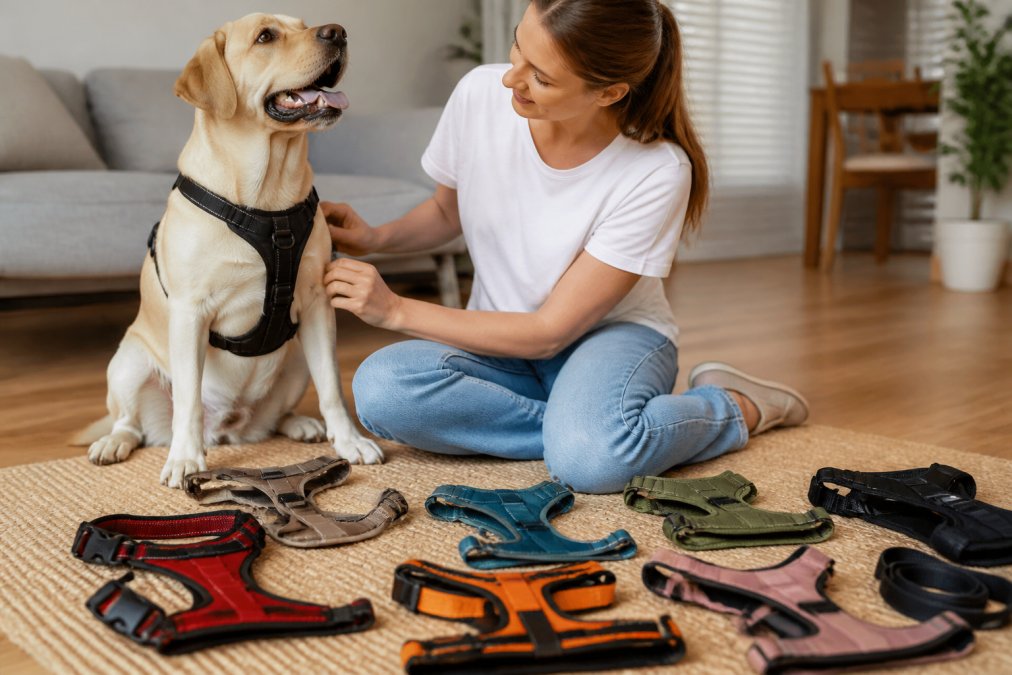
Choosing the right pet harness is the most effective way to protect your dog's neck and throat during walks, especially for dogs that pull. A properly fitted harness spreads force across the chest and shoulders instead of the trachea, critical for flat-faced breeds and small dogs prone to collapsing trachea. This guide covers measuring, clip styles, materials, and fit checks.
Most guides treat harness selection as a sizing exercise alone. Fit is only half the equation; the other half is matching the design to your dog's body shape, strength, and walking behavior.
Veterinary guidance from the [American Veterinary Medical Association on collar and leash(/products/gentle-paws-anti-strike-harness-and-leash-set) injuries | avma.org] notes that neck pressure from collars can aggravate existing respiratory and ocular conditions. A harness sidesteps that risk entirely when it fits correctly.
How to Measure a Dog for a Harness
Measure two things: girth (the widest part of the ribcage, just behind the front legs) and neck circumference. Use a soft tape, keep it snug but not tight, and measure twice.
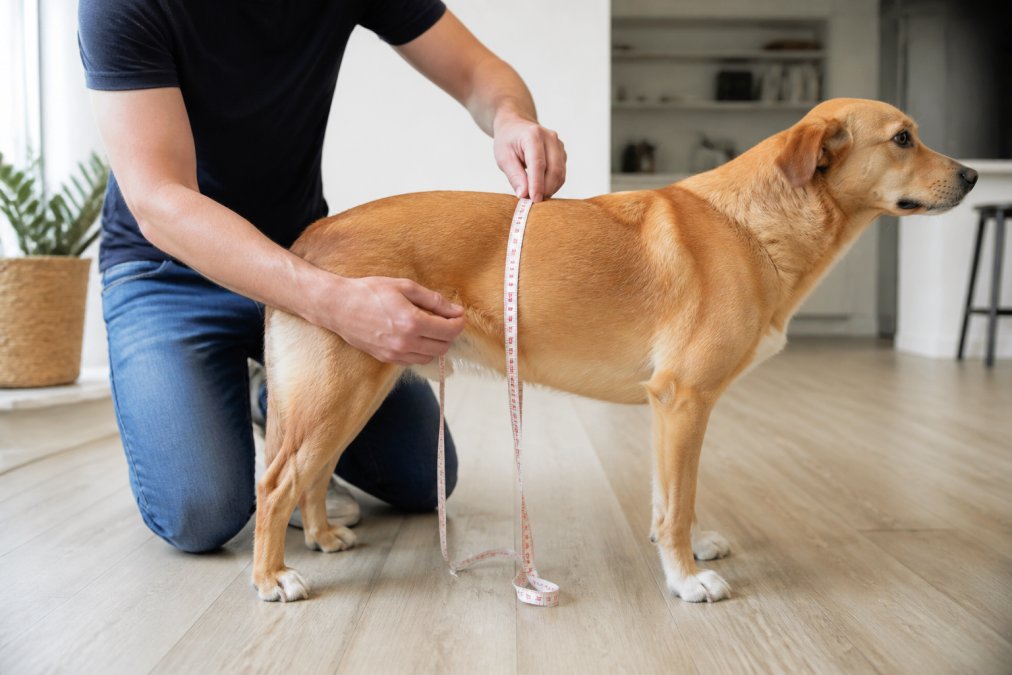
Don't measure over a thick winter coat or estimate from weight, breed and body shape matter more than the number on the scale.
- Girth: around the deepest part of the chest, behind the front legs
- Neck: around the base of the neck, where a collar would sit
- Chest depth: from the base of the neck to the bottom of the ribcage, for vest-style harnesses
If your dog sits between two sizes, size up and tighten the adjustable straps. A snug fit beats a loose one every time.
Front-Clip vs Back-Clip Harness: Which Is Better?
Front-clip harnesses suit dogs that pull, because the chest attachment redirects forward motion sideways. Back-clip harnesses suit polite walkers needing freedom of movement. The choice comes down to behavior, not preference.
| Harness Type | Leash Attachment | Best For | Main Drawback |
|---|---|---|---|
| Front-clip | Chest D-ring | Pullers, training | Can twist if loose |
| Back-clip | Shoulder D-ring | Calm walkers | Encourages pulling |
| Dual-clip | Both points | Mixed needs | Higher cost |
A dual-clip attachment lets you switch as behavior changes, which is why trainers often recommend it for puppies in training.
Durable Dog Harness Materials and Construction
Durable dog harness materials fall into three categories: padded nylon webbing (daily walks, resists fraying), breathable mesh (warm weather, sensitive skin), and Oxford cloth (waterproof, handles mud, rain, and washing).
Look for reinforced stitching at stress points, a sturdy D-ring, and quick-release buckles rated for your dog's weight. Prioritize reflective stitching for dawn or dusk walks.
The Canadian Centre for Occupational Health and Safety guidance on reflective materials explains why visibility gear matters in low-light conditions, and the same principle applies to your dog on evening walks.
Matching the Harness to Your Dog's Body and Behavior
Generic sizing charts assume a dog is roughly cylindrical. Most aren't. The harness that works on a Labrador will slide off a Greyhound and choke a Pug, so match the design to your dog's actual anatomy and behavior.
Deep-chested, narrow-waisted breeds
Greyhounds, Whippets, Salukis, and other sighthounds have a ribcage much deeper than their waist. A standard harness sized to the chest sits loose around the belly, exactly where a startled dog backs out. Look for a separate, independently adjustable belly strap and a longer body panel. If chest and rib girth differ by more than a few inches, you need a multi-point adjustable design, not a single-strap vest.
Broad-chested, short-necked breeds
Pugs, French Bulldogs, English Bulldogs, and Boston Terriers have wide chests and very little neck. A Y-front harness crossing the throat crowds the trachea and worsens existing breathing problems. A step-in or vest-style harness with a wide, padded chest plate spreads pressure across the sternum instead. Avoid narrow straps over the windpipe.
Long-backed breeds
Dachshunds, Corgis, and Basset Hounds need a longer body panel so load spreads along the torso rather than concentrating on one point of the spine. A harness ending mid-back digs in when the dog pulls; look for a rear strap that sits well behind the ribcage.
Small and toy breeds
Chihuahuas, Yorkies, and Maltese have delicate tracheas and little body mass to anchor a harness. A lightweight mesh or soft-webbing harness with thin, adjustable straps beats a bulky padded vest that overwhelms a 5 lb dog. Extra-small sizes aren't just scaled-down mediums, check strap width, not just length.
Flat-faced (brachycephalic) breeds
Any brachycephalic dog, Pugs, Boxers, Shih Tzus, should wear a harness, not a collar, on every walk. Neck pressure aggravates their narrowed airways. A front-clip harness with a padded chest plate is the safest default.
Behavior-based selection
- Pullers: A front-clip or dual-clip harness with a padded chest plate redirects forward motion sideways. A back-clip harness on a puller makes the problem worse because it gives the dog something to lean into.
- Escape artists: Look for a third belly strap, a martingale loop, or a design marketed as escape-proof. A harness with only two adjustment points will not hold a determined Houdini.
- Reactive or anxious dogs: A harness with a vertical handle gives you immediate control without grabbing the dog's body. A front-clip attachment also lets you steer rather than pull.
- Dogs in training: A dual-clip harness lets you switch from front-clip (control) to back-clip (freedom) as behavior improves, so you don't have to buy a second harness.
Life-stage considerations
Puppies are still growing: prioritize generous adjustability in neck and chest straps, and re-check fit every two to three weeks. Senior dogs with arthritis or vision loss do better in a lighter harness with a vertical handle, so you can assist them over curbs and stairs without lifting by the chest. Dogs recovering from surgery may need a step-in design that sits low on the chest and avoids the incision, rather than a vest that pulls over the head.
Car travel: the angle most guides miss
A walking harness is not a car restraint. In a sudden stop, an unrestrained dog becomes a projectile, and an untested harness can fail at the stitching or D-ring. For car travel, choose a harness dynamically tested to a recognized crash-test standard and pair it with a tether attached to a seatbelt or secured anchor. A crash-tested harness states the standard on the label or product page, if it doesn't, assume it hasn't been tested. Treat this as a separate purchase from your walking harness.
Signs of an Ill-Fitting Harness and When to Replace It
The two-finger rule is a starting point, not a diagnosis. It tells you whether a strap is roughly the right tightness, but not whether the harness sits in the right place. A harness can pass the two-finger test and still be the wrong shape.
The full fit check, in order
- Girth strap: Slide two fingers under the strap behind the front legs. You should feel light resistance. A whole hand means too loose; fewer than two fingers means too tight.
- Neck strap: Same test, at the base of the neck. On flat-faced breeds, the neck strap should sit low, below the throat, not across it.
- Chest plate position: The front of the harness should sit on the sternum (the flat bone between the front legs), not on the throat and not so low that it interferes with the front leg stride.
- Leg clearance: With the dog standing, lift each front leg through a full stride. The harness should not rub the armpit or restrict the shoulder. If it does, the chest strap is too far forward or the harness is too small.
- D-ring position: The leash attachment should sit on the back or chest, not on the side, where it will pull the harness crooked under load.
- Walk test: Walk 20-30 steps on a loose leash, then 20-30 with light tension. Watch for twisting, sliding, or a strap migrating toward the armpit.
What specific problems actually mean
- Harness twists to one side: Usually a sizing issue, the girth strap is too loose, or the harness is too wide for a narrow-chested dog. Tighten the girth and check the chest strap length.
- Dog backs out of the harness: The neck opening is too large, or the harness lacks a belly strap. This is a design problem, not a sizing problem, no amount of tightening will fix a two-strap harness on an escape artist.
- Redness, bald patches, or scabbing under the straps: Chafing. Check for a rough seam, a strap too narrow for the dog's weight, or a harness worn too long. Hair loss under a harness is common in short-coated breeds and signals the strap is moving against the skin.
- Dog freezes, squats, or refuses to walk: Often a sign the harness is pinching at the armpit or restricting the shoulder. Try a different style, a step-in instead of a vest, or a front-clip instead of a back-clip.
- Buckles pop open under tension: The buckle is the wrong size for the dog's strength, or it's worn. Replace the harness; do not repair it.
- Strap edges curling or fraying: The webbing is degrading. This is a replacement trigger, not a repair trigger.
How to tell a sizing problem from a design problem
If the harness fits at every strap but still rubs, twists, or invites escape attempts, the problem is design, not size, sizing up or down won't help. The fix is a different style: multi-point adjustable for deep-chested dogs, step-in for broad-chested dogs, three-strap escape-proof for a Houdini.
When to replace
Replace a harness when any of the following is true:
- Webbing is frayed, fuzzy, or has a visible cut
- The D-ring shows wear, rust, or has deformed under load
- Buckles no longer click firmly or release under tension
- Stitching at any stress point has pulled or unraveled
- The harness no longer fits, puppies outgrow harnesses every few weeks, and adult dogs' weight can shift with age or illness
- The harness has been in a car accident or a serious fall, even if it looks intact
A well-made harness used daily typically lasts one to two years; a cheap one on a strong puller may last a season (avma.org). Inspect the D-ring and stitching at the chest and back attachment points monthly, those fail first.
Fit changes with the seasons and the dog
A harness that fits in July may not fit in January if your dog wears a coat underneath, size up for winter or choose one designed to go over a light layer. Re-check fit whenever weight shifts through illness, age, or activity changes; weigh monthly and re-run the full fit check if the number changes by more than about 10%.
Introducing a New Harness to Your Dog
Introduce the harness in stages over three to five days. Rushing this step is the most common reason dogs resist wearing one.
- Let your dog sniff the harness and reward calm behavior.
- Drape it over the back without buckling, then treat.
- Buckle it loosely for short indoor sessions.
- Clip the leash and walk a few steps indoors.
- Take the first outdoor walk with plenty of praise.
If your dog shuts down, back up a step. Behavioral training works better than forcing it.
Conclusion
Getting the fit, clip style, and material right takes twenty minutes and saves months of walking frustration. Measure twice, test the two-finger rule, and match the design to your dog's body and behavior.
Bentley's Bark curates harnesses built for real walks, including the Gentle Paws™ Anti-Strike Harness and Leash Set with breathable mesh and webbing ($29.95), the Rhinestone Anti-Strike Pet Chest Strap and Leash ($19.95) for smaller dogs, and the Cute Cartoon Dog Vest Harness and Leash for Pets ($39.95) for warm-weather comfort. Every order ships free, and each item is Bentley Approved hand-picked before it reaches your door.
Get started with Bentley's Bark and find a harness your dog will actually enjoy wearing. We also offer the Durable Waterproof Pet Harness with Vertical Handle ($39.95) for active and adventurous pets.
Frequently Asked Questions
Which dog harness do vets recommend?
Many veterinarians prefer Y-shaped harnesses because the straps sit away from the shoulder joint and allow a full range of motion. A front-clip no-pull harness is often suggested for dogs that pull, since it redirects momentum without putting pressure on the throat. Whichever style you pick, the fit matters more than the brand. Look for padded straps, a snug two-finger gap at the chest, and a design that does not rub behind the front legs.
How do I measure my dog correctly for a new harness?
Use a soft measuring tape to find the girth, which is the widest part of the ribcage just behind the front legs. Write that number down, then measure the neck and the distance from the base of the neck to the widest part of the chest. If your dog is between two sizes, size up and tighten the adjustable straps. A snug fit lets you slide two fingers under the strap without pinching.
What features should I avoid when buying a pet harness?
Skip harnesses with thin, unpadded straps that can dig into the skin during long walks. Avoid designs with a single attachment point on the throat, since these put pressure on the trachea when a dog pulls. Also pass on harnesses that cross directly over the shoulder joint, as they limit range of motion. Check that buckles are quick-release and that stitching is reinforced at every stress point before you buy.
Is a harness better than a collar for walking a pulling dog?
For dogs that pull, a harness is generally the safer choice. A collar concentrates force on the neck and throat, which can cause coughing, tracheal damage, or eye pressure over time. A front-clip harness spreads that load across the chest and shoulders, giving you more walking control without choking. Pair the harness with reward-based training so your dog learns to walk calmly instead of fighting the gear.